저희는 중국에 본사를 둔 선도적인 유리 제조업체로,
산업 및 건축 분야를 위한 고품질 유리 솔루션을 전문으로 합니다.
다년간의 경험과 ISO 인증을 바탕으로, 전 세계의 조달 전문가, 엔지니어 및 프로젝트 관리자에게 신속하고 맞춤형 견적과 신속한 지원을 제공합니다.

A shielding glass unit can look excellent on a submittal and still be an inadequate carbon acquisition.
That is the awkward beginning point.
Purchasers routinely contrast U-factor, solar warm gain coefficient, noticeable passage, safety classification, coating placement, cost, and shipment time. Personified carbon has actually now joined that listing, typically as a Global Warming Possible number replicated from an Environmental Item Declaration.
After that the evaluation stops.
I assume that is a blunder. A reduced preliminary GWP means less than buyers assume when the IGU has weak edge-seal toughness, doubtful fabrication control, improper bite measurements, or no defensible service-life basis. Carbon is invested at manufacture. If the unit fails and should be changed, the majority of that expenditure happens again.
Years transform every little thing. If one IGU carries 100 kg CO TWO e per square metre and survives 40 years while one more carries 85 kg carbon monoxide TWO e however falls short after 20, the obviously cleaner product can create substantially even more symbolized carbon over the building’s research study duration. So why do bid comparisons so often disregard the?
IGU service life is the duration throughout which a sealed shielding glass system remains to perform its designated thermal, moisture-control, structural, optical, and safety and security functions under the problems in which it is set up.
It is not merely the age of the glass.
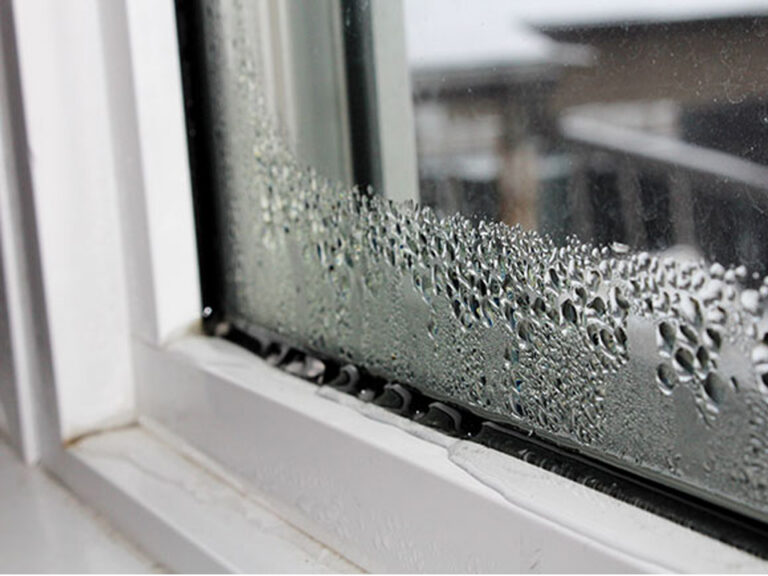
The glass lites might continue to be structurally audio long after the side seal has actually shed bond, dampness has actually bewildered the desiccant, argon has gotten away, or condensation has actually appeared inside the cavity. For numerous traditional systems, the functional end of life is seal failure– not busted glass.
That distinction issues when choosing a project-specific curtain-wall IGU setting up. The IGU does not run alone. Framework water drainage, establishing blocks, glazing pockets, sealant compatibility, side removal, exposure, altitude, unit geometry, elevation and temperature cycling all influence its survival.
A 20-year warranty likewise does not confirm a 20-year life span. The warranty is an industrial assurance bounded by exclusions, insurance claim procedures, treatments and the financial survival of the company. Life span is a design quote. Those are various papers addressing different concerns.
My candid view: buyers that treat the guarantee term as sturdiness evidence are outsourcing technological judgment to lawful language.
For early budgeting, buyers commonly design a traditional insulated glass unit lifespan of roughly 20 to 30 years. That variety is not a forecast for any type of private item, and it must never ever be placed into a life-cycle model without examining the setting up, direct exposure and readily available longevity evidence.
Some units stop working earlier. Others continue to be serviceable far longer.
A 2023 peer-reviewed study on IGU degradation kept in mind the continuing lack of long-term, real-condition resilience information– specifically the proof required to convert laboratory certification into a positive field-life prediction.
What shortens IGU life span?
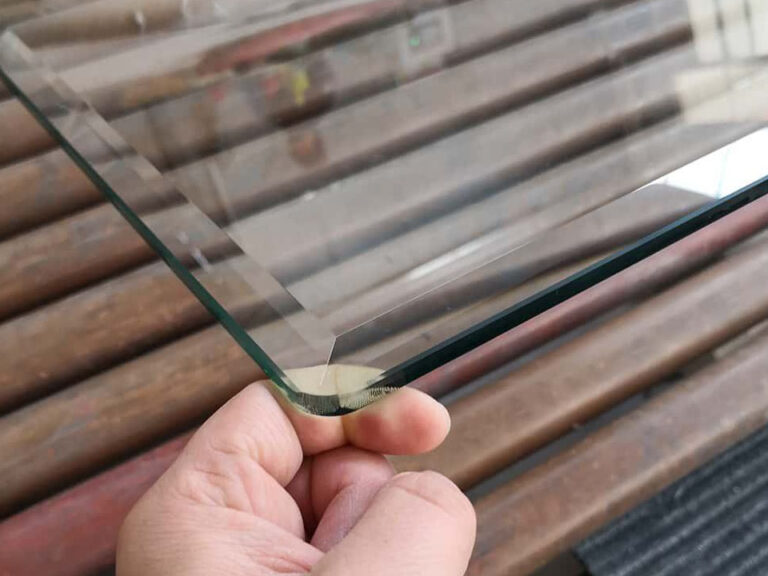
Side prep work is worthy of more focus than it receives. Effectively defined polished-edge level solidified glass may attend to edge high quality and toughness needs, but polishing alone can not rescue a severely designed seal system or wet polishing pocket.
The failing chain is normally ordinary. Water remains near the edge, vapor transmission climbs, the desiccant approaches saturation, fog shows up, and substitute becomes inescapable. Nothing significant happens– until the proprietor receives the access, removal, disposal and reglazing costs.
Annualized symbolized carbon reveals an embodied-carbon amount over an assumed variety of solution years.
For a simple product-level contrast:
$$. \ message Annualized personified carbon =. \ frac $$
If an IGU has a verified cradle-to-gate GWP of 120 kg CO ₂ e/m ² and a predicted service life of thirty years:
$$. 120 \ div 30 = 4.0 \ \ message m ^ 2/ \ message $$
That does not imply the manufacturing facility sends out 4.0 kg every year. The Majority Of A1– A3 discharges took place before the IGU reached the structure. Annualization is an allowance device utilized to contrast products with different anticipated lives.
This is where negligent evaluation begins.
A customer can make an item look attractive by picking a generous service-life common denominator. Forty years instead of 20 quickly halves the annualized result, although the heater, coating line and manufacture plant released exactly the very same quantity.
So the service-life assumption must be treated as auditable data– not advertising copy.
The copying presumes every substitute system has the same 100 kg carbon monoxide ₂ e/m two production impact. It omits transportation, installation, removal, waste processing and future production improvements.
| Assumed IGU service life | Product-only annualized GWP | Installments throughout a 60-year study | 60-year product GWP | Project-level annualized GWP |
|---|---|---|---|---|
| 15년 | 6.67 kg CO ₂ e/m TWO/ year 4 | 400 kg CO ₂ e/m TWO 6.67 kg carbon monoxide ₂ e/m TWO/ year | ||
| Two decades | 5.00 kg carbon monoxide two e/m TWO/ year 3 | 300 kg CO ₂ e/m TWO 5.00 kg carbon monoxide two e/m ²/ year | ||
| 30년 | 3.33 kg CO ₂ e/m ²/ year 2 | 200 kg carbon monoxide ₂ e/m TWO 3.33 kg CO ₂ e/m TWO/ year | ||
| 40 years | 2.50 kg CO ₂ e/m ²/ year 2 | 200 kg carbon monoxide ₂ e/m TWO 3.33 kg CO ₂ e/m ²/ year |
Notice the last row. A 40-year device still calls for one replacement inside a 60-year building study, so its project-level outcome does not be up to 2.50 kg. The timing limit transforms the answer.
Carbon mathematics bites.
An Environmental Item Statement reports environmental effects under defined Item Group Policy, system boundaries, stated units and life-cycle components. It is not a resilience certificate, efficiency service warranty or forecast of area survival.
Customers need to inspect whether they are comparing:
In December 2023, the United State General Services Management established flat-glass limits of 1,331 kg carbon monoxide TWO e per metric tonne for its top-20% tier, 1,370 for the top-40% tier, and 1,401 for “far better than average.” The very same needs clearly identified IGUs, laminated units and vacuum cleaner protecting glazing as settings up consisting of flat glass.
Those thresholds work procurement filters. They are not a complete glazing life process assessment.
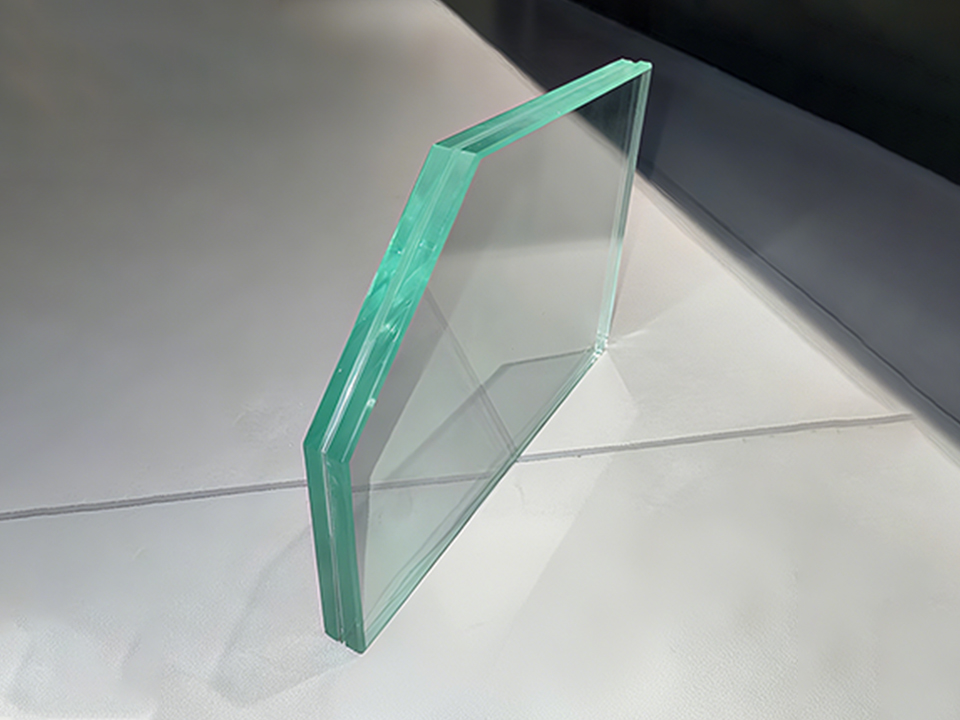
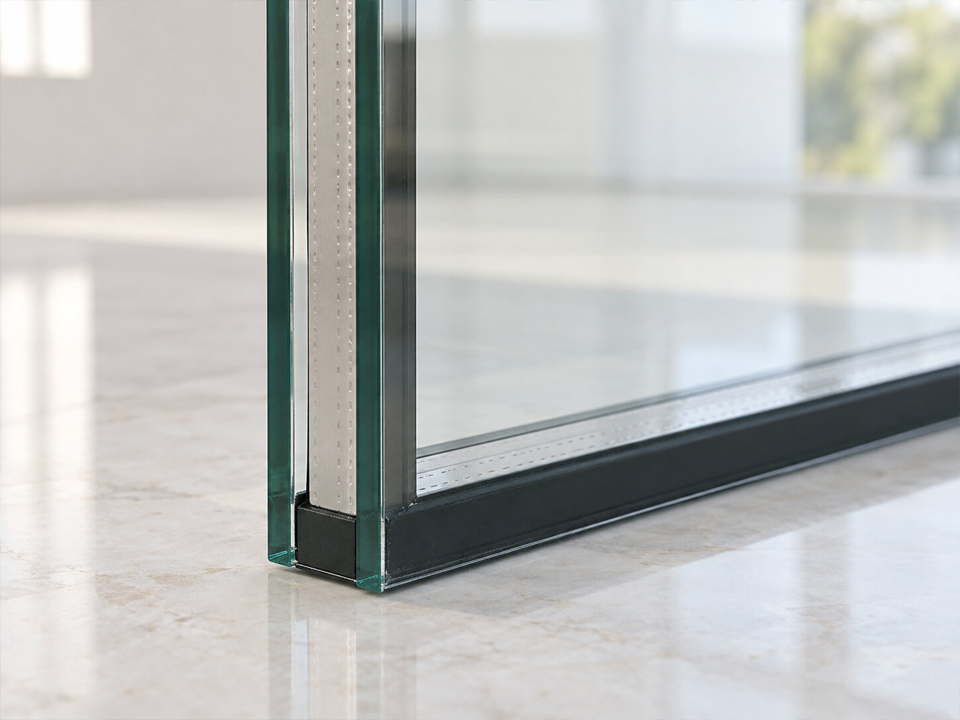
An IGU includes spacers, desiccant, sealants, gas filling, finishings, construction power and yield losses. Laminated setups include an interlayer– often polyvinyl butyral, or PVB– and need to be examined utilizing the real laminated-glass interlayer specification, not a generic assumption.
Fire-resistance, safety, acoustics and post-breakage retention can require still even more material. A customer comparing conventional IGUs with fire-resistant laminated glass systems should normalize practical efficiency before comparing carbon. Otherwise, the exercise compensates an item that might not satisfy the very same task.
The Lewis F. Powell Jr. U.S. Court house task in Richmond is more useful than a polished sustainability sales brochure since it discloses what purchase resembles under real constraints.
In September 2023, GSA granted a $5.3 million home window choice within a $16.5 million restoration. The chosen flat glass reported a third-party-verified GWP of 1,350 kg CO ₂ e per metric tonne. GSA likewise anticipated its wider program to require more than one million square feet of glass.
The later October 2024 project instruction was even more enlightening: only three eligible suppliers were recognized, simply two plant locations were thought about sensible geographically, and one at first targeted maker might not fulfill the production schedule because the order volume obtained reduced top priority.
That is the hard reality. The most effective low-embodied-carbon glazing on a spread sheet is unimportant if the certified plant can not reserve capability, produce the needed make-up, satisfy the routine, or ship within an acceptable distance.
Purchase therefore needs 2 filters:
By October 2024, GSA reported that more than 150 government projects had implemented its Buy Tidy plan, while additionally acknowledging local data voids, EPD costs and uneven vendor participation. Customers must read that as a market signal: carbon documents is entering traditional procurement, however vendor depth stays irregular.
Preliminary manufacturing issues. Replacement frequency can matter extra.
I would separate the choice right into 6 variables:
| 변수 | Evidence purchasers need to request | Why it changes the outcome |
|---|---|---|
| Initial GWP | Present, third-party-verified product-specific EPD | Establishes the starting carbon quantity |
| Service-life basis | Reference service life, field history and mentioned assumptions | Controls the annualized common denominator |
| Edge-seal design | Sealer types, dimensions, spacer building and compatibility | Impacts moisture resistance and fatigue |
| Manufacture control | Gas-fill records, sealer QA, dew-point testing and traceability | Reveals whether the specified style is consistently produced |
| Installation exposure | Water drainage details, bite, edge clearance, shielding and elevation review | Connects laboratory efficiency to field problems |
| Substitute circumstance | Research study duration, gain access to method, damage allocation and disposal path | Captures repetitive carbon and price |
Attractive treatments can change the calculation too. A ceramic-frit glass requirements for skylights may minimize solar gain, manage glare or conceal framework, yet frit protection and thermal loading have to be collaborated with heat therapy, coverings and makeup design.
Even more material is not immediately worse. If laminated glass, thicker lites or an extra durable edge system expands life span or protects against premature substitute, the extra preliminary carbon may create a lower annualized result.
Yet do not invent that extension. Show it.
Beginning by freezing useful equivalence. Every choice should fulfill the exact same structural loads, security needs, thermal targets, solar-control criteria, dimensions, edge problems, look requirements and applicable codes.
Then normalize the carbon data.
I would additionally score confidence. A product-specific EPD plus recorded area background is entitled to more weight than an industry-average EPD paired with an in need of support 40-year case.
And I would deny decimal theater. Reporting annualized symbolized carbon to 3 decimal areas does not make an unsure service-life assumption accurate.
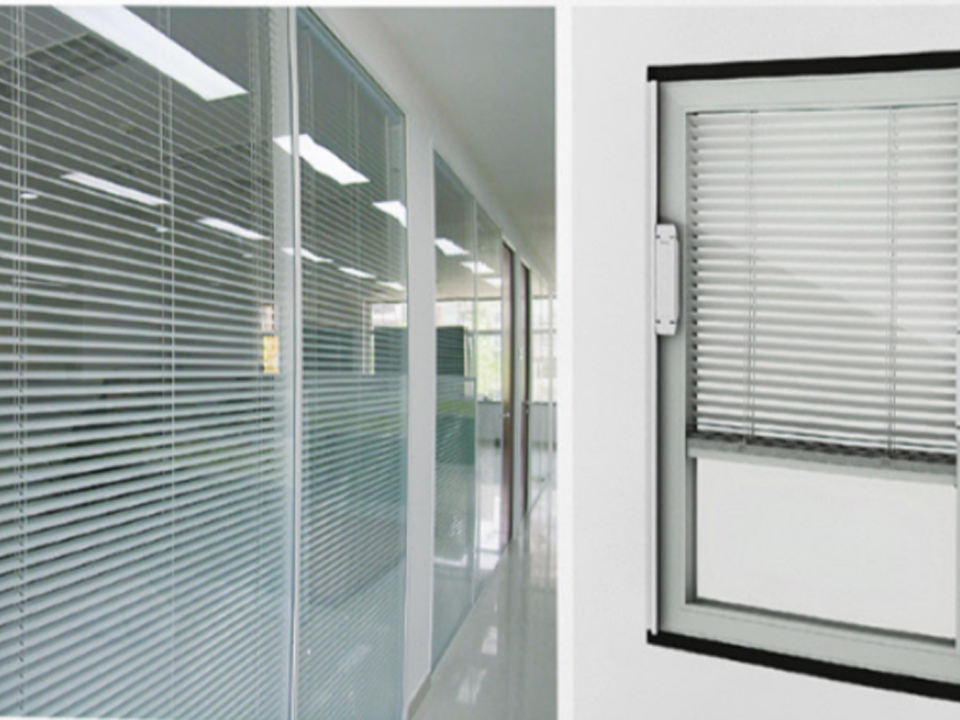
Potentially, yes.
A 2024 research study utilizing dismantled IGUs from the 1980s found that remanufactured devices can attain efficiency comparable with devices used brand-new glass. That does not mean every removed lite is multiple-use; coverings, side damage, warmth treatment, measurements, traceability and code compliance can disqualify material.
Still, the searching for tests an established practice: treating every fell short side seal as a command to melt and reprise every glass lite.
For customers, the practical questions are straightforward:
Designing for replacement works. Designing to stay clear of unnecessary remanufacture is better.
Ask every prospective buyer for the very same proof, in the same style.
If a bidder supplies a carbon number yet can not discuss the setting up, or replacement presumption, the submission is incomplete.
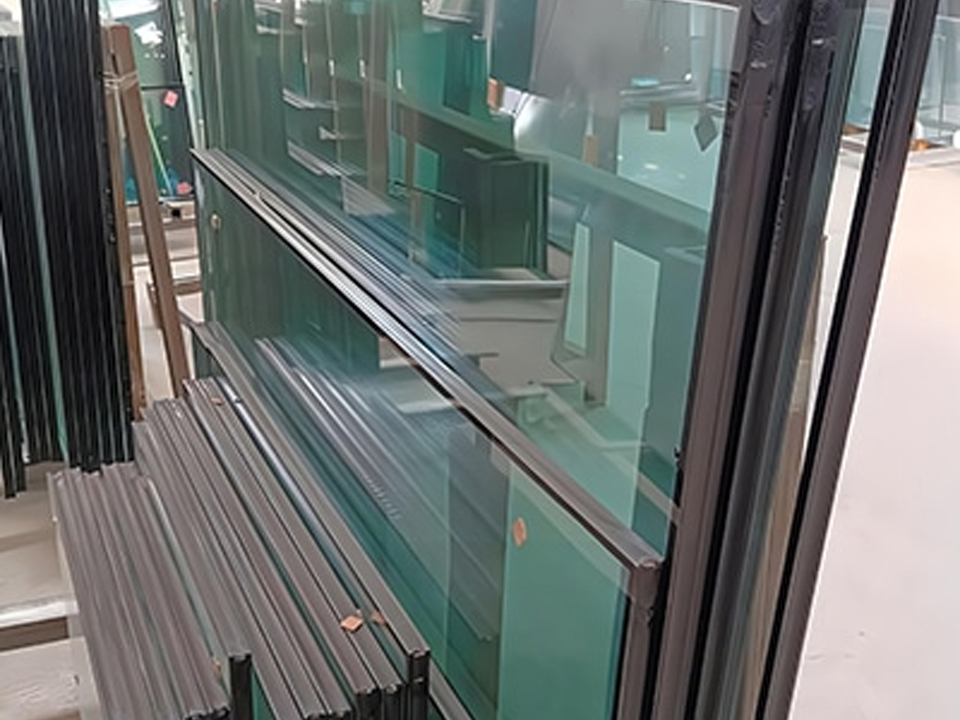
IGU life span is the anticipated duration during which a protecting glass unit maintains acceptable thermal, moisture, optical, structural and safety performance under stated direct exposure and upkeep problems; it finishes when wear and tear– frequently edge-seal failing, interior condensation or unacceptable gas loss– protects against the unit from executing its intended feature.
It needs to be supported deliberately information, production controls, exposure presumptions, examination outcomes and relevant field background. It should not be duplicated instantly from the service warranty period.
Insulated glass devices are usually allocated at about 20 to three decades, however actual life can be much shorter or longer because edge-seal style, manufacture quality, device dimensions, temperature level biking, structure drain, altitude, polishing compatibility and water direct exposure establish whether the secured tooth cavity continues to be useful.
Make use of numerous service-life situations in the monetary and carbon version. A single hopeful number conceals replacement direct exposure.
Annualized embodied carbon is an audit metric that splits an item’s embodied greenhouse-gas exhausts, revealed in kgs of carbon dioxide equivalent, by an assumed life span in years, allowing purchasers to contrast products whose initial impacts and anticipated replacement periods vary.
It is not a stream of annual manufacturing facility discharges. It is only as legitimate as the GWP border and service-life assumption used in the computation.
A reduced EPD worth confirms just that an item reports a relatively reduced environmental influence within that statement’s specified unit, modules, geography, PCR and information duration; it does not verify lengthy life span, equal functional performance, low transport exhausts or fewer substitutes throughout the structure’s research duration.
Contrast like with like, then design the total assembly and substitute cycle.
The very best low-embodied-carbon glazing is the code-compliant setting up that delivers the required thermal, solar, structural, security and optical performance with a confirmed production impact, qualified service life, workable transport distance and the most affordable whole-life replacement burden– not simply the most affordable isolated EPD number.
In some projects, that might be a slightly higher-GWP system with substantially far better durability evidence.
An IGU guarantee is a contractual remedy covering defined issues for a stated duration, whereas life span is a design quote of the length of time the device will carry out in its real setting; exclusions, prorated settlement, labor limitations and installment conditions can make the warranty materially narrower than the proprietor’s replacement threat.
Review the warranty, however model the exterior.
The purchase decision should come down to one auditable question: just how much confirmed carbon and price will this glazing impose while supplying the needed performance over the building’s actual research duration?
Need the total IGU make-up, current EPD, stated boundaries, construction controls, service-life proof and substitute situation before contrasting bids. Then evaluate the response at 15, 20, 30 and 40 years.
If the ranking changes, you have actually discovered the threat.
Send your IGU routine, job area, called for performance values and prospective buyer EPDs for a stabilized service-life and annualized embodied-carbon comparison prior to honor.