산업 및 건축 프로젝트를 위한 신뢰할 수 있는 유리 제조
당사는 중국에 본사를 둔 선도적인 유리 제조업체로, 산업 및 건축용 고품질 유리 솔루션을 전문으로 합니다. 다년간의 경험과 ISO 인증을 바탕으로 전 세계 조달 전문가, 엔지니어 및 프로젝트 관리자에게 신속하고 맞춤화된 견적과 신속한 지원을 제공합니다.
린 리
설립자
당사는 중국에 본사를 둔 선도적인 유리 제조업체로, 산업 및 건축용 고품질 유리 솔루션을 전문으로 합니다. 다년간의 경험과 ISO 인증을 바탕으로 전 세계 조달 전문가, 엔지니어 및 프로젝트 관리자에게 신속하고 맞춤화된 견적과 신속한 지원을 제공합니다.
당사는 중국에 본사를 둔 선도적인 유리 제조업체로, 산업 및 건축용 고품질 유리 솔루션을 전문으로 합니다. 다년간의 경험과 ISO 인증을 바탕으로 전 세계 조달 전문가, 엔지니어 및 프로젝트 관리자에게 신속하고 맞춤화된 견적과 신속한 지원을 제공합니다.

The U.S. recorded 5,283 fatal work injuries in 2023 and 5,070 in 2024, and transportation incidents remained the biggest category in both years at 1,942 and 1,937 deaths, which is why I have very little patience for sales teams that treat jumbo glass packaging as a cost line to trim after the glass has already been specified. Does that still sound like a “logistics issue” and not a product issue?
I have watched manufacturers obsess over tempering cycles, edge polish, ceramic frit consistency, and light transmission, then send a massive lite out the door in a weak crate with vague handling labels and a fantasy-level unloading plan. And then everyone acts surprised when the freight claim arrives. That theater wastes money.
If you sell custom glass fabrication for oversized project panels or highly visible products like clear low-iron flat tempered glass project specs, packaging is not an accessory. I treat it as part of the finished system, because edge bruising, face rub, torsion during lifting, and bad center-of-gravity control can destroy a premium panel long before installation.
They look sturdy in the yard, they photograph well for the customer, and they survive the first forklift move, but the real test is uglier: container stuffing, port dwell, cross-dock vibration, hard braking, site congestion, a rushed telehandler operator, and one impatient worker cutting a restraint in the wrong order. Why do so many suppliers still package for the photo instead of the route?
OSHA’s own incident records read like a warning label for this industry. On June 20, 2024, workers unloading glass panels inside a shipping container cut the metal strap on a crate, the panels shifted, the crate broke, and one worker was fatally pinned. On October 11, 2024, a roughly 1,984-pound crate of glass windows became unbalanced as forklift tines cleared a container truck, killing a worker. And on November 21, 2023, a 21-year-old employee died after part of a bundle of 10 leaning glass sheets slid toward him during handling. That is the pattern: unstable geometry, weak restraint logic, and too much trust in “be careful.”
So here is my blunt view. Jumbo glass usually does not “just break in transit.” It gets packaged into failure.
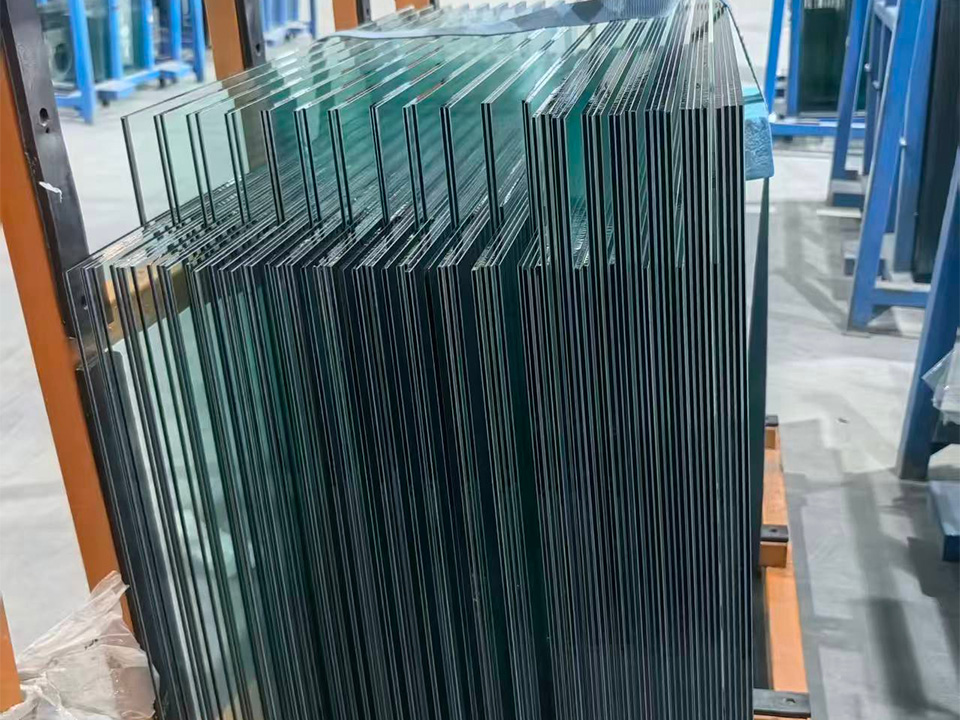
APHIS says regulated wood packaging material used to support, protect, or carry cargo must be treated and certified under ISPM 15, and the agency says the same standard is used for exports so the packaging meets importing-country requirements. FMCSA, meanwhile, says cargo securement systems must be able to handle 0.8 g forward deceleration plus 0.5 g rearward and lateral acceleration, with edge protection where tiedowns could be cut or abraded by cargo contact. OSHA’s construction storage rule says materials stored in tiers must be stacked, racked, blocked, interlocked, or otherwise secured to prevent sliding, falling, or collapse. That is not “some wood around the glass.” That is a compliance stack.
And this is where weak exporters get exposed. They think export-grade wooden packing means thicker timber. I disagree. Real export-grade packing means legal wood treatment, repeatable rack geometry, predictable forklift entry, secure base restraint, edge-safe tiedowns, and labeling that survives weather and rough handling. Anything less is a liability disguised as a crate.
The product type changes the risk, too. Bulk ceramic frit tempered glass for facade use needs careful face separation because visible abrasion will be noticed immediately on installation. Switchable privacy smart glass panels for home add busbars, wiring points, and edge vulnerabilities that make lazy crating even more reckless. And custom safety fire-rated glass for home and shop leaves very little room for “close enough” handling.
I have seen export crates survive an ocean leg, customs clearance, and inland trucking, only to get ruined at site because the unloading sequence was never engineered, only assumed, and assumptions die fast when the site has one tight access lane, one overworked forklift, and six trades arguing over space. Why do we keep pretending site delivery is gentler than export?
OSHA’s materials-handling guidance says improper handling and storing of materials often result in costly injuries, and that sounds mild until you pair it with the 2024 and 2023 fatality cases above. The lesson is obvious: site delivery is not the easy part of oversized glass transport; it is the phase where decent packaging is exposed as either disciplined engineering or decorative timber.
For fit-out work and smaller crews, I often prefer simpler, more readable systems over “clever” ones. A well-marked unloading face, visible center-of-gravity marking, and clear strap-release order beat fancy hardware that nobody on site understands. But if the shipment includes custom size interior decoration glass for decoration, the temptation to unload fast and lean panels casually against unfinished walls is exactly what I try to design out.
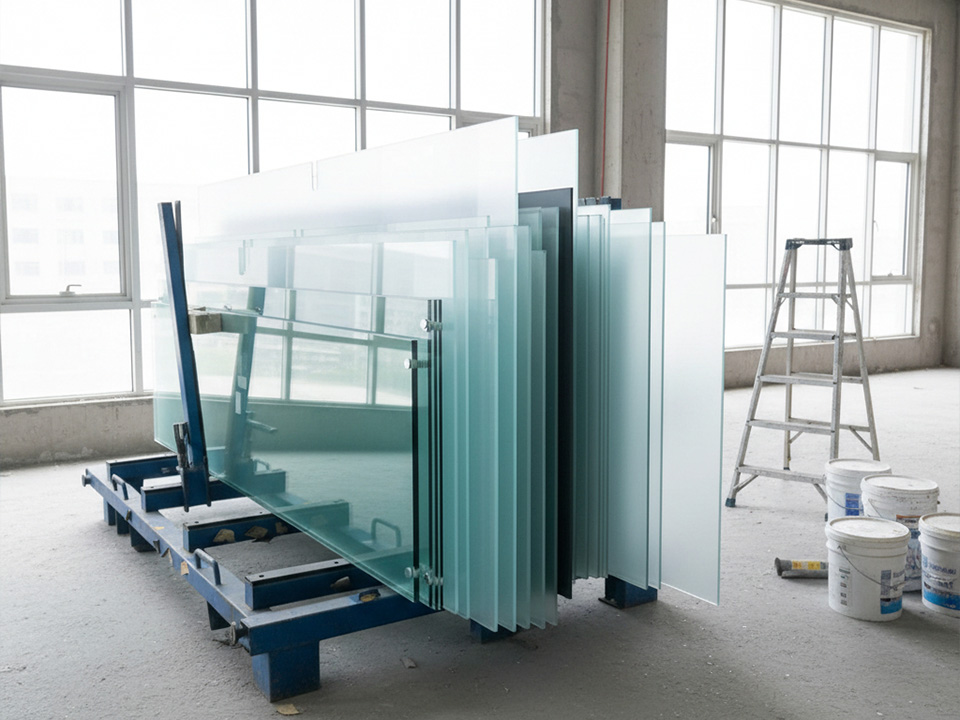
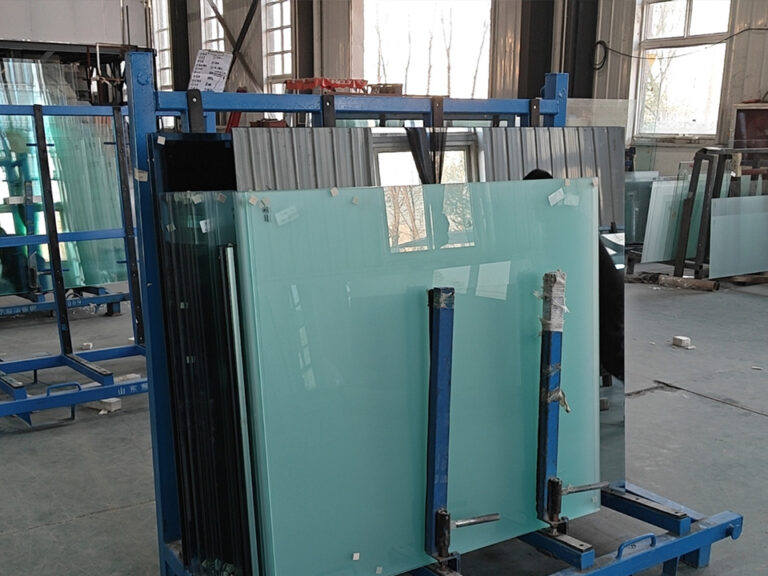
My standard for jumbo glass packaging is not mysterious, but it is stricter than what many suppliers want to pay for: vertical or slight back-lean support, non-abrasive separators at every glass-to-glass interface, positive base blocking so the lite cannot walk under vibration, no direct metal-to-glass contact, edge protection where restraint touches cargo, and an unloading method that can be executed by real crews, not imaginary experts. Does that sound expensive compared with a remanufacture, a missed façade sequence, or an injury investigation?
I also separate export logic from site logic. A containerized export move benefits from closed protection, moisture-aware timber, and disciplined internal restraint. A local site-delivery move may be better served by engineered A-frame glass racks with fast visual inspection and staged unloading. I do not like one-packaging-fits-all promises because the route, not the brochure, decides the failure mode.
And one more hard truth: if the seller has no photos of the packed unit, no crate drawing, no weight declaration, no lift-point identification, and no unload instructions, then the seller does not have a packaging system. They have hope.
This is my operating view, built from the standards and incident patterns above, not from catalog copy.
| Packaging format | 모범 사용 사례 | What it does well | Where it usually fails | 내 평결 |
|---|---|---|---|---|
| Closed wood export crate | Ocean export, container transshipment, long dwell times | Protects faces, controls handling points, supports documentation and markings | Weak internal restraint, poor forklift balance, bad unload sequence | Best default for export if properly engineered |
| A-frame glass rack | Controlled domestic transport and direct site delivery | Fast loading, fast visual checks, efficient staged unloading | Overconfidence, strap release errors, weak edge protection, poor truck securement | Excellent for short controlled lanes, risky in chaotic hands |
| Hybrid steel/wood stillage | Repeat projects, returnable lanes, contractor-managed logistics | Strong geometry, repeatability, lower long-run damage risk | Higher upfront cost, poor fit for one-off export jobs | Best option when the same team controls the loop |
| Cheap generic crate | Lowest-bid procurement | Looks acceptable at dispatch | Fails at the exact moment forces become real | False economy |
If your portfolio includes high-spec products such as custom glass fabrication for oversized project panels 그리고 clear low-iron flat tempered glass project specs, I would rather see a slightly slower, heavier, documented packing method than a sleek low-cost crate that shifts once and ruins the unit. Pretty packaging is not the goal. Predictable survival is.
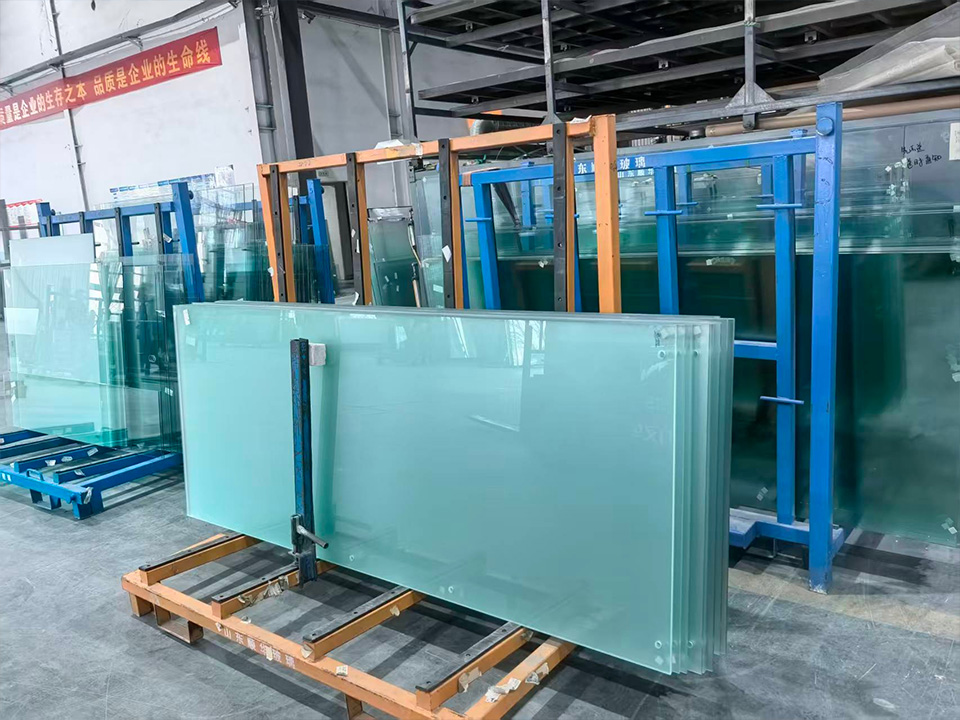
Jumbo glass packaging is an engineered transport system that uses export-grade crates or racks, controlled lean angles, edge and surface protection, securement hardware, handling marks, and unloading instructions to keep oversized glass stable from factory dispatch through port transfer, warehouse staging, and final installation delivery.
I define it that way because the real job is not merely wrapping glass; it is controlling movement, contact, and human error across multiple handoffs.
To pack jumbo glass for export, build an ISPM 15-compliant crate or stillage around the glass geometry, keep the lite vertical or slightly back-leaning, isolate every contact point with non-abrasive separators, lock the base against shift, and specify a documented unloading sequence before shipment leaves the plant.
I would add one more rule from experience: never approve export packing until you have seen the crate drawing, the weight, the lift points, and the photo set of the final packed unit.
The best packaging for oversized glass panels is the format that matches the full route: closed export crates for transshipment-heavy international moves, engineered A-frame racks for controlled local drops, and hybrid returnable stillages for repeat lanes where the same team manages loading, transport, and unloading.
That answer annoys buyers who want one universal option, but route-specific packaging beats generic packaging almost every time.
A-frame glass racks are safe for site delivery when the rack geometry matches the glass size and weight, the tiedowns are edge-protected, the truck deck and center of gravity are stable, and the receiving crew follows a controlled unloading order rather than cutting restraints and improvising.
I like A-frames for disciplined crews and short, direct lanes. I dislike them when nobody owns the unload sequence.
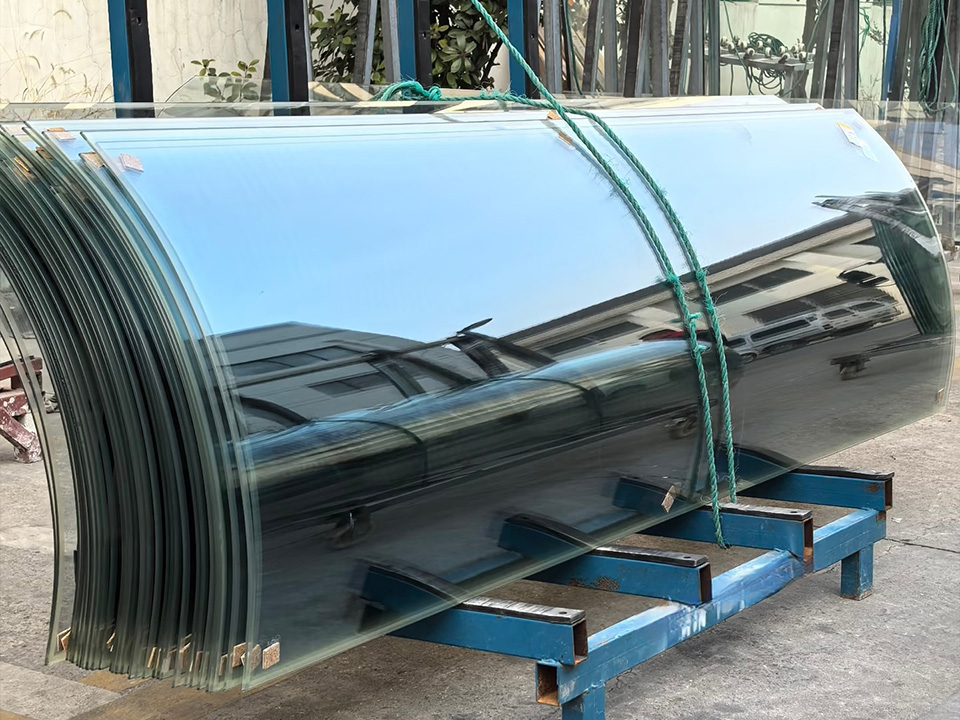
I will say it plainly. If you are selling jumbo glass and still treating packaging as a back-office afterthought, you are underpricing risk and overpromising reliability.
Build the packing spec into the quote. Match the crate or rack to the route. Engineer the unload before the truck moves. And if your next project involves bulk ceramic frit tempered glass for facade use, switchable privacy smart glass panels for home, 또는 custom safety fire-rated glass for home and shop, treat the packaging spec with the same seriousness as the glass spec itself.