Fabrico fiável de vidro para projectos industriais e arquitectónicos
Somos um fabricante líder de vidro sediado na China, especializado em soluções de vidro de alta qualidade para aplicações industriais e arquitectónicas. Com anos de experiência e certificação ISO, fornecemos cotações rápidas e personalizadas e um apoio reativo a profissionais de compras, engenheiros e gestores de projectos em todo o mundo.
Lynn Lee
Fundador
Fabrico fiável de vidro para projectos industriais e arquitectónicos
Somos um fabricante líder de vidro sediado na China, especializado em soluções de vidro de alta qualidade para aplicações industriais e arquitectónicas. Com anos de experiência e certificação ISO, fornecemos cotações rápidas e personalizadas e um apoio reativo a profissionais de compras, engenheiros e gestores de projectos em todo o mundo.
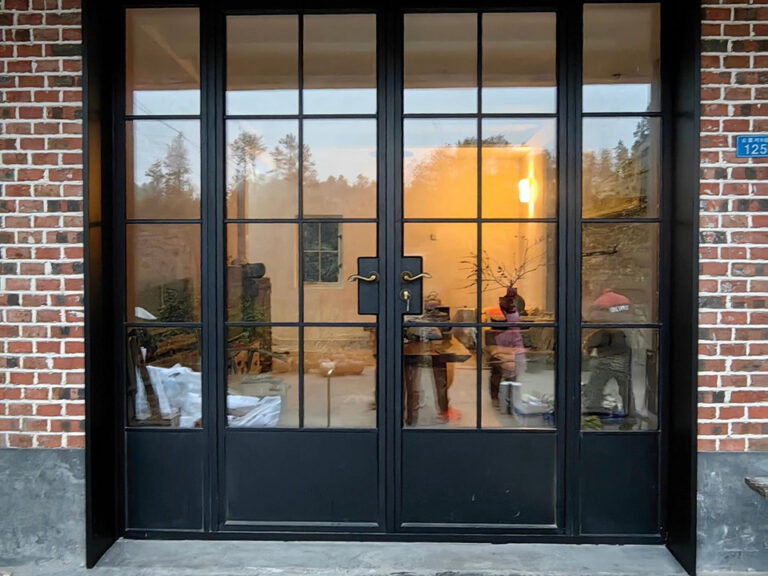
When Do Glazed Doors Need Mid-Rails for Hardware Support?
Glass lies beautifully. On drawings, a glazed door can look effortless, almost smug, but in the field it has to survive lever loads, closer geometry, panic hardware, lock prep, access-control trim, and the boring little code numbers that kill bad details for a living. Who pays for the “clean look” when the hardware has nowhere real to go?
I’ll be blunt. Glazed doors need mid-rails when the hardware needs structure in the working zone and the rest of the door assembly cannot honestly provide it, which is why the right answer is sometimes “yes, add a mid-rail,” and sometimes “no, what you actually need is a lock rail, bottom rail, patch fitting, or header system.” ASSA ABLOY’s glass-door guidance says rails can house closers, strikes, mag locks, and pivots, and it also warns that rails and patches come with inserts and hardware pockets that limit what you can do.
Índice
The blunt answer nobody likes
A mid-rail becomes necessary on glazed doors when the required hardware sits in the middle of the leaf, usually in the same zone where accessibility rules place operable parts, and that hardware cannot be carried safely by the stiles, top rail, bottom rail, or a purpose-built all-glass hardware package. Under ADA 404.2.7, door hardware has to sit 34 to 48 inches above finished floor, which means the “middle” of the door is not a stylistic accident; it is the place the project is already forcing you to work.
That is the hard truth. I see too many schedules that specify a mostly glass leaf, then drop a standard lockset, reader, electric latch retraction, and a closer onto it as if glass were a framing member, and then everyone acts shocked when the shop drawing grows metal in the center. Why would it not?
The four moments a mid-rail stops being optional
First: when your lock or lever lands in the ADA band and narrow stiles cannot carry the prep. A glazed leaf with slim framing can look sharp right until you ask it to support a latch, trim, cylinder, thumbturn, reader alignment, and repetitive abuse in the 34-48 inch zone. At that point, a lock rail or mid-rail is not visual clutter; it is the load path the original concept forgot to admit. ADA does not care about the architect’s purity. It cares that the operable hardware is usable, reachable, and positioned correctly.
Second: when exit hardware needs stiffness and cover. Special-Lite says its mid-rail strengthens the door, splits the glass area into two sections for easier replacement, and can conceal touch bar exit devices from exterior view; it offers mid-rails in 2-1/2, 4, 6-1/2, and 8 inch widths. That is not decorative language. That is a manufacturer spelling out exactly why mid-rails show up on heavily used glazed doors.
Third: when you are really specifying an all-glass entrance, not a conventional glazed leaf. This is where people use the wrong vocabulary. On true all-glass doors, the answer is often not a center mid-rail at all; it is a system of top and bottom rails, patch fittings, and headers. ASSA ABLOY says rails can house closers, strikes, mag locks, and pivots, while dormakaba’s glass-door rail and header literature describes headers built to house concealed closers and floating headers that can support overhead closers, magnetic locks, door stops, and pivots. That is a very different animal from casually dropping hardware onto bare glass.
Fourth: when the door is fire-rated. This is where bad opinions go to die. Fire-rated glazed doors do not automatically need an intermediate rail, but they do require total obedience to the tested and listed assembly. SAFTI’s GPX Architectural Series data for 20-45 minute fire protective aluminum framing shows 5 inch stiles, a 5-1/2 inch top rail, a 10 inch ADA-compliant bottom rail, hardware prep, and testing to UL 9, UL 10B, UL 10C, NFPA 252, and NFPA 80. Another SAFTI ballistic spec is even more revealing because it explicitly says “No intermediate rails required” for certain maximum door sizes, while also requiring continuous hinges. That is the lesson: when rails are not needed, the listing says so. When the listing is silent, you do not freestyle.
Fire-rated glazed doors are where fantasy gets expensive
This part matters more than designers admit. A listed fire door is a tested system, not a mood board, and once glazing, rails, hinges, hardware prep, and opening size have been tested together, your job is to stay inside that box unless the manufacturer and AHJ give you a lawful path out. SAFTI’s published data is very plain about this: door profile, bottom rail, glazing type, maximum single-door opening of 48 in. x 108 in., and maximum pair opening of 96 in. x 108 in. are all spelled out.
I have zero patience for the phrase “we’ll make the hardware work later” on rated openings. Later is where money burns. And yes, sometimes a rated glazed door can stay visually open without a center mid-rail. But only because the tested system already solved the support problem somewhere else. That is not minimalism. That is engineering.
ADA quietly dictates more of this than most teams admit
ADA is not asking whether your elevation looks refined. ADA is asking whether the user can actually reach, understand, and operate the door without gymnastics, and that reshapes the hardware zone on glazed doors in a very practical way. Section 404.2.7 places operable hardware 34 to 48 inches above finished floor; 404.2.8.1 requires a 5-second minimum sweep for closers from 90 degrees to 12 degrees from latch; 404.2.10 requires a 10 inch smooth push-side bottom surface on swinging doors, with a specific exception for tempered glass doors without stiles that have a bottom rail or shoe tapered at 60 degrees minimum; and 404.2.11 puts the bottom of at least one vision panel at 43 inches maximum above finish floor. That stack of rules is why the “middle” of a glazed door becomes a technical zone, not just empty transparency.
So when do glazed doors need mid-rails for hardware support? When ADA pushes the hardware into the middle band, and the door type you chose does not provide a better support strategy. That is the answer stripped of marketing.
What the recent record says, not the sales pitch
The industry keeps pretending these are abstract detailing debates. They are not. In the 2023 Bridgewater Apartments consent order, the defendants had to retrofit exterior-side primary entry door hardware so all ground-level units had lever hardware, and they also had to remove certain door closers on request where maneuvering space at the latch side was too tight. That is what happens when hardware, clearance, and real human use were never coordinated honestly in the first place.
And the stakes are not small anymore. The U.S. Census Bureau reported that the value of construction in 2024 reached $2.1544 trillion, with private nonresidential construction at $743.8 billion. When that much money is moving through submittals, pretending a glazed door’s support strategy is a “field adjustment” is not bold. It is lazy.
Even the fabrication side tells its own story. The Bureau of Labor Statistics put 2024 metal window and door manufacturing at 3.4 total recordable cases per 100 full-time workers, while ornamental and architectural metal products manufacturing came in at 3.5. I would not oversell one table, but I will say this: every dumb late-stage hardware change gets paid for by someone handling metal, glass, or both.
Where glass selection changes the hardware conversation
Specs drift. A team starts with a door question and ends up with a glass question, which is fine until nobody notices those are the same question in different clothes.
If you are pairing the leaf with project-spec tinted tempered glass ou decorative project glass for branded interiors, do not let the hardware schedule live in a different spreadsheet from the cutout schedule. Tinted, patterned, and decorative choices change what people can tolerate visually, but they do not change the support physics.
If the project is leaning on polished-edge flat tempered glass, then edge quality, hole location, and clamp or rail tolerances stop being shop trivia. They become the difference between a door that feels solid and one that starts telegraphing stress, slop, or misalignment six months after turnover.
And if the entry condition is more defensive, with blast mitigation glass for safety-focused openings, the idea that hardware support is “just an accessory issue” falls apart fast. Security glazing and retention thinking usually make the support conversation more disciplined, not less.
For thermally demanding frontages, especially when the entrance sits beside vidro economizador de energia com rebordo quente, coordinate rail depths, sightlines, and adjacent framing early. I have watched too many entrances look like they were value-engineered by three different people who never met.
A fast decision table for skeptical specifiers
Door condition
Mid-rail needed?
Better support answer
Porquê
Narrow-stile glazed swing door with lockset, reader, and trim in the 34-48 in. zone
Often yes
Lock rail or mid-rail
The hardware band is fixed by accessibility and the stile may be too slight for the prep
Fully glazed all-glass door with closer, mag lock, and pivots
Usually not a center mid-rail
Top/bottom rails, patches, header
True all-glass systems carry hardware through rails, patches, and headers
Medium-stile glazed door with touch bar exit device
Often yes
Mid-rail sized for exit hardware
Manufacturers use mid-rails to stiffen the door and conceal touch bar hardware
20-45 minute fire-rated glazed door
Only if listing allows or requires it
Follow listed assembly exactly
Rail sizes, glass type, opening size, and hardware prep live inside the tested system
High-traffic school, hospital, or multifamily common-area door
Frequently yes
Mid-rail or lock rail
Repetitive abuse and maintenance realities punish under-supported hardware
The code, product, and hardware logic behind that table comes straight from ADA 404.2.7-404.2.11, SAFTI’s listed fire-door data, Special-Lite’s mid-rail guidance, and major glass-door hardware manufacturers’ notes on rails, patches, and headers.
FAQs
Do glazed doors always need mid-rails? No. A glazed door needs a mid-rail only when the required hardware, access-control prep, exit device, or rated assembly cannot be properly supported by the stiles, top or bottom rails, patch fittings, or header while still meeting code, listing, and usable hardware-height rules. On true all-glass doors, rails or headers often solve the problem instead.
Is a lock rail the same as a mid-rail? Not exactly. A lock rail is a horizontal member positioned to receive locking hardware in the working zone, while a mid-rail is a broader intermediate rail that may stiffen the leaf, divide the glass, support hardware, or conceal exit devices depending on the door system and manufacturer vocabulary.
Can panic hardware go on a fully glazed door without a mid-rail? Yes, sometimes. Fully glazed doors can carry panic or access hardware through purpose-built rails, patches, and header systems, but the support method has to match the manufacturer’s hardware pockets, rail design, pivot strategy, door weight, and any tested limitations instead of being invented in the field.
Do fire-rated glazed doors need special hardware support? Yes. Fire-rated glazed doors require hardware support that stays inside the tested and listed assembly, so rail sizes, glazing type, hinge choice, door size, prep details, and any intermediate rail condition must track the manufacturer listing and the applicable fire-door code path rather than design preference.
If I were reviewing this spec package, I would ask one question before approving the door schedule: where, exactly, is the hardware load being carried? Answer that early, and the right glazed door detail usually reveals itself. Dodge it, and the mid-rail will show up later anyway, only uglier and more expensive.