Endüstriyel ve mimari uygulamalar için yüksek kaliteli cam çözümleri konusunda uzmanlaşmıştır.
Yıllara dayanan deneyimimiz ve ISO sertifikamızla, dünya çapındaki tedarik uzmanlarına, mühendislere ve proje yöneticilerine hızlı, ihtiyaçlarına özel teklifler ve anında yanıt veren destek sunuyoruz.
Çin merkezli önde gelen bir cam üreticisiyiz,
Endüstriyel ve mimari uygulamalar için yüksek kaliteli cam çözümleri konusunda uzmanlaşmıştır.
Yıllara dayanan deneyimimiz ve ISO sertifikamızla, dünya çapındaki tedarik uzmanlarına, mühendislere ve proje yöneticilerine hızlı, ihtiyaçlarına özel teklifler ve anında yanıt veren destek sunuyoruz.
Insulated Glass Types, Installation, and How to Buy
The performance comes from the assembly—two or three lites, a dehydrated sealed cavity, spacer, desiccant, primary and secondary edge seals—and from a frame and installation detailed well enough to preserve what the factory built.
So why do so many quotations say only “double glazed”?
Because vague specifications are convenient. They let sellers substitute a cheaper coating, ordinary aluminum spacer, air instead of argon, thinner glass, or a warranty that covers the replacement unit but not freight, removal, or installation. The invoice still says insulated glass. The building gets something else.
My blunt view: “double-pane” is a pane count, not a performance specification.
What Is Insulated Glass? Start With the Assembly
Insulated glass is a factory-sealed unit made from at least two glass panes separated by one or more dry cavities. It is also called an insulating glass unit, IGU, sealed glass unit, double glazing, or double-pane glass.
A conventional double-pane IGU contains:
An exterior lite exposed to weather
An interior lite facing the occupied room
A hollow or solid spacer controlling cavity width
Desiccant that absorbs residual moisture
Dry air, argon (Ar), or krypton (Kr) inside the cavity
A primary vapor seal, commonly polyisobutylene
A secondary structural seal, commonly silicone, polysulfide, or polyurethane
The cavity slows conduction and convection. A low-emissivity coating reduces long-wave infrared heat transfer. Gas fill improves the cavity’s thermal resistance. The spacer and edge seals hold everything together while trying—sometimes unsuccessfully—to keep water vapor out.
That distinction matters: the IGU is only the glass component. The frame, sash, gaskets, hardware, drainage, perimeter flashing, and wall connection determine how the complete window behaves.
In fact, the final ENERGY STAR Version 7.0 specification states that components may not carry the ENERGY STAR label. A loose custom IGU is therefore not automatically an “ENERGY STAR IGU”; certification applies to an assembled window, door, or skylight with NFRC-rated performance.
The 2023–2024 Data Exposes the Real Stakes
The U.S. Department of Energy’s June 2023 High-R Windows field-validation briefing estimated that thermal losses and gains through windows account for roughly 25% of building HVAC consumption. It also calculated 2.3 quadrillion Btu of annual technical savings potential for high-R residential window solutions—1.30 quadrillion Btu from heating and 0.94 from cooling.
Those are modeling estimates, not guaranteed savings for one building. Still, they show why glazing specifications deserve more scrutiny than paint colors and handle finishes.
EPA’s ENERGY STAR Version 7.0 became effective on October 23, 2023. Using RESFEN 6.0 modeling, the agency estimates that replacing single-pane windows with certified products can reduce household heating and cooling bills by an average of up to 13% nationwide.
Up to. Not always.
Orientation, climate, window area, frame quality, air leakage, shading, HVAC efficiency, and installation workmanship can erase or amplify the result. Anyone promising an exact 20% reduction from glass alone is selling certainty that building physics does not provide.
There is also an outdated sales pitch still circulating. The federal Section 25C rules available during 2023–2025 allowed a credit equal to 30% of qualifying exterior-window costs, capped at $600 in total, while excluding installation labor. That program ended for improvements placed in service after December 31, 2025 under the published IRS rules. Do not let a 2026 quotation quietly include an expired credit in its payback calculation.
Insulated Glass Types Compared
The best insulated glass for windows depends on climate, elevation, orientation, framing capacity, appearance, safety rules, noise exposure, and budget. “More panes” is not always the right answer.
Insulated glass type
Typical construction
En iyi uyum
Ana avantaj
What buyers often miss
Clear double-pane IGU
Two clear lites, dry-air cavity
Mild climates and budget-led projects
Lowest initial cost
Limited solar control and weaker thermal performance than low-E gas-filled units
Low-E argon double-pane
Two lites, protected low-E coating, argon cavity
Most residential and commercial windows
Strong cost-to-performance balance
Coating product, coated surface, gas-fill percentage, and spacer still need specification
Triple-pane low-E IGU
Three lites, two cavities, one or two low-E coatings
“Double-pane” alone does not establish an STC or OITC rating
Solar-control IGU
Tinted, reflective, fritted, or solar-control low-E glass
Hot climates and high-exposure façades
Lower solar heat gain
Darker glass can reduce daylight and create thermal-stress concerns
Vacuum insulating glass
Two closely spaced lites with a vacuum cavity and micro-supports
Thin retrofits and specialty high-performance work
High insulation in a slim build-up
Edge conduction, visible support dots, dimensions, availability, and cost require scrutiny
Annealed, heat-strengthened, tempered, and laminated describe strength or post-breakage behavior—not insulation. Low-iron describes optical clarity. None of those treatments replaces a low-E coating, gas cavity, or thermally improved spacer.
For storefronts, façades, and display glazing where green edge tint is objectionable, low-iron flat tempered glass can improve color neutrality while satisfying an appropriate safety-glazing specification. It does not, by itself, lower the U-factor.
Noise is another trap. A symmetrical 6 mm / 12 mm / 6 mm IGU may perform poorly at certain coincidence frequencies. I generally prefer an asymmetric build-up with a laminated lite when sound control matters; clear acoustic laminated glass for commercial spaces is a more relevant starting point than simply adding another identical pane.
And privacy? That is an optical-control requirement, not a thermal one. Switchable privacy smart glass panels can be integrated into selected laminated or IGU constructions, but the wiring exit, busbar position, controller, edge protection, heat load, and replacement access must be designed before fabrication.
Read the Ratings Before You Read the Brochure
Most buyers compare the wrong number.
U-factor measures heat transfer through a window assembly in Btu/h·ft²·°F. Lower is better. But a center-of-glass U-factor excludes the weaker frame and glass-edge conditions, so it will normally look better than a whole-window NFRC value.
SHGC, or Solar Heat Gain Coefficient, measures the fraction of incident solar heat entering the building. It runs from 0 to 1. Lower SHGC generally helps in hot, sunny climates; a higher value may support useful winter solar gain in a cold climate.
Visible Transmittance, or VT, describes how much visible light passes through. Lower SHGC does not automatically mean dark glass, although aggressive solar-control coatings can alter color, reflectance, and daylight.
Air leakage belongs to the complete fenestration system. The glass unit cannot compensate for a leaky sash or badly sealed frame-to-wall joint.
As a U.S. residential reference, ENERGY STAR Version 7.0 established these whole-window prescriptive limits:
Northern: U-factor ≤ 0.22 and SHGC ≥ 0.17
North-Central: U-factor ≤ 0.25 and SHGC ≤ 0.40
South-Central: U-factor ≤ 0.28 and SHGC ≤ 0.23
Southern: U-factor ≤ 0.32 and SHGC ≤ 0.23
Window air leakage: ≤ 0.3 cfm/ft²
These are certification thresholds, not universal project specifications. Commercial curtain walls, storefronts, skylights, doors, overseas projects, and site-built systems may be governed by different codes and test methods.
For North American procurement, I look for applicable evidence under NFRC 100 and NFRC 200 for complete products, ASTM E2190 or IGCC certification for IGU durability, ASTM C1048 for heat-treated glass, ASTM C1172 for laminated glass, and ANSI Z97.1 or 16 CFR 1201 where safety glazing is required. EN 1279 is a common insulating-glass reference in European specifications.
A logo is not evidence. Ask for the certificate, scope, model, tested size, issuing body, and expiration status.
Choose the Best Insulated Glass for the Actual Exposure
For a cold-climate bedroom, low U-factor, warm-edge performance, interior-surface temperature, and air leakage may dominate. Triple-pane glass can improve comfort near the window even when the utility-bill payback looks slow.
For a west-facing office in Phoenix, low SHGC usually matters more than squeezing out the final hundredth of U-factor. Late-afternoon solar gain is brutal. Interior blinds arrive too late because the heat has already crossed the glass.
For a street-facing hotel, the acoustic target should be expressed as STC or, preferably for traffic and aircraft noise, OITC. Ask for laboratory data for the exact or technically comparable build-up. A generic “acoustic glass” label proves very little.
For a high-end retail façade, low-iron substrates, coating color, exterior reflectance, roller-wave distortion, heat-treatment marks, ceramic-frit consistency, and batch uniformity may matter as much as thermal performance.
For doors, bathrooms, areas near walking surfaces, guards, and other hazardous locations, safety-glazing rules can dictate tempered or laminated glass. Local code review comes first. Guessing from a product photo is reckless.
Insulated Glass Installation Is Mostly Edge Management
The center of an IGU is rarely where installation begins to fail. The vulnerable area is the perimeter, where glass, spacer, sealants, setting blocks, gaskets, drainage, frame movement, and weather exposure meet.
Before installation, verify:
Width, height, diagonal dimensions, thickness, pane build-up, coating orientation, safety marks, spacer color, and unit identification.
Chips, scratches, edge damage, seal discontinuities, contamination inside the cavity, or excessive bow.
Frame drainage paths, weep holes, glazing pockets, gasket condition, bite, edge clearance, and compatibility with the specified unit.
Project elevation against the IGU’s manufacturing elevation. Large altitude differences can create pressure-induced bow, seal stress, or glass breakage.
Manufacturer-approved sealants and setting-block materials. Chemical incompatibility can attack an edge seal or laminated interlayer.
Then support the unit on correctly sized, compatible setting blocks; center it without hard glass-to-metal contact; maintain drainage; engage gaskets or glazing beads evenly; and apply approved perimeter seals without trapping water.
Simple enough? It is not.
Large or heat-treated units are heavy, sharp, and capable of sudden breakage. Structural silicone glazing, overhead glass, guard glazing, fire-rated assemblies, hurricane systems, and high-rise façades require engineered details and qualified installers. A generic bead of field-applied silicone is not a substitute for a tested system.
And never block the weep path. I have seen buyers blame the IGU factory for fogging when the real failure began with water held permanently against the edge seal.
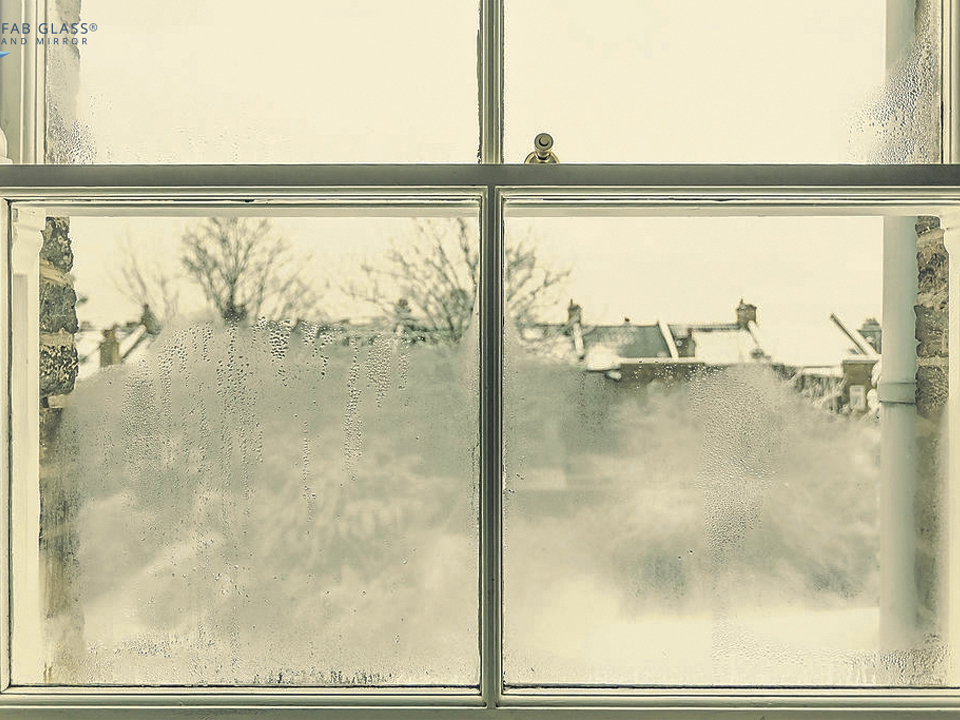
Surface condensation also needs diagnosis. Moisture between panes points toward loss of seal integrity. Condensation on the room-side surface may indicate high indoor humidity or a cold interior glass temperature. Exterior condensation can occur when high-performing glass keeps the outer lite colder. These are three different conditions.
How to Buy Insulated Glass Without Buying a Dispute
Start with a written request for quotation. Screenshots, voice messages, and “same as last time” are not specifications.
A professional IGU request should state:
Project name, location, building type, orientation, and installation elevation
Unit width × height, quantity, shape, and drawing reference
Exterior and interior lite thicknesses
Annealed, heat-strengthened, tempered, heat-soaked, or laminated treatment
Low-E manufacturer, coating code, and coated surface
Cavity width and number of cavities
Air, argon, or krypton fill and minimum initial fill percentage
Spacer material, color, profile, and warm-edge requirement
Primary and secondary sealant system
Overall IGU thickness
Required U-factor, SHGC, VT, STC, OITC, or other performance value
Applicable ASTM, ANSI, CPSC, NFRC, IGCC, EN, or local standards
Edge deletion, frit, grids, holes, notches, shapes, or stepped edges
Dimensional and visual-quality tolerances
Packaging, crate design, labeling, spare-unit quantity, and delivery sequence
Warranty term and exclusions
Incoterm, freight responsibility, insurance, breakage procedure, and replacement lead time
A usable example might read:
48 units, 1200 × 1800 mm, 6 mm clear heat-strengthened outboard lite with solar-control low-E on surface #2 / 14 mm black warm-edge spacer with minimum 90% initial argon fill / 6 mm clear tempered inboard lite; 26 mm overall; dual-seal construction; project elevation 850 m; dimensions and edge deletion per approved shop drawings.
That sentence will produce a more comparable quotation than ten pages of marketing language.
For standard and specialty builds, factory-direct custom insulating glass units can be reviewed against the opening schedule, coating, spacer, gas-fill, sealant, safety, and delivery requirements. If the project also needs holes, notches, CNC shapes, polished edges, or hardware cutouts, coordinate those details through custom project glass fabrication before heat treatment or assembly. Tempered glass cannot be safely cut or drilled afterward.
Compare Landed Cost, Not the Attractive Unit Price
The cheapest square-foot rate often wins the spreadsheet and loses the project.
Consider a hypothetical 400 ft² order. Supplier A quotes $30/ft² ex works, or $12,000. Add $1,400 for export crates, $3,600 freight, $900 brokerage and import charges, plus a 4% breakage allowance worth $480. The landed glass cost becomes $18,380, or $45.95/ft², before installation.
Supplier B quotes $38/ft² delivered, or $15,200. It looked 27% more expensive at first. It is actually $3,180 cheaper in this example.
Those figures are an illustration, not a market price. Size, thickness, tempering, lamination, low-E coating, spacer technology, gas, shape, holes, heat soaking, testing, quantity, destination, crate utilization, tariffs, and replacement terms can move the result sharply.
Normalize every bid into five buckets:
Fabricated glass
Testing and documentation
Packaging and spares
Freight, insurance, duties, and delivery
Installation, access equipment, sealants, and disposal
Then read the warranty. A 20-year material-only warranty that excludes freight, labor, access equipment, consequential damage, and international replacement shipping may be worth less than a ten-year warranty with clear replacement obligations.
The Failure Modes Sellers Prefer Not to Discuss
Seal failure receives the attention, but it is not the only risk.
Glass breakage can result from impact, edge damage, frame contact, thermal stress, nickel-sulfide inclusions in tempered glass, excessive wind load, pressure differentials, or incorrect support. Heat soaking may reduce—not eliminate—the risk of spontaneous tempered-glass breakage.
IGU bow or “pillowing” can distort reflections when barometric pressure, temperature, cavity pressure, and installation elevation differ. Wider, thinner units tend to show the effect more readily.
Low-E coatings can create slight color variation. Tempered glass can show roller wave, bow, and anisotropy under polarized light. Laminated glass can display interlayer haze or edge effects. None should be accepted without agreed visual criteria, viewing distance, lighting conditions, and tolerances.
Gas loss is usually invisible. Fogging is late-stage evidence that moisture has entered and the desiccant is saturated; it is not a practical gas-fill test.
This is why I ask for batch traceability, production records, gas-fill verification method, sealant compatibility statements, applicable certification, and a written nonconformance process. Trust is pleasant. Documentation travels better.
Frequently Asked Questions About Insulated Glazing
What is insulated glass?
Insulated glass is a factory-sealed glazing assembly made from two or more panes separated by a spacer, with a dry-air or inert-gas cavity and continuous edge seals that reduce heat transfer, surface condensation, and outside-noise transmission compared with a single monolithic pane.
It may incorporate low-E coatings, tempered or laminated lites, warm-edge spacers, argon, krypton, tint, ceramic frit, decorative grids, or smart-glass layers.
What is the best insulated glass for windows?
The best insulated glass for windows is the lowest whole-window U-factor and climate-appropriate SHGC that the frame, budget, orientation, safety rules, and project details can support; in many homes that means low-E, argon-filled double-pane glass, while colder climates or premium comfort targets may justify triple-pane construction.
Do not choose from pane count alone. Compare certified whole-product ratings and confirm the precise glass build-up supplied.
Can only the failed insulated glass unit be replaced?
An insulated glass unit can often be replaced without replacing the entire window when the sash or frame remains square, dry, mechanically sound, and compatible with the new unit; failed edge seals, fogging between panes, or broken glass alone do not automatically require full-frame replacement.
A glazing professional should inspect drainage, glazing pockets, gaskets, sash condition, hardware, and dimensional tolerances before ordering the replacement.
How long does an insulated glass unit last?
An insulated glass unit is generally a multi-decade component whose actual service life depends less on a marketing number than on edge-seal chemistry, manufacturing quality, drainage, solar exposure, altitude, frame movement, glazing compatibility, and installation workmanship, so the written warranty is more useful than a generic lifespan claim.
Compare what the warranty pays for, who diagnoses failure, whether freight and labor are covered, and how replacement units are obtained.
Does double-pane glass block noise?
Double-pane glass is an insulating assembly that can reduce some sound transmission, but it is not a complete soundproofing system; strong acoustic performance usually requires asymmetric pane thicknesses, a wider cavity where design permits, laminated glass with an acoustic interlayer, airtight frames, and careful perimeter sealing.
Request an STC or OITC report for the proposed construction. OITC is often more informative for low-frequency road, rail, and aircraft noise.
How should insulated glass be measured?
Measuring for insulated glass means documenting the exact visible opening, glass edge-to-edge width and height, overall unit thickness, spacer width, frame pocket, required edge clearance, and pane build-up, then confirming those dimensions against the manufacturer’s tolerances before any irreversible fabrication begins.
Do not estimate thickness from the visible spacer alone. Remove glazing beads or obtain original drawings when necessary, and have the final dimensions verified by the party accepting measurement liability.
Can insulated glass be installed as a DIY project?
Insulated glass installation is the controlled placement of a sealed, heavy, breakable unit into a compatible drained frame using specified clearances, setting blocks, gaskets, sealants, retainers, and safety procedures, which means small accessible units may appear straightforward but large, overhead, structural, or safety-glazing applications require qualified professionals.
Manufacturer instructions and local codes control. Poor handling can injure the installer, damage concealed glass edges, obstruct drainage, void the warranty, or create delayed failure.
Buy the Specification, Not the Sales Pitch
Send suppliers the opening schedule, drawings, project elevation, glass build-up, performance targets, standards, packaging requirements, destination, and warranty expectations. Then demand a line-by-line compliance statement.
That changes the conversation. Instead of asking, “How much is double-pane glass?” you are asking whether a factory can manufacture, verify, pack, and replace the exact assembly your project needs.
Ready to price the project? Submit the dimensions, quantities, glass make-up, coating, spacer, gas-fill, safety, acoustic, and delivery requirements for a buildable insulated glass quotation.