We are a leading glass manufacturer based in China,
Specializing in high-quality glass solutions for industrial and architectural applications.
With years of experience and ISO certification, we provide fast, tailored quotes and responsive support for procurement professionals,engineers, and project managers worldwide.
We are a leading glass manufacturer based in China,
Specializing in high-quality glass solutions for industrial and architectural applications.
With years of experience and ISO certification, we provide fast, tailored quotes and responsive support for procurement professionals,engineers, and project managers worldwide.
Tempered and Heat-Strengthened Laminated: Where They Fit Best
I’ve watched too many teams write “tempered laminated” as if the word tempered automatically means better, then act surprised when the real debate shows up later in the job file: residual strength, fragment retention, nickel sulfide exposure, point-fix stresses, overhead risk, and whether the lite still behaves after the first crack instead of before it. Why do we still pretend those are side issues?
San Francisco did not tighten façade oversight because somebody in a code office got bored. In December 2023, its Department of Building Inspection said broken glass had been reported from seven high-rises after the March 2023 storms, and the WJE investigation found 30 breakages likely tied to issues that could have been identified and mitigated earlier; that is not bad luck, that is a warning label for lazy glazing decisions.
My view is simple. If the glass must take a hard human-impact event, pass a safety-glazing trigger cleanly, or survive abuse at a rail line, tempered laminated is often the safer argument. If the glass must stay readable, hang together, and keep some post-breakage dignity in overhead or point-supported work, heat-strengthened laminated often gives the more defensible answer. Is that less flashy than one-size-fits-all specifying? Yes. Is it more honest? Also yes.
Table of Contents
Where tempered laminated earns the spec
When the governing problem is direct human impact, I usually want tempered laminated near the front of the conversation, not the back, because the 2024 IBC framework for guards and handrails treats laminated tempered and laminated heat-strengthened glazing as the two structural options that remain acceptable under all installation conditions, while single-layer tempered is pushed into narrower exceptions. The same 2024 changes also spell out the design stress caps for guards: 3,000 psi for heat-strengthened glass and 6,000 psi for fully tempered glass, with the underlying guard loads still tied to a 200-pound concentrated load and 50 pounds per linear foot through ASCE 7.
That matters in the real world because railings are not theory labs. They get kicked, leaned on, slammed with carts, hit by bodies, and specified by people who love transparency but hate callbacks, which is exactly why I get nervous when teams start from monolithic habits or default to oversized lites like jumbo tempered glass panels without first asking whether the assembly has quietly crossed into guard, infill, or fall-protection territory.
I also think tempered laminated is easier to defend in premium guard systems where abuse load and impact classification are both live issues, especially in hospitality, retail, transit, and school projects where nobody should be pretending “unlikely impact” is a serious design assumption. The code language is moving the same way: all panes in multipane assemblies located in hazardous locations now need to be safety glazing, a clarification pushed by reports of assemblies with non-complying annealed center panes hidden behind compliant outer panes.
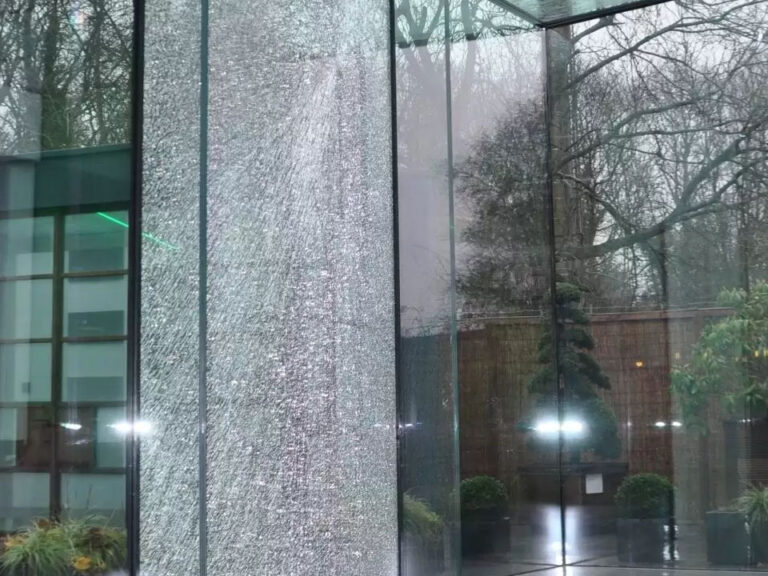
But here is the catch. Tempered laminated is not magically immune to embarrassment, and anyone who has spent time around tower façades knows it. San Francisco’s 2023-2024 inspection response singled out glass failures, spandrel issues, and even nickel sulfide-related spontaneous breakage risk in tempered glass, which is why I’d rather see a disciplined spec built around heat-soaked tempered glass supply than a vague note about “manufacturer standard practice.”
Where heat-strengthened laminated is usually the smarter bet
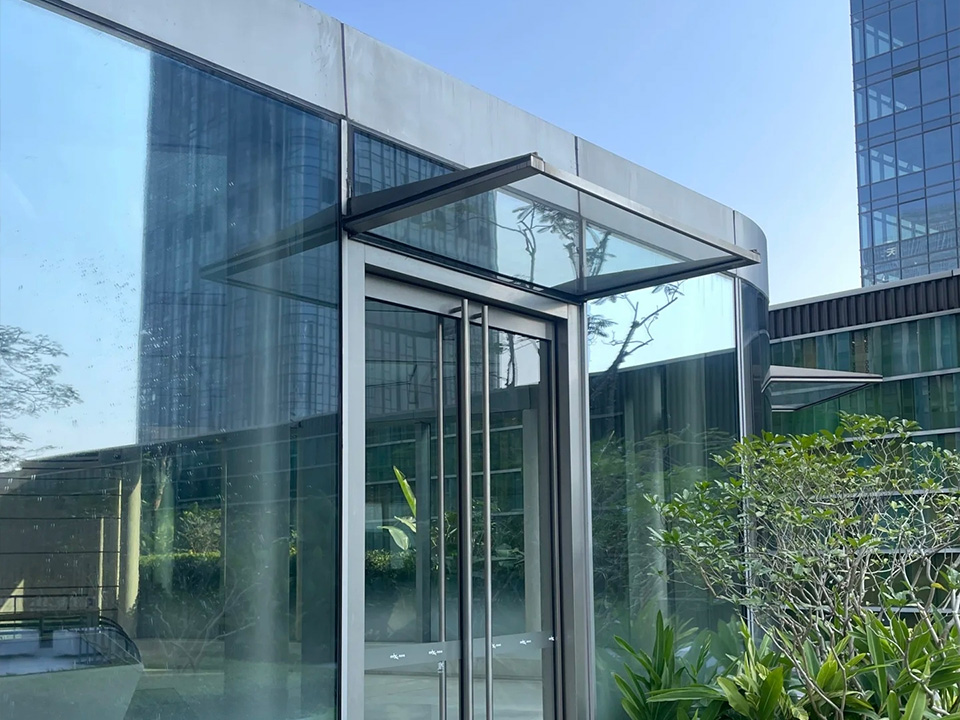
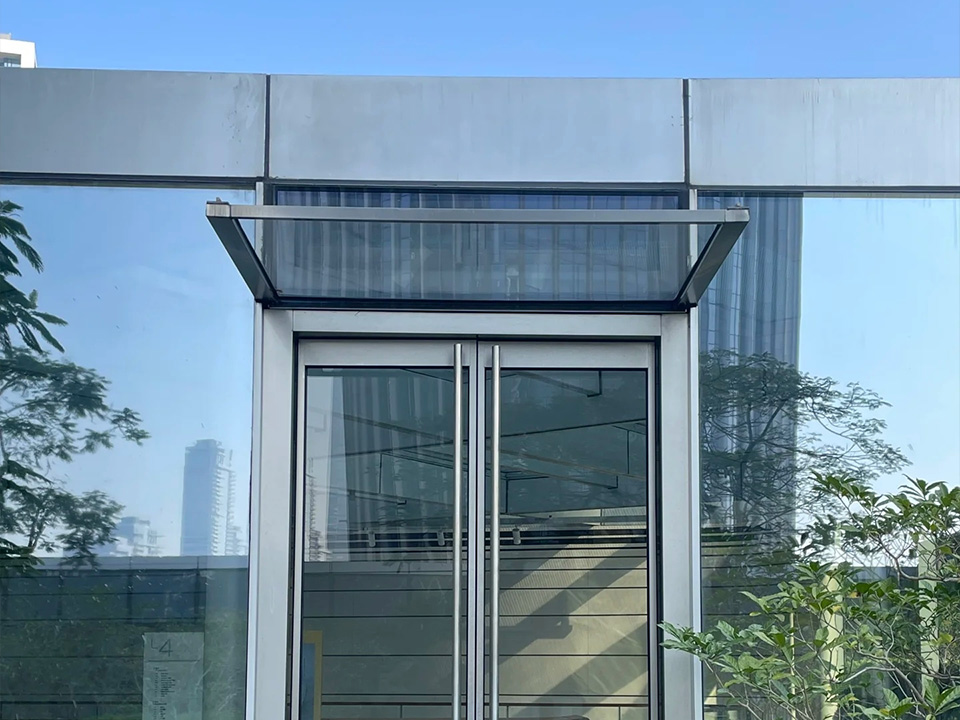
This is where a lot of spec writers get stubborn, because heat-strengthened laminated does not sound as tough on paper, yet on overhead glazing, sloped glazing, canopies, skylights, and point-fixed systems, I often trust its breakage behavior more than I trust tempered laminated’s theatrics after failure. Want the glass to crack and still behave like part of a system instead of confetti with branding?
A 2024 experimental paper on post-fracture laminated glass with bolted connections is blunt enough for me: thermally toughened specimens showed very low residual resistance after full fracture, with absolute maximum force values 23 to 43 times lower than unfractured specimens and about 3.3 times lower than the annealed-glass specimens used in the same study’s comparison; the authors then state the practical advantage of heat-strengthened glass is its annealed-like breakage pattern paired with higher strength. That is the sentence too many sales sheets do not want sitting in the middle of the meeting.
So when the brief is “keep the lite in the opening, preserve post-breakage integrity, control fallout, and survive a cracked state long enough for the assembly to remain safe,” I lean heat-strengthened laminated unless a specific safety-glazing trigger or abuse scenario forces me elsewhere. That is especially true on point-supported or bolted systems, where the first crack is not the end of the story; it is the start of the expensive part.
The code angle backs that up. The 2024 change summaries for sloped glazing say heat-strengthened and fully tempered monolithic glazing need screens below the full area, and the same logic extends to multiple-layer systems when those glass types are used as the bottom lite; separate exceptions then carve out limited residential cases, including laminated glass with a 15-mil (0.38 mm) PVB or equivalent interlayer in certain dwelling-unit conditions. That is not a broad commercial free pass, and I wish more people would stop reading it like one.
This is also where make-up discipline matters more than brochure language. On façade packages that need solar control, I would rather start from project-spec solar control coated glass and decide, early, whether the laminated ply should be heat-strengthened, what the interlayer should be, and whether the coating location complicates the thermal treatment path, instead of letting value engineering dismantle the logic one substitution at a time.
And no, I do not buy the argument that heat-strengthened laminated is somehow “too conservative” for visible design work. I’ve seen it do exactly what good glass should do in overhead and enclosure applications: fail less dramatically, stay more coherent, and reduce the chance that the public experiences your specification as weather. That is not romance. That is liability control.
The code traps and injury signals people ignore
The federal safety standard in 16 CFR Part 1201 was built around very ugly injury patterns, including lacerations, tendon and muscle damage, nerve injury, and incidents involving glazed doors, panels, bathtub enclosures, and shower doors; the rule’s findings estimate roughly 190,000 injuries associated with covered architectural glazing products in the United States at the time the standard was established, which tells you how serious the injury problem was before safety glazing became baseline thinking.
That injury story never really disappeared; it just changed scale. Consumer Reports said in 2023 that shower and tub doors were linked to more than 300 injuries in its analysis of CPSC data, which is one more reason I roll my eyes when people talk about glazing choices as if they are mostly aesthetic. They are not. They are body-contact products.
So here is my hard rule: if the job is a straightforward shower enclosure, clear tempered shower glass is usually the sane baseline and laminated glass is often needless cost unless you have a project-specific containment, acoustic, or risk brief that justifies the upgrade. But if the job is a guard, canopy, overhead lite, point-fixed wall, or façade zone with fallout consequences, I stop treating those products as cousins. They are not cousins there. They are different answers.
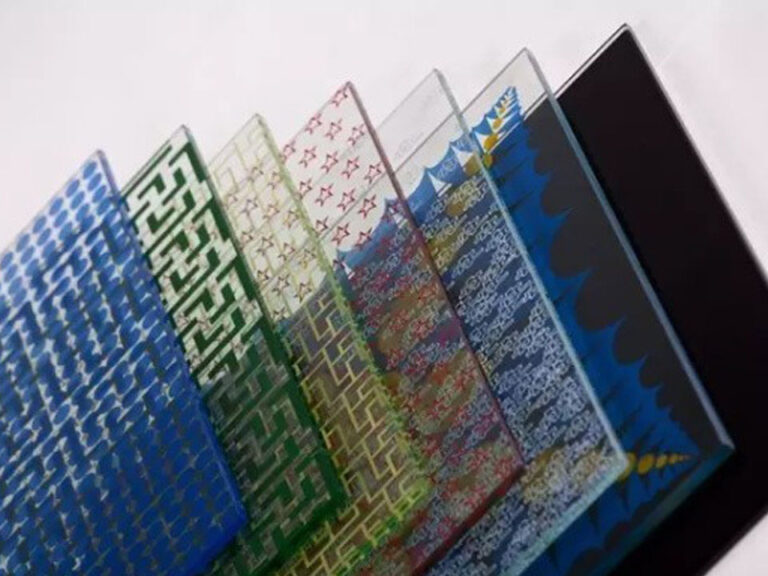
And privacy glass does not get a free pass either. A designer might start with fluted pattern glass for privacy-focused applications for the look, but the second that panel becomes a guard, enclosure edge, or overhead element, the pattern stops being the decision-maker; thermal treatment, lamination build, interlayer chemistry, support condition, and fallout risk take over.
Tempered vs heat-strengthened laminated at a glance
Here’s the version I’d put on the wall in every glazing coordination room.
Decision point
Tempered laminated
Heat-strengthened laminated
My call
Human-impact zones
Strong fit where clear safety-glazing compliance and abuse resistance are driving the choice
Can also qualify in many assemblies, but not always my first instinct where violent impact is the main concern
Edge to tempered laminated
Guards and railings
Good fit, especially for higher-abuse conditions
Also code-recognized and often overlooked
Depends on abuse level and post-breakage priority
Overhead glazing
Can work, but breakage pattern is less forgiving after failure
Usually the better bet when retention and fallout control matter
Edge to heat-strengthened laminated
Point-fixed / bolted systems
Higher intact strength, but fractured behavior can get messy
Better residual behavior logic in many structural concepts
Edge to heat-strengthened laminated
Nickel sulfide exposure
Live issue in tempered glass; heat-soak is a common risk-management move
Lower concern profile than tempered
Edge to heat-strengthened laminated
Large architectural façades
Useful where safety glazing and impact drive the spec
Useful where post-breakage coherence and fallout control drive the spec
Decide by failure mode, not habit
Cost and procurement psychology
Often chosen because teams think “tempered = safer”
Often dropped too early because teams underestimate retained performance value
Don’t let purchasing pick the physics
The guard-load limits, multipane safety-glazing clarification, screening rules, and post-fracture performance signals behind that table come straight out of the 2024 code summaries, structural commentary, and the 2024 experimental paper.
FAQs
What is the difference between tempered laminated glass and heat-strengthened laminated glass?
Tempered laminated glass is a laminated safety assembly made with fully tempered plies that offer higher intact strength and smaller fracture particles, while heat-strengthened laminated glass uses lower-stress heat-treated plies that generally break in larger, more coherent fragments and can deliver better post-breakage behavior in certain structural conditions. In practice, I treat the first as the stronger impact-first option and the second as the steadier retention-first option.
Where should tempered laminated glass be used?
Tempered laminated glass is best defined as laminated glass used where safety-glazing compliance, direct human impact, and higher abuse exposure are the leading design problems, including many guards, balustrades, doors, sidelites, and heavily trafficked public-facing assemblies where intact strength and impact classification carry real weight. I usually start there for retail rails, school barriers, airport zones, and hospitality edges that get hit, leaned on, and tested by the public every day.
Why is heat-strengthened laminated often preferred for overhead glazing?
Heat-strengthened laminated glass is a laminated assembly built to favor more controlled fracture morphology and retained integrity after cracking, which makes it especially attractive in overhead, sloped, canopy, skylight, and point-supported work where fallout risk and residual behavior matter as much as, or more than, the pre-break strength number. That is why I keep pushing it in overhead specs: once the lite breaks, coherence matters more than swagger.
Is laminated glass required for railings and guards?
Laminated glass for railings and guards is the code-centered baseline because the current IBC treatment for structural glass guards recognizes laminated fully tempered and laminated heat-strengthened glass as the general acceptable options, while single-layer tempered glass is limited to narrower cases where the risk below is controlled. If someone tries to sell you monolithic thinking for a true guard application, slow the meeting down.
If I were reviewing this spec package with you, I’d ask four things before I approved one word of the glass schedule: Is this an impact problem, a fallout problem, a post-breakage problem, or a procurement problem pretending to be engineering? Send the opening type, support condition, interlayer target, and exposure profile, then build the answer around that instead of around habit.