We are a leading glass manufacturer based in China,
Specializing in high-quality glass solutions for industrial and architectural applications.
With years of experience and ISO certification, we provide fast, tailored quotes and responsive support for procurement professionals,engineers, and project managers worldwide.
We are a leading glass manufacturer based in China,
Specializing in high-quality glass solutions for industrial and architectural applications.
With years of experience and ISO certification, we provide fast, tailored quotes and responsive support for procurement professionals,engineers, and project managers worldwide.
Condensation Risk in High-Performance Low-E Window Packages
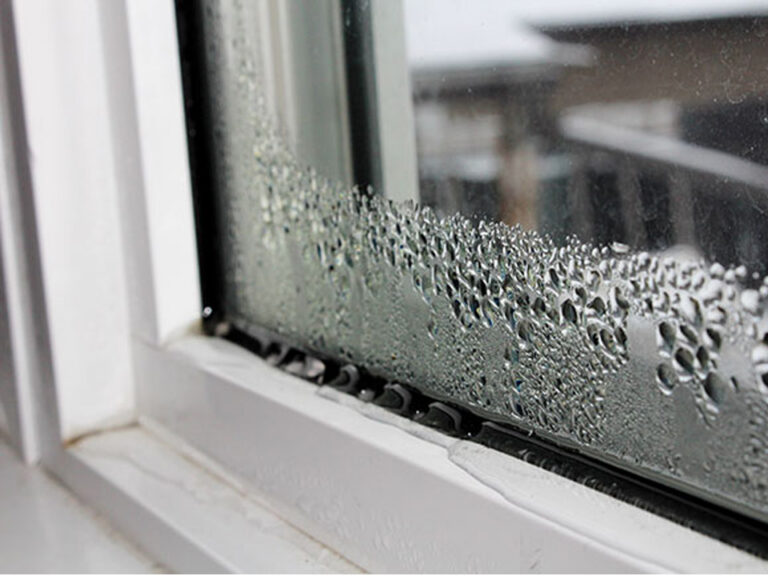
I’ve seen this movie before, and it always starts the same way: someone buys a premium low-E package because the center-of-glass numbers look slick on a cut sheet, the rep throws around “high performance” like confetti, and then—once winter really bites—the perimeter of the lite starts sweating and everybody suddenly wants to pretend dew point is some mysterious act of sabotage. It isn’t. Physics. Still. The real trigger for window condensation is brutally simple: when the coldest interior-facing surface in the assembly falls below the dew point of the surrounding air, water shows up, and then the blame game begins. Want the ugly version? ASHRAE has already said humidifying cold-climate buildings up into the commonly cited 40%–60% RH range can create condensation on windows and inside the enclosure. That’s not a theory.
But here’s what bothers me. People keep talking about low-E glass as if the coating itself somehow “causes” condensation, when the package usually fails for much more boring reasons—cheap spacer bar, lousy frame section, sloppy install, humid interior air, or all four at once. From my experience, that’s the industry’s favorite trick: oversell the sexy coating stack, under-explain the edge conditions. And the edge is where the bodies are buried.
Table of Contents
Low-E glass isn’t the problem. Half-baked specs are.
Here’s the part most brochures mumble through. The U.S. Department of Energy says windows with low-e coatings typically cost about 10% to 15% more than regular windows, and they can cut energy loss by as much as 30% to 50%; the same DOE guidance also points buyers toward spacers, gas fills, frame materials, and the overall NFRC label because those parts affect the whole unit—not just the headline metric. That’s why I don’t look at low-E in isolation when I’m reviewing energy-efficient door and window glass or custom-size low-E glass. I look at the whole stack-up. Every time.
And yes, the chemistry is real. Low-E coatings are microscopically thin metallic or metallic-oxide layers, and the cavity usually gets filled with argon (Ar) or, in tighter builds, krypton (Kr). Fine. Useful. But none of that rescues a thermally lousy edge build or a frame that behaves like a radiator in reverse. It helps. Usually. DOE flat-out notes that warm-edge spacers are designed to lower U-factor and reduce condensation at the edge of the window, which tells you exactly where the fight usually happens. Not in the middle of the glass. At the edge.
The edge-of-glass zone is where the glossy sales sheet falls apart
A lot of people in glazing treat condensation resistance like a magic score, and I frankly believe that’s one of the bigger half-truths in the fenestration business, because once you get past the showroom pitch and start looking at actual thermal maps, the coldest spots aren’t where the marketing copy wants your eyes to be. They’re tucked into the spacer-line, the sash interface, the frame corner, the bite. That’s the dirty little secret.
The 2023 paper at ascelibrary.org is useful because it doesn’t sugarcoat the issue. The researchers evaluated 11 window systems and found that condensation conditions and condensation extent were not driven by U-factor or CR alone; they were driven by the specific performance of the frame, glass, and spacer together, and the lowest-performing component effectively set the trap. That lines up almost perfectly with what I’ve seen on jobs where the center-of-glass numbers were beautiful and the sightline still turned into a moisture magnet.
So when someone waves around a “high-performance windows” cut sheet and wants me to nod approvingly, I start asking the annoying questions instead. What spacer? Which surface carries the coating—#2 or #3? What’s the gas fill target? What’s the thermal break dimension? What’s the frame material doing at the jamb-to-sill transition? I’ve learned not to apologize for that. Because if those answers get fuzzy, somebody’s pushing risk downstream.
The 2023–2024 evidence is less polite than the sales copy
Yet the market keeps pretending this is complicated. It’s not, not really. Pacific Northwest National Laboratory backed a 2024 paper hosted at osti.gov that tracked thin triple-pane window testing and field demonstrations from 2020 to 2023, and the results were pretty blunt: average whole-home heating energy savings hit 12%, cooling savings hit 27%, and the researchers also noted better comfort, sound insulation, and improved condensation potential versus double-pane clear-glass windows. That’s a serious data point—not brochure fluff, not a lunch-and-learn slide deck. Actual field work.
But—and this is where people get themselves into trouble—better glazing doesn’t repeal indoor moisture math. ASHRAE’s material makes that painfully obvious: the same humidity band that some people like to cite for health discussions can become a condensation headache in cold-weather buildings, especially when operators start humidifying without thinking through enclosure limits, surface temperatures, or window package details. I’ve watched that happen. It gets expensive fast. ashrae.org says the quiet part out loud—humidification can cause condensation on windows and within the building enclosure. There’s your answer.
And zoom out for a second. Reuters reported in March 2024 that buildings account for 40% of EU energy use, right as the European Parliament approved tougher efficiency rules, which means more retrofits, more pressure to specify better glazing, and, unless people stop buying on headline numbers alone, more callbacks when premium units still sweat at the edge. The retrofit wave is real. So are the mistakes.
What I look at before I trust any low-E window package
From my experience, most condensation failures can be spotted before the order is signed—if somebody bothers to ask grown-up questions instead of shopping by adjectives. If a package includes energy-efficient door and window glass, extra-large tempered glass cutouts, or curtain wall laminated glass systems, I want the spacer detail, edge-seal strategy, gas fill, coating surface, frame section, and install perimeter discussed before anyone says the word “premium.” That word means nothing by itself. Less than nothing, honestly.
And decorative assemblies aren’t off the hook either. I’ve seen people treat patterned units like they live outside the same heat-flow rules. They don’t. If you’re specifying patterned IGU options for decorative glazing, the condensation risk still gets decided by cavity, edge build, frame conductivity, and interior RH—same old physics, same old trap, just prettier glass. That 2023 condensation paper makes the point without drama: the assembly works as a system, and the weakest component drags the rest of it down.
NFRC, for its part, defines condensation resistance in the most practical way possible: higher number, better resistance. Useful. But not enough. I use CR as a filter, not a verdict, because once you’ve looked at enough field conditions, you stop treating any single label value as a silver bullet. The weird cold spots don’t care what the brochure promised.
Decision point
What it changes
What I want in writing
Risk signal
Low-E coating location
Radiant heat flow and interior surface temperature
Surface #2 or #3 location, U-factor, SHGC, VLT
“Low-E included” with no surface callout
Spacer type
Edge-of-glass temperature and condensation resistance
Sealant, shim, flashing, and perimeter insulation detail
Installer says “standard practice”
Indoor RH control
Whether any surface drops below dew point
Winter RH target by climate, ventilation strategy, hygrometer plan
Humidifier settings with no dew-point logic
The best windows for reducing condensation are usually the boring ones
Three words now. Boring stuff matters.
The best windows for reducing condensation are not usually the ones with the slickest naming convention or the most dramatic cutaway sample on the rep’s desk; they’re the ones with a disciplined insulated glass unit, a decent warm-edge spacer, a sane frame design, low air leakage, and installation that doesn’t invite moist indoor air to sneak into the perimeter and chill out where it shouldn’t. That’s the difference between real condensation resistance and catalog theater. DOE’s glazing guidance, NFRC’s ratings framework, and the 2023 thermal-analysis paper all point in the same direction, even if the sales culture doesn’t.
I frankly believe buyers spend too much time chasing center-of-glass bragging rights and not enough time interrogating the sash, spacer, and edge seal. That’s backwards. If you want to know how to prevent window condensation, don’t start with the prettiest number on the sheet. Start with the coldest location in the assembly—and work outward from there.
FAQs
Does low-E glass cause window condensation?
Low-e glass condensation is moisture that forms when the interior-facing glass, edge seal, or nearby frame surface in a low-emissivity window assembly drops below the dew point of the surrounding air, meaning the coating changes heat flow but humidity and local surface temperature still determine whether water appears. That’s the short answer. The longer answer is that people blame the coating because it’s visible on the spec, while the real culprits are usually indoor RH, spacer conductivity, frame design, or a leaky install perimeter.
What is a good condensation resistance rating?
A good condensation resistance rating is a higher NFRC CR value indicating that a tested fenestration product is better able to resist visible condensation under standardized conditions, although the number is still only a comparative benchmark because field performance also depends on frame geometry, spacer design, humidity, and installation quality. I use CR as a first pass—not the final call. If the CR looks great but the spacer data is missing, I keep asking questions.
How do you prevent window condensation in winter?
Preventing window condensation in winter means keeping the coldest interior glass, sash, or frame surface above the indoor dew point by combining lower U-factor glazing, warm-edge spacers, airtight installation, controlled air leakage, and winter humidity settings that actually match the outdoor conditions instead of staying fixed year-round. In other words: don’t humidify like crazy and then act shocked when the lite sweats. ASHRAE has already warned that raising humidity in cold climates can create condensation on windows and within the enclosure.
Are triple-pane windows the best windows for reducing condensation?
The best windows for reducing condensation are assemblies that keep interior surface temperatures highest at the glass edge, frame, and sash interface, so triple-pane units often perform better, but only when the entire package—glass, spacer, gas fill, frame, and installation—works together as a coherent thermal system. That’s why I won’t automatically crown triple-pane as the winner. The 2024 PNNL-backed results were impressive, yes, but a badly detailed triple can still lose to a smarter double-pane package with better edge conditions.
If you’re serious about reducing callbacks, warranty noise, and winter complaints, stop buying the phrase “high-performance” like it means something by itself. It doesn’t. Spec the whole system—IGU build-up, warm-edge spacer, frame thermal break, air-sealing, and indoor humidity strategy—and you’ll be a lot closer to a window package that behaves as well as it sells.