We are a leading glass manufacturer based in China,
Specializing in high-quality glass solutions for industrial and architectural applications.
With years of experience and ISO certification, we provide fast, tailored quotes and responsive support for procurement professionals,engineers, and project managers worldwide.
We are a leading glass manufacturer based in China,
Specializing in high-quality glass solutions for industrial and architectural applications.
With years of experience and ISO certification, we provide fast, tailored quotes and responsive support for procurement professionals,engineers, and project managers worldwide.
Atypical Glass Geometry: 180-Degree and Angled Butt Joints
A glass butt joint looks clean on paper, and that is exactly why architects love it, estimators underprice it, and installers get cornered into pretending a narrow silicone line can fix bad geometry, bad tolerances, and bad substrate movement all at once, which it absolutely cannot. Why do we keep acting surprised when the joint is the part that fails first?
The hard truth is this: a 180 degree glass-to-glass joint is not just a straight seam, and an angled glass butt joint is not just the same seam tilted a few degrees for “design effect.” They are different stress stories, different sightline problems, different sealant demands. In 2023, the University of Colorado Anschutz Medical Campus issued a curtain wall repair project explicitly aimed at stopping water intrusion on multiple elevations, which is the kind of expensive, public cleanup job that usually starts long before the tender documents admit it. And the 2024 Challenging Glass 9 proceedings stated something the trade often dances around: for structural glazing joints under earthquake loading, there is still no recognized design proposal tailored to those conditions. That matters, because atypical joints are where assumptions get exposed.
Table of Contents
Why butt-joint glazing fails in the field, not the brochure
Three things dominate.
First, geometry controls everything: joint width, edge quality, glass thickness, and tolerance stack-up. Second, the sealant is not a decorative filler; in many assemblies it is the weatherseal, the movement buffer, and the visual finish all at once. Third, the installer is usually handed an “elegant” detail that was never mocked up honestly. Sound familiar?
I’m blunt about this because the industry deserves it. People still talk about a silicone butt joint as if any black or clear bead can rescue misaligned glass, inconsistent bite, dirty substrates, or thermal movement. It can’t. ASTM’s current standards catalog still separates roles for structural silicone and elastomeric joint sealants for a reason: ASTM C1184 addresses structural silicone sealants, while ASTM C920 covers elastomeric joint sealants more broadly, and ASTM’s 2024 catalog also lists C1564-20(2024) for protective glazing systems. Those are not interchangeable labels for the same tube with different marketing copy.
That is why I would never discuss butt-joint glazing without discussing compatibility, movement capability, cure chemistry, and adhesion testing. Not in 2026. Not after decades of façade litigation, leak investigations, and reseal cycles. The fancy render gets the approval; the sealant data sheet gets ignored. Then everyone acts shocked when the joint clouds, tears, debonds, or starts leaking at the first serious seasonal swing. Isn’t that the real sequence?
180-degree butt joints: cleanest sightline, least forgiveness
This is the seductive one.
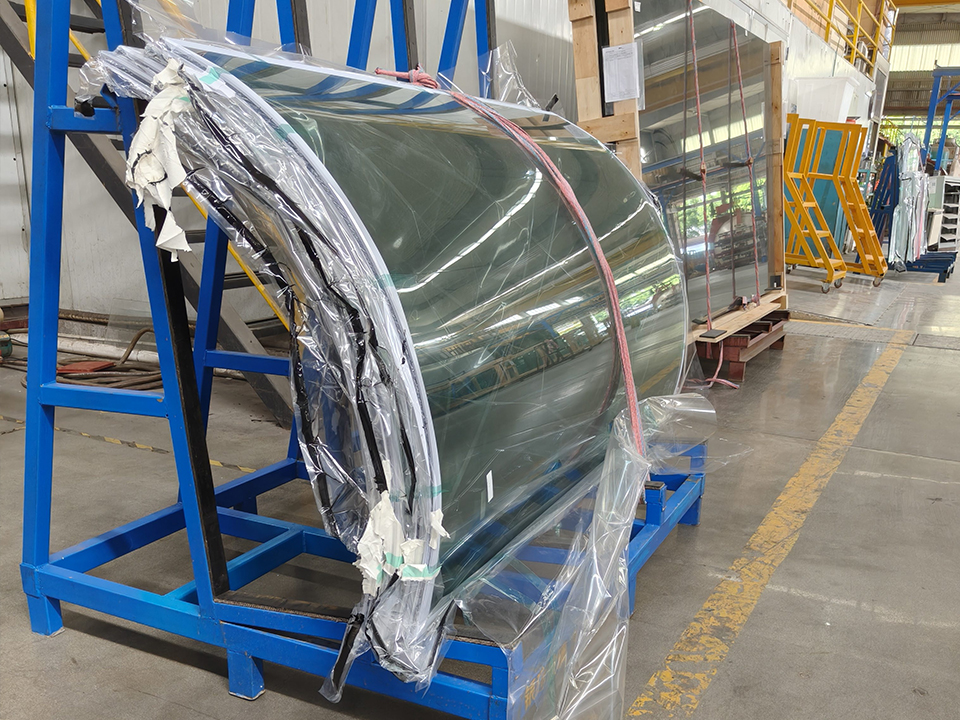
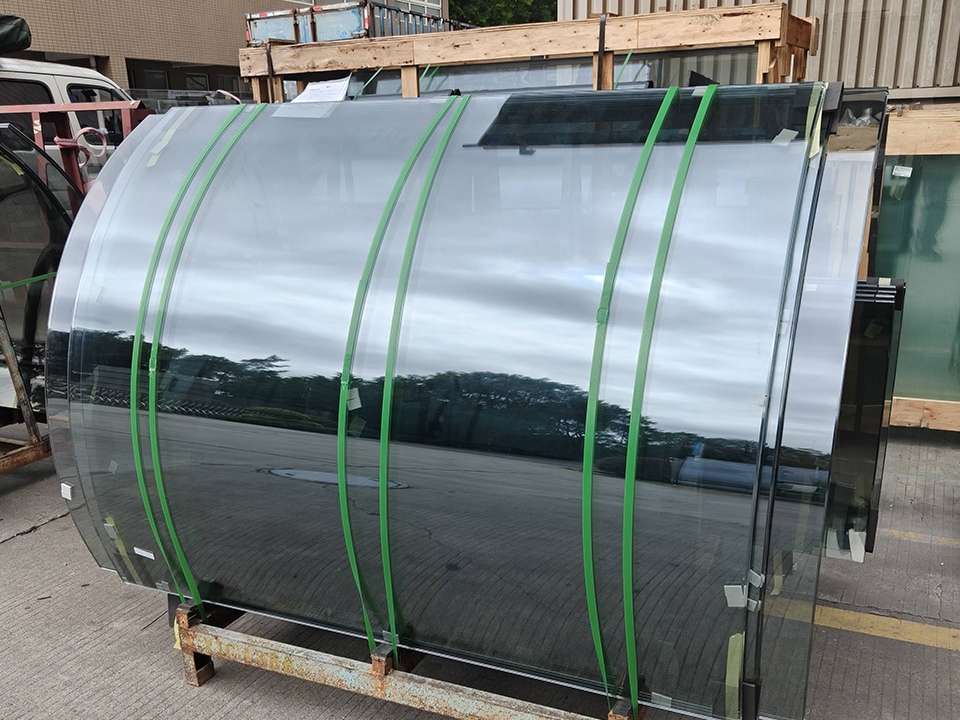
A 180-degree glass-to-glass joint gives you the pure, uninterrupted line that designers chase in ultra-clear rectangular tempered glass applications and premium factory-direct tempered glass panels. But that visual minimalism is brutal in execution because every defect is now front-page news: edge chips, thickness variation, roller-wave distortion, and bead inconsistency all become visible from six meters away.
In a straight butt joint, the industry’s favorite lie is that alignment is “close enough.” It isn’t. Even minor deviation telegraphs through the seam. And because the faces are parallel, people underestimate capillary pathways and water migration around imperfect contact planes. That is one reason public owners keep writing tighter glazing language into project specifications. A 2024 Chicago public-building addendum required structural-sealant glazing to comply with ASTM C1401 for design and installation, which tells you where sophisticated owners are landing: less improvisation, more standard-based verification.
My rule is simple: if the aesthetic value of the seam is the sales pitch, then the tolerance and mock-up regime should be twice as serious as a standard framed condition. But the market often does the reverse. Beautiful joint. Cheap process. Predictable mess.
Angled butt joints: where pretty details become engineering details
This is where amateurs get exposed.
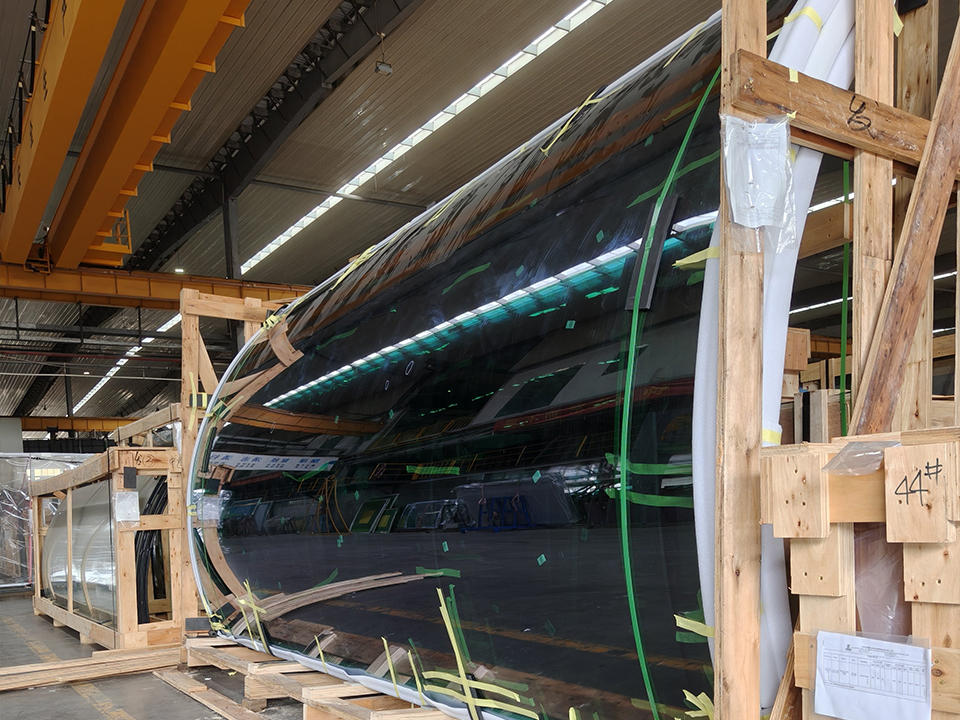
An angled glass butt joint introduces directional load behavior, differential movement paths, and uglier sealant geometry. The bead is no longer just bridging a neat, parallel gap; it is accommodating an angle, changing sightlines, and often dealing with asymmetrical stress concentration along the glass edges. So why do so many shop drawings treat it like a cosmetic variant?
The 2024 research published in Challenging Glass 9 put it plainly: structural glazing joints can be exposed to dynamic earthquake loads, yet recognized design methods for those conditions are still lacking. That should sober anyone specifying unconventional glass-to-glass joint geometry in seismic or high-movement contexts. And a 2024 paper on damage states in structural silicone glazed façades reported experimental work specifically aimed at understanding damage progression and ultimate resistance in silicone-bonded façade assemblies, which tells me the research community is still trying to map problems that the sales side often pretends are settled.
If I were detailing an angled butt joint for a frameless glass partition joint, shower enclosure, or feature wall, I would insist on mock-ups with real edgework, real sealant, real lighting, and real installation sequence. No digital fantasy. For interiors, especially where aesthetics and privacy matter, custom shower glass configurations and other frameless partition concepts can work beautifully, but only when the angle is treated as a performance variable, not as a sketchbook flourish.
Best sealant for glass butt joints? The answer people hate
There is no universal best.
The best sealant for glass butt joints is the one whose chemistry, movement class, adhesion profile, cure type, and tested compatibility actually match the assembly, substrate contamination risk, joint geometry, and service environment; anyone giving you a one-word answer without that context is selling, not advising. Is that inconvenient? Good.
For exterior butt joint glazing, I lean hard toward neutral-cure silicone systems with documented compliance where structural or façade-grade performance is involved, because the standards trail is not subtle here. ASTM C1184-23 covers structural silicone sealants intended to structurally adhere components in structural sealant glazing systems, and public-university specifications continue to point designers toward single-component neutral-curing silicone formulations for structural-sealant-glazed systems. That is not proof that every job needs structural silicone, but it is strong evidence that serious assemblies demand serious chemistry.
And no, I do not trust “equivalent” language unless the equivalency package includes compatibility testing, adhesion data, and a mock-up record. I’ve watched too many projects save 2% on sealant and burn 20% on callbacks.
For assemblies near heat, solar gain, or performance glazing stacks, I would also think beyond the visible seam and consider adjacent system demands, especially in projects that already specify heat-resistant insulated tempered glass or use specialty products such as fire-rated vision glass for interior applications. The point is not to mix categories blindly. The point is to detail the joint as part of the whole enclosure logic.
How to install a glass butt joint without creating a future repair contract
Mock it up.
A proper answer to “how to install a glass butt joint” starts before the first lite reaches site: verify edge finish, inspect dimensional tolerances, confirm joint width, control substrate cleanliness, document ambient conditions, and sequence glazing so the bead is tooled consistently and not contaminated by dust, release agents, or rushed handling. Why does this still sound radical to some contractors?
Here is the comparison I use when owners want the pretty version and the durable version at the same time.
My installation bias is unfashionable but earned: I would rather widen a joint slightly and make it buildable than preserve a “knife-line” detail that depends on flawless field conditions no real project ever has. That is not anti-design. That is pro-survival.
The market still underprices the risk
Nobody says it.
But atypical butt joints are often bid like standard glazing with a prettier rendering. That is why they go sideways. Specialty trade work is not low-risk just because it looks clean, and the latest BLS industry tables still place glass and glazing contractors at a nontrivial occupational injury incidence rate of 2.7, which is a reminder that the labor behind these assemblies is not abstract. Combine schedule compression, heavy panels, edge sensitivity, and façade tolerances, and the idea that an angled butt joint is a “simple premium upgrade” starts to sound ridiculous.
So my strong opinion is this: if your estimator does not price mock-ups, sealant testing, edge protection, rework allowances, and installation sequencing into an atypical glass-to-glass joint package, the quote is probably fiction. And fiction gets expensive fast.
FAQs
What is a glass butt joint?
A glass butt joint is a glass-to-glass connection where adjacent lites meet edge-to-edge with little or no framing at the seam, using a narrow gap, sealant, or both to create a continuous visual plane while managing movement, weathering, and assembly tolerances. In practice, it is the cleanest-looking joint and one of the easiest to get wrong. I treat it as a performance detail disguised as an aesthetic detail.
What is the difference between a 180-degree and an angled glass butt joint?
A 180-degree butt joint is a straight, coplanar glass-to-glass seam, while an angled butt joint connects glass panels that meet at a non-flat angle, changing the load path, sealant shape, visual depth, and installation difficulty significantly. The straight joint punishes visual defects. The angled joint punishes bad engineering. One exposes tolerance errors. The other multiplies them.
What is the best sealant for glass butt joints?
The best sealant for glass butt joints is a tested, compatible sealant system whose chemistry and movement capability match the glass assembly, joint geometry, substrate conditions, and service environment rather than a generic “glass silicone” selected only by color or price. For exterior or demanding façade work, I want neutral-cure silicone, documented compatibility, and standards-based confidence. Cheap substitutions are where the trouble usually begins.
Can butt joint glazing be used in frameless glass partitions?
Butt joint glazing can be used in frameless glass partitions when the glass thickness, edge quality, joint width, sealant, and support conditions are coordinated to suit the partition’s movement, safety, and visual goals rather than copied from unrelated façade details. Yes, absolutely. But I would still mock it up. Interior work is less forgiving visually, even when it is more forgiving structurally.
Why do angled butt joints fail more often?
Angled butt joints fail more often because the non-linear geometry increases tolerance pressure, complicates sealant tooling, intensifies edge stress, and makes movement behavior less uniform than in a straight coplanar seam, especially when the detail was priced or installed like a standard joint. The failures are rarely mysterious. They are usually designed in, then discovered later.


Shop Drawing Notes That Prevent Code and Scope Disputes