We are a leading glass manufacturer based in China,
Specializing in high-quality glass solutions for industrial and architectural applications.
With years of experience and ISO certification, we provide fast, tailored quotes and responsive support for procurement professionals,engineers, and project managers worldwide.
We are a leading glass manufacturer based in China,
Specializing in high-quality glass solutions for industrial and architectural applications.
With years of experience and ISO certification, we provide fast, tailored quotes and responsive support for procurement professionals,engineers, and project managers worldwide.
Guardrail and Balustrade Glass: Core Code Decisions
Most teams still talk about guardrail glass as though the real choice is visual—clear or low-iron, framed or frameless, minimalist or “luxury”—when the code cares about something colder: retained barrier performance after breakage, load transfer into the structure, and whether the assembly still behaves like a guard after one ply is gone. Want the hard truth?
I have sat through enough value-engineering calls to know the pattern. Someone says “tempered is fine,” someone else says “frameless is standard now,” and nobody wants to read the part where the 2024 IBC got more explicit about allowable stresses for glass guards and handrails, while cities like Chicago kept their own sharper language around minimum thickness, top rails, and post-breakage behavior. That is not design freedom. That is a liability map.
Table of Contents
The industry keeps pretending glass railing code is simple
It is not.
The 2024 code conversation is less about whether glass can be used in a guard and more about what kind of glass, under what loading, with what residual behavior, and with what exceptions. Structure Magazine’s review of the 2024 IBC changes spells it out: calculated stresses in glass handrails and guards are now capped at 3,000 psi for heat-strengthened glass and 6,000 psi for fully tempered glass, while guard systems still have to satisfy the familiar 200-pound concentrated load and 50 pounds-per-linear-foot line load logic coming through ASCE 7. That clarification matters because too many submittals used to hide behind the old “factor of safety of four” language without showing their math.
And here is the part the sales sheets like to blur. The current code framework treats laminated tempered or laminated heat-strengthened glass as the dependable structural answer; single-layer fully tempered glass survives only in narrower situations, typically where there is no walking surface below or that surface is permanently protected from falling glass. That distinction is the whole fight in one sentence.
If your architect is still treating “frameless” as a style choice rather than a structural decision tree, I would slow the meeting down right there.
Laminated vs tempered is not an aesthetic debate
This is the core decision.
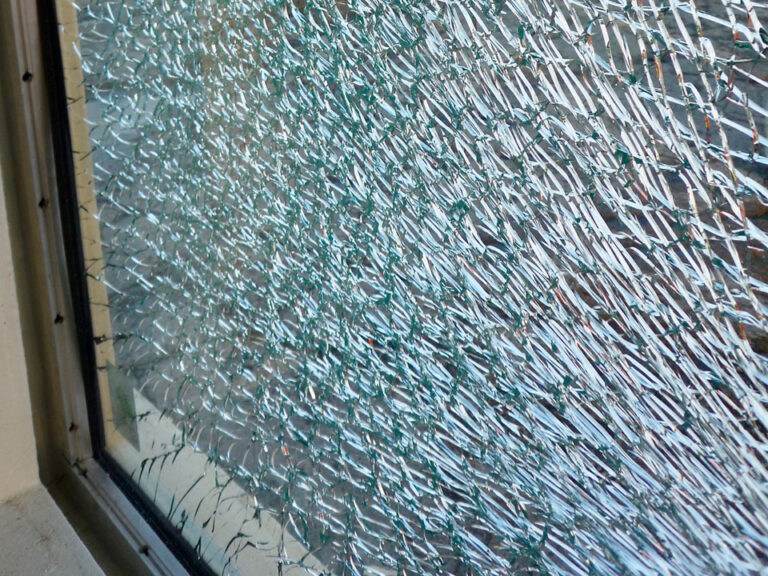
When people search laminated vs tempered glass for railings, what they usually want is a simple answer. Mine is simple, and some fabricators hate it: if the panel is doing real guard work, I want laminated construction unless a local code path makes an unusually clean case for something else. Why? Because a shattered tempered lite becomes glitter and gravity; a laminated assembly, even when broken, still gives you a shot at barrier retention long enough to matter. The 2024 IBC language and Chicago’s current guard provisions both lean into that logic, not away from it.
Chicago is especially revealing because it says the quiet part out loud. Its municipal code adopts IBC Section 2407 with modifications, requires glass in guards or supporting a handrail to be laminated and constructed of fully tempered or heat-strengthened glass, sets a minimum nominal thickness of 1/4 inch (6.4 mm), and then limits the single-fully-tempered exception to conditions with no walking surface below or permanent protection from falling glass. That is not decorative language. That is a city reducing post-breakage exposure.
And if you are specifying low-iron, ultra-clear sightlines for a premium stair or terrace, fine, do it well. But do not confuse visual clarity with code intelligence. I would rather start with a robust laminated build and then optimize optics using anti-reflective coated glass for high-clarity railing applications than start with a visually pristine but structurally thin premise.
Frameless glass railing code is where specs go to die
That sounds harsh.
But frameless details are exactly where teams overestimate elegance and underestimate failure mode, because the glass is not just filling space anymore; it is the barrier, the visual line, and often a major part of the load path. Chicago again gives the best practical warning sign: structural glass baluster panels need an attached top rail or handrail supported by at least three panels unless the assembly uses laminated glass with two or more equal-thickness plies of the same glass type and is tested to remain in place as a barrier after impact or breakage under ASTM E2353. That last clause is the killer. Have you actually seen the test report?
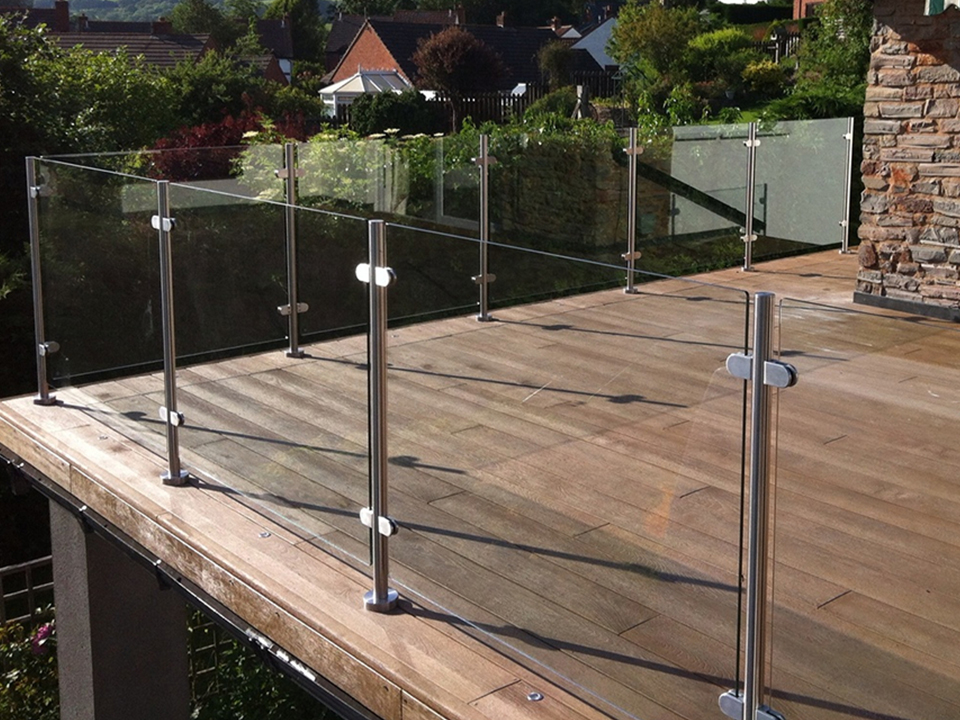
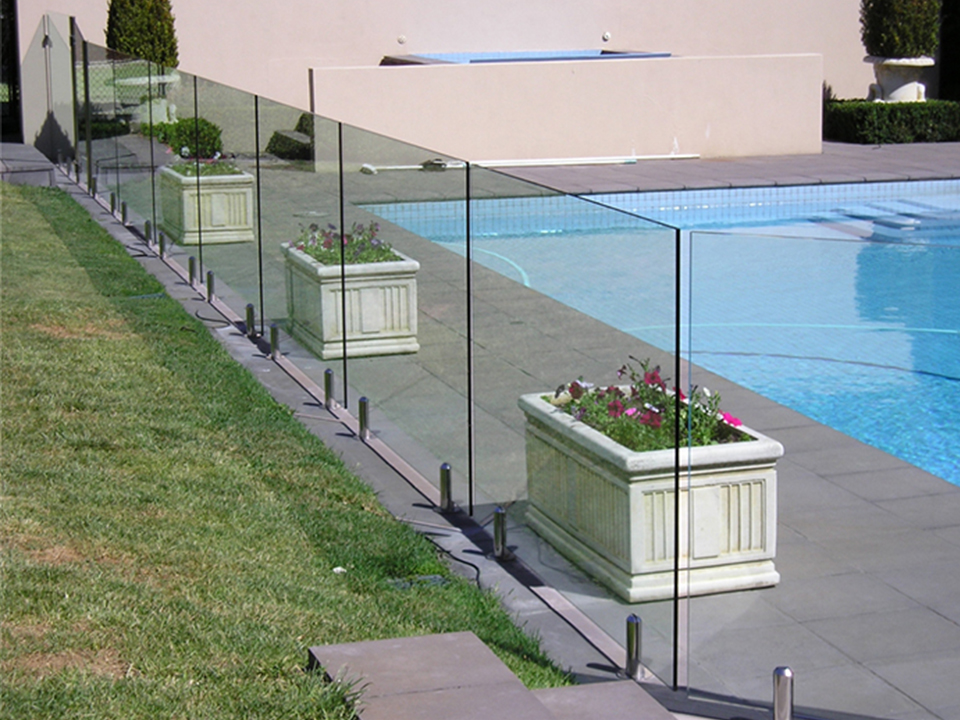
This is where I stop trusting mood boards. “Frameless” is not a code category. It is a marketing label covering radically different assemblies: base-shoe systems, point-supported systems, captured edge systems, wet-glazed customs, and hybrids with decorative caps that get mislabeled as top rails. I have seen teams pay a premium for a thin glass look, then spend that savings back two months later on thicker lites, revised anchors, or emergency top-rail additions once the engineer or AHJ reads the detail instead of the rendering.
The better approach is brutally specific. State the glass build-up. State whether the guard relies on residual capacity after one lite breaks. State whether the top rail is decorative, load-sharing, or structurally required. State the tested assembly standard. And if nickel sulfide anxiety is in the room, fine, deal with it early by evaluating jumbo heat-soaked tempered glass for large guard panels rather than pretending spontaneous breakage is somebody else’s warranty problem.
The 2024 data says this matters more now, not less
Projects are still flowing.
The U.S. Census Bureau reported that total construction spending in 2024 reached $2.154 trillion, up 6.5% from 2023, with residential construction up 5.9% and nonresidential up 5.3%. Reuters’ coverage of the same release made the point even more bluntly: construction spending beat expectations as private and public work stayed elevated. More projects means more stair towers, more balcony edges, more amenity decks, more multifamily guard lines—and therefore more chances for a lazy glass spec to become an expensive field correction.
There is another signal buried in the technical literature. A June 2024 peer-reviewed paper on glass handrails argued that U.S. practice still lags best practice internationally and does not adequately capture crowd-loading dynamics or residual capacity after damage. I agree, maybe too strongly. The code minimum is a floor, not proof of wisdom, and if you are detailing a high-traffic public edge, stadium concourse, university overlook, or hospitality roof deck, you should be asking harder questions than “does it pass.”
That is why I do not love generic substitutions. A vendor offering “equivalent” glass without assembly-specific testing is not offering value. They are offering ambiguity.
What I specify when I do not trust the room
I get more conservative.
For ordinary infill conditions, I still want the glass guardrail code requirements written with stupid-proof clarity: laminated safety glazing, explicit reference to IBC Section 2407 and CPSC 16 CFR Part 1201 Category II or ANSI Z97.1 Class A, stated nominal thickness, and stated support conditions. For structural baluster or near-frameless conditions, I want the spec to force the issue on post-breakage performance, top-rail logic, and assembly testing. If the project sits in a windborne debris region, the 2024 IBC tightens the logic further by requiring laminated glazing in exterior handrails or guards.
Here is the decision matrix I would use before I sign off on a detail. It is not pretty. It is useful.
Decision path
Usually code-friendly?
Hidden catch
My view
Single fully tempered infill panel
Sometimes, in limited conditions
Falling-glass risk and limited exceptions
Accept only when the exception is explicit and defensible
Laminated tempered guard panel
Yes, commonly the safest path
Cost and edge-quality discipline
Best default for most occupied projects
Laminated heat-strengthened guard panel
Often viable
Requires disciplined engineering and fabrication
Good option when breakage behavior matters more than impact theatrics
Structural glass baluster without top rail
Only with the right laminate build and proof
Testing burden and post-breakage retention
Do not approve from renderings alone
“Frameless” premium aesthetic package
Depends entirely on assembly
Marketing language hides structural reality
Treat as a structural system, not a finish selection
That matrix is not fear-driven. It is what happens when you actually read the code, the city amendments, and the recent engineering commentary together.
And one more thing. I see teams drag façade products into guardrail discussions as if performance categories are interchangeable. They are not. A perimeter package may absolutely need high-performance low-E insulating glass for adjacent façade zones or low-maintenance wholesale low-E glass for envelope-driven specs, but a guard detail lives and dies on impact safety, retention, support, and post-breakage behavior first. Different problem. Different liability. Sometimes, for higher-risk occupancies or forced-entry concerns, the conversation even starts to overlap with laminated security-grade glass systems, though that is a separate security discussion, not a shortcut around guard code.
The hard truth about “best glass” for balustrades
There is no magic SKU.
There is only the correct alignment between occupancy, support condition, local amendments, breakage consequences, and the tolerance of the owner, architect, engineer, insurer, and AHJ for residual risk. When somebody asks me how to choose code-compliant balustrade glass, I do not start with product brochures. I start with five questions: Is the panel structural or infill only? Is there a walking surface below? Is a top rail structurally required? What test evidence exists for post-breakage retention? Which code amendments beat the model code in this jurisdiction?
Most glass mistakes are not technical. They are social. The wrong person wins the meeting.
FAQs
What are glass guardrail code requirements?
Glass guardrail code requirements are the minimum structural, impact, retention, and safety-glazing rules that let a glass assembly legally function as a fall barrier, usually covering glass type, lamination, load resistance, breakage behavior, thickness, support conditions, and compliance with IBC Section 2407, CPSC 16 CFR 1201, and ANSI Z97.1.
In plain English, the code is asking whether the glass can take the design loads, whether it is approved safety glazing, and whether the assembly stays safe when things go wrong. That is why glass guardrail code requirements cannot be reduced to “use tempered glass.”
What is the difference between glass balustrade code and frameless glass railing code?
Glass balustrade code and frameless glass railing code describe overlapping compliance rules, but the frameless condition usually triggers more scrutiny because the glass may act as the barrier itself, making support details, top-rail exceptions, and post-breakage retention testing far more important than they are in framed or infill-only systems.
That is why so many “frameless” details get re-engineered late. The visual ambition outruns the documented structural behavior.
Is laminated glass better than tempered glass for railings?
Laminated glass is generally the safer code-driven choice for railings because it combines safety glazing performance with better post-breakage retention, meaning a broken panel is more likely to remain in place long enough to preserve the barrier, whereas monolithic tempered glass can fully fragment and create a falling-glass problem.
That does not mean every laminated build-up is automatically right. Interlayer, support geometry, edge quality, and tested assembly behavior still matter.
What thickness of glass is required for a guardrail?
Required guardrail glass thickness is not a universal single number because it depends on assembly type, loading, support, and jurisdiction, but many code paths start from a minimum nominal thickness and then move upward based on engineering calculations, allowable stress limits, and assembly-specific testing or local amendments.
Chicago, for example, states a minimum nominal thickness of 1/4 inch (6.4 mm), but that is the floor, not the answer for every structural or near-frameless condition. Engineers who stop at the floor are usually the ones who get dragged back into the project.
If you are specifying a guard system right now, do not ask for “glass.” Ask for a code path. Then make the supplier prove it.

Shop Drawing Notes That Prevent Code and Scope Disputes