We are a leading glass manufacturer based in China,
Specializing in high-quality glass solutions for industrial and architectural applications.
With years of experience and ISO certification, we provide fast, tailored quotes and responsive support for procurement professionals,engineers, and project managers worldwide.
We are a leading glass manufacturer based in China,
Specializing in high-quality glass solutions for industrial and architectural applications.
With years of experience and ISO certification, we provide fast, tailored quotes and responsive support for procurement professionals,engineers, and project managers worldwide.
PDLC Smart Glass for Offices, Clinics, and Meeting Rooms
I’ve sat through enough partition, façade, and interiors meetings to know the script: someone dims the room, taps a switch, the panel turns milky-white, and suddenly the room starts acting like it solved privacy, hygiene, aesthetics, and building performance in one move, even though the quote often says nothing serious about transformers, edge deletion, cleaning chemistry, control failure, or the ugly fact that visual privacy and speech privacy are two different worlds. Want the blunt version?
PDLC smart glass is impressive. I’m not here to pretend otherwise. But I am here to say what sales decks usually bury: if you buy smart glass for the wrong reason, you pay premium money for a very expensive frosted screen.
Table of Contents
Most buyers are solving the wrong problem
Here’s the hard truth.
In offices, the real complaint is usually interruption. In clinics, it is exposure. In meeting rooms, it is confidentiality theatre mixed with actual confidentiality risk. Those are related problems, sure, but they are not the same engineering brief, and anyone who treats them as one line item is asking for rework.
That matters more in 2026 because capex scrutiny is savage. Reuters reported in April 2024 that U.S. office vacancy hit a record 19.8%, which tells me every workplace upgrade now has to survive CFO-level questioning, not just designer enthusiasm. If a privacy system cannot defend its cost in operational terms, it gets cut.
So what does smart glass actually do well? It removes the visual clutter of blinds, gives you immediate line-of-sight privacy, keeps corridors brighter than curtains usually do, and makes a room feel more expensive than it probably is. What does it not do well by itself? Sound isolation. Solar control. Abuse tolerance from sloppy installers. Cheap retrofits.
How PDLC smart glass actually works
This is the mechanism.
PDLC stands for polymer-dispersed liquid crystal: liquid-crystal droplets sit inside a polymer layer between conductive surfaces, and when current is applied, the droplets align so the panel turns clearer; when power is off, light scatters and the glass goes translucent. That is why the product feels almost theatrical in use, even though the science is fairly straightforward.
I tell clients the same thing every time: you are buying controlled light scatter, not magic. And that distinction matters. Because once you frame it correctly, the spec decisions get cleaner.
If the target is exterior performance first, I would not begin with PDLC. I would begin with custom high-performance Low-E insulating glass and, where the assembly needs better edge thermal behavior, custom-size warm-edge IGU insulating glass. Privacy is one job. Thermal control is another. Why mash them together before the project brief is even honest?
Offices, clinics, and meeting rooms are three separate markets
I don’t spec them the same. Neither should you.
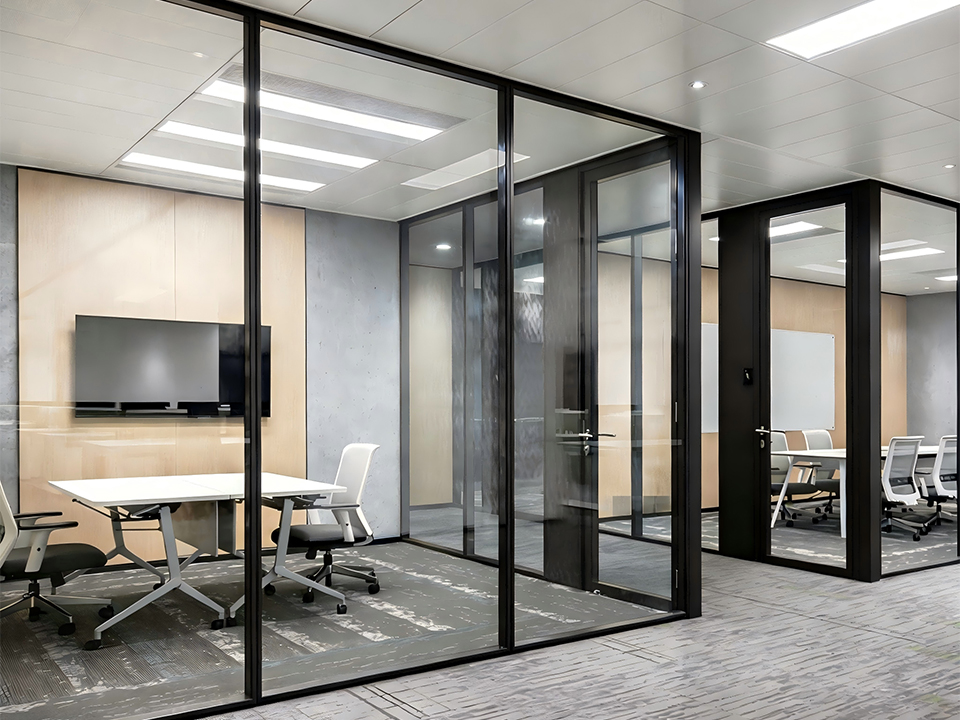
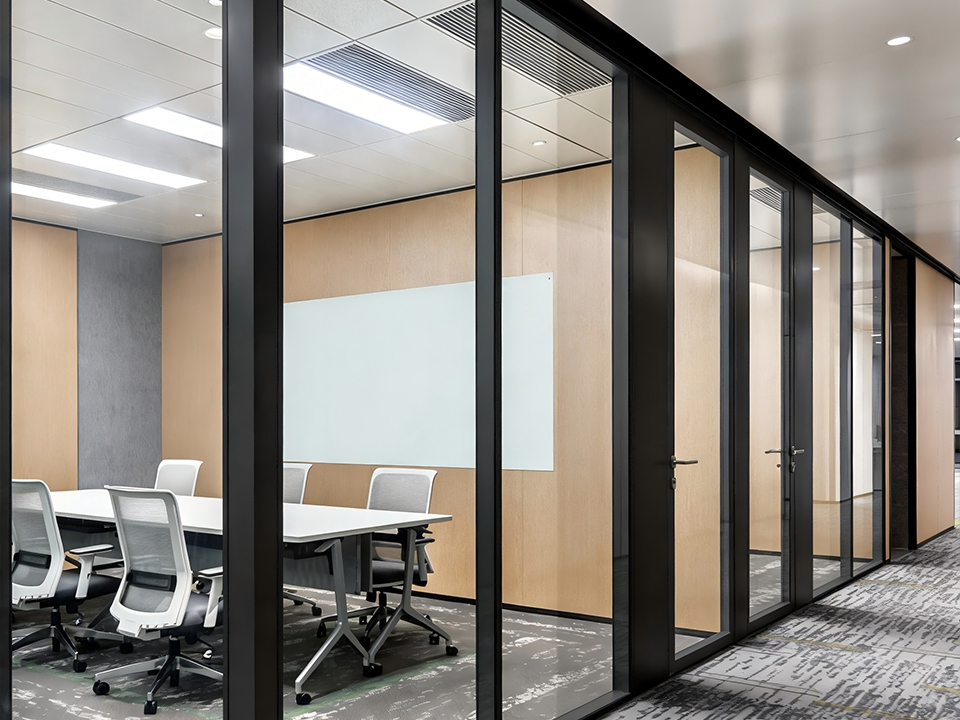
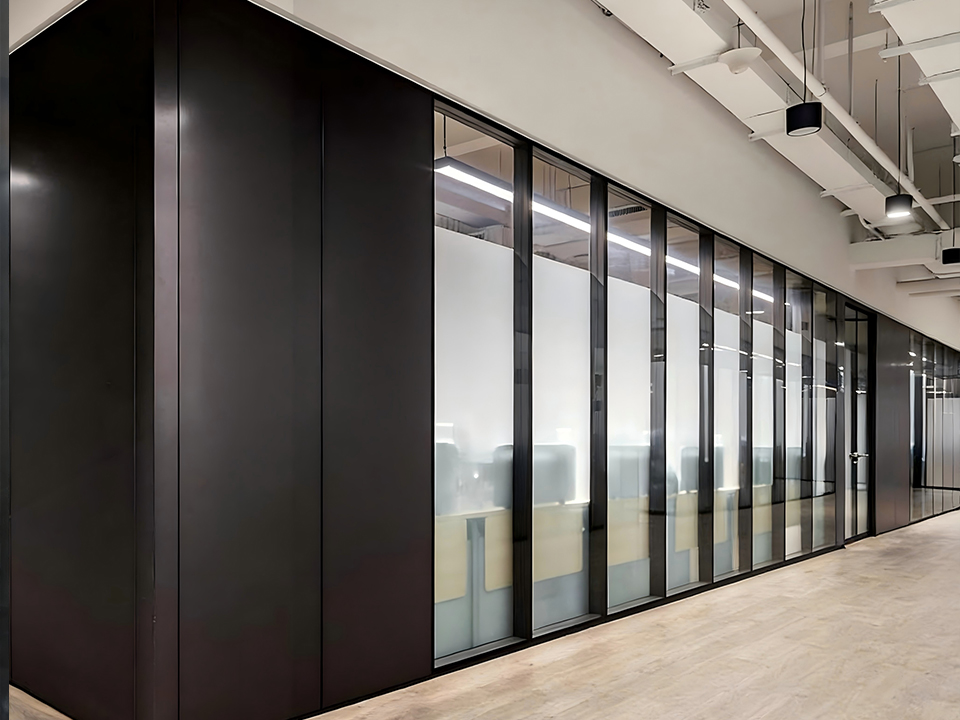
For offices, privacy glass for offices works best in executive fronts, HR rooms, boardrooms, and shared meeting suites where the room needs to switch identity fast—open, then private, then open again—without the dust, cords, and visual drag of blinds. But if the office is mostly open-plan chaos, PDLC will not rescue concentration. It may make the room look sharper. It will not stop overheard conversations leaking under the door.
For clinics, the buying logic changes. The biggest advantage is not the wow effect. It is the wipe-clean surface and the instant privacy transition without fabric barriers. That argument gets stronger when the compliance temperature rises. In April 2024, the U.S. Department of Health and Human Services announced a $4.75 million settlement with Montefiore Medical Center after employees improperly accessed an individual’s records over several years; that case was about records access, not glazing, but it is still a clean signal that privacy failures in healthcare are treated as governance failures, not little mistakes.
For smart glass for meeting rooms, the trap is obvious. Teams love the clean switch from transparent to private. Procurement loves the absence of blinds. Legal loves the symbolism. Then someone runs a confidential call in a room with a hollow-core door, no acoustic seals, and a plenum path that leaks speech like a sieve. Smart glass for conference rooms does not make a bad room secure. It makes it look secure. That difference is expensive.
The installation math is where good projects go bad
Panels grow. Problems grow faster.
Once you start using switchable glass partitions at meaningful scale, fabrication discipline matters more than mood-board aesthetics. Large lites, imperfect edges, poor busbar planning, and lazy wiring routes are where installers quietly burn margin and owners later burn patience. That is why I’d rather see the team discuss factory-direct jumbo heat-soaked tempered glass early, then lock in the finishing tolerances with edgework for extra-large tempered glass, instead of pretending the electrical package will somehow forgive sloppy glass preparation.
And here is another opinion I will happily defend: not every privacy brief deserves PDLC. If the room needs permanent obscurity with low capex and almost zero controls risk, decorative door glass patterns may beat switchable privacy glass outright. If the opening is in a higher-risk reception or sensitive zone where retention matters, that is a different conversation again, and blast mitigation glass with enhanced retention belongs in the room before anyone starts admiring the frosting effect.
What I compare before I approve a smart-glass package
I use a practical matrix.
Decision Factor
PDLC Smart Glass
Static Frost Film
Blinds or Curtains
Visual privacy on demand
Excellent
None once installed
Good
Daylight with clean appearance
Strong
Moderate
Weak to moderate
Acoustic privacy
None by itself
None by itself
None by itself
Cleaning and infection-control fit
Strong in clinics and consult rooms
Strong
Weak
Controls and wiring complexity
High
Low
Low to moderate
Failure points
Power supply, controls, lamination quality
Adhesion, scratching, yellowing over time
Dust, hardware, cords, user abuse
Best use case
Boardrooms, consult rooms, executive fronts
Permanent privacy zones
Budget-led spaces
That table is not brochure copy. It is field logic. And it leads to a simple conclusion: PDLC smart glass wins when instant privacy, cleaner aesthetics, and faster room turnover matter more than first cost. It loses when the client really wants acoustic secrecy, hard energy savings, or the cheapest path to obscurity.
The spec stack that separates smart glass from smart-looking glass
This is where professionals earn their fee.
I want the spec team asking about transformer location, switching uniformity, edge finishing, cleaning chemicals, fail-state behavior, wiring access, and whether the controls need local switches, occupancy logic, or integration into BACnet, KNX, or the AV stack. I also want the owner told, in plain language, whether the panel defaults to private or clear when power is lost. That one answer changes how I view healthcare rooms, interview rooms, and high-stakes conference spaces.
And I would put this in bold if I could do it without sounding theatrical: if the client’s first sentence is “we need confidentiality,” then I do not stop at smart glass. I ask about acoustic seals, laminated acoustic interlayers, door bottoms, ceiling paths, and room geometry. Because the industry’s favorite trick is selling visible privacy while ignoring audible failure.
That’s why I still like PDLC. I just like it for the right reasons. Use it where speed, cleanliness, and visual control matter. Do not use it as a substitute for a real room strategy.
FAQs
How does PDLC smart glass work?
PDLC smart glass is a laminated glazing system that suspends liquid-crystal droplets inside a polymer layer between conductive surfaces; when AC power is applied, the droplets align and the panel turns clearer, and when power is removed, the light scatters so the panel turns translucent again.
In practice, that means you get fast visual privacy without adding blinds, fabric, or moving hardware. I like it for spaces that change mode throughout the day, not for rooms that need deep acoustic isolation.
Is smart glass a good choice for clinics?
Smart glass for clinics is a visual-privacy glazing system best used where staff need immediate sightline control, wipe-clean surfaces, and daylight without fabric barriers, but it still needs a separate plan for acoustic privacy, electrical reliability, room workflow, and HIPAA-aware operating procedures.
My view is simple: clinics get more value from PDLC than many offices do because hygiene and fast patient privacy matter. But the room still lives or dies on details like seals, controls, and cleaning discipline.
What is the best smart glass for conference rooms?
The best smart glass for conference rooms is usually PDLC laminated glass integrated with room controls, wall switches, and the AV or booking system, because buying quality depends less on the frosting effect and more on switching uniformity, edge quality, transformer access, and failure-state planning.
If the room hosts investor calls, legal reviews, or HR disputes, I also want the acoustic package verified before anyone signs off. Clear-to-private switching is useful. False confidence is not.
Does switchable privacy glass reduce sound?
Switchable privacy glass is a line-of-sight privacy system, not a soundproofing system, so it can help hide people, screens, and activity from view while doing little by itself to stop speech transmission unless the full glazed assembly, frame, seals, and surrounding construction are also engineered for acoustics.
That is the misunderstanding I see most. Buyers think “private” means confidential. Usually, it only means obscured.
If you’re pricing smart glass now, be ruthless about the brief. Separate privacy, thermal performance, acoustics, hygiene, and security into distinct decisions, then build the glazing package around the real use case. That is how you avoid paying premium money for a feature that only looks intelligent.