Reliable Glass Manufacturing For Industrial & Architectural Projects
We are a leading glass manufacturer based in China, specializing in high-quality glass solutions for industrial and architectural applications. With years of experience and ISO certification, we provide fast, tailored quotes and responsive support for procurement professionals, engineers, and project managers worldwide.
Lynn Lee
Founder
Reliable Glass Manufacturing For Industrial & Architectural Projects
We are a leading glass manufacturer based in China, specializing in high-quality glass solutions for industrial and architectural applications. With years of experience and ISO certification, we provide fast, tailored quotes and responsive support for procurement professionals, engineers, and project managers worldwide.
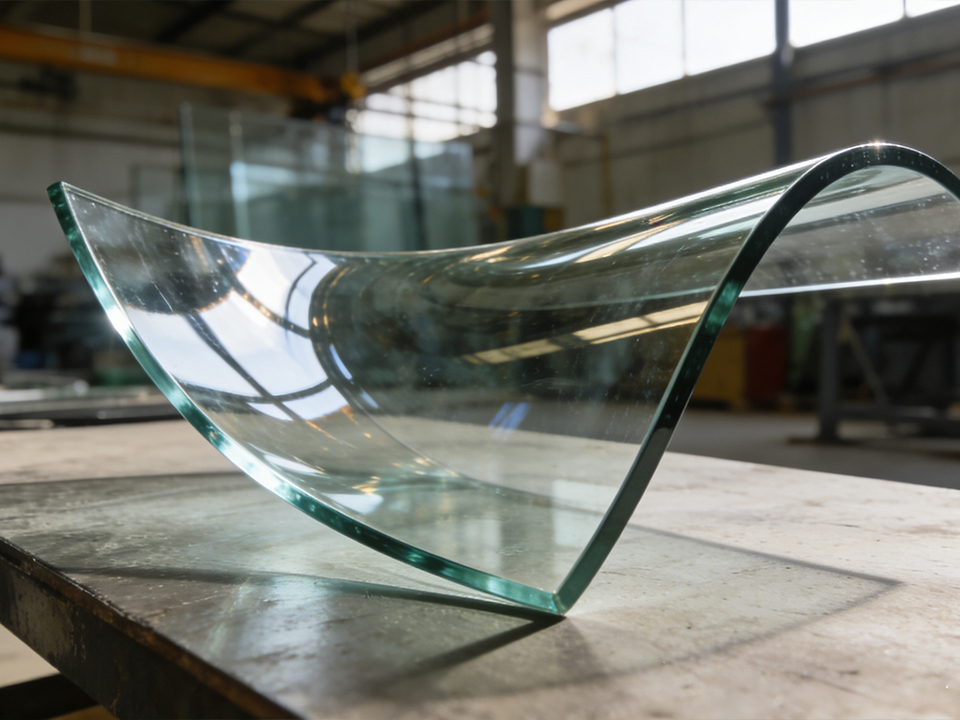
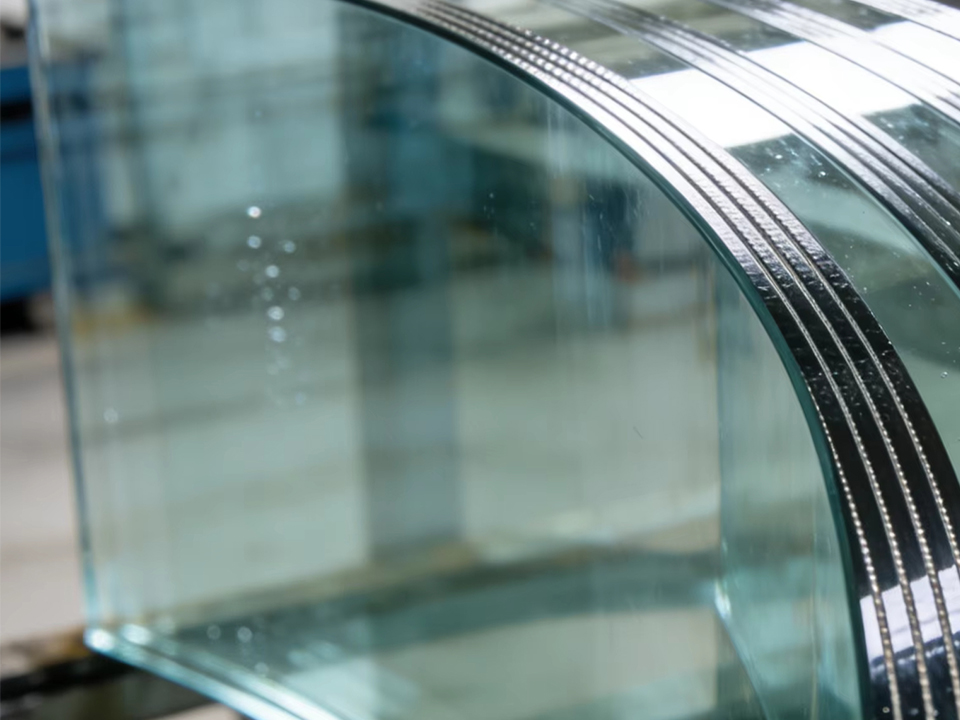
Curved Glass for Curtain Walls: What Buyers Must Know
I’ve watched buyers sign off on a slick facade concept—complete with seductive reflections, zero manufacturing logic, and a vague note that says “smooth curved glass expression”—and then act surprised when the bid package comes back bloated, lead times stretch, distortion complaints start flying, and the glass guys begin muttering about radius drift, furnace limits, roller-wave, anisotropy, and remake exposure before anybody has even locked the lite schedule. It happens. Constantly.
And that’s the whole scam, honestly. The early-stage romance around a curved glass curtain wall is usually strongest at the exact moment when the project team knows the least about what it’s actually buying.
Table of Contents
Most buyers aren’t buying glass. They’re buying geometry risk.
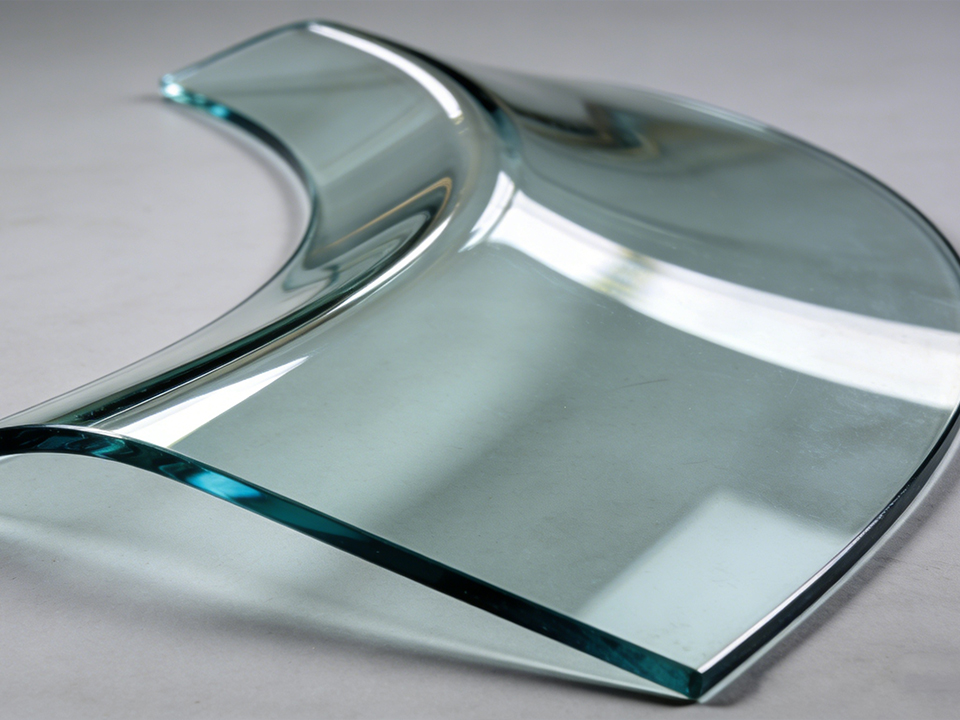
But, weirdly, the market still talks about “curved glass” as if that’s one clean product category. It’s not. It’s a bucket term. Sometimes it means a simple single-radius bent lite. Sometimes it means a faceted system pretending to be continuous. Sometimes it means curved laminated glass with a real post-breakage agenda. And sometimes—this is where jobs go sideways—it means a design team has drawn something flirting with double curvature and is hoping the fabricator can somehow make physics feel collaborative.
That distinction matters more than most buyers want to hear. If the radius isn’t fixed, if the arc length isn’t fixed, if the glass make-up isn’t fixed, if the viewing criteria aren’t fixed, then the number on the quote isn’t a number. It’s bait.
From my experience, the first serious conversation shouldn’t even be price. It should be tolerance stack, visual standard, and safety logic. If you know the facade needs retention performance, quit hand-waving and start there with custom curtain wall laminated glass. Not later. Early.
And here’s the ugly truth: buyers still act as if more glass equals more value. ULI’s May 2024 research was a cold shower for that idea. The report said facade decisions carry both embodied and operational carbon consequences, noted that glazing area matters a lot, warned that triple glazing can add more embodied emissions than it saves operationally in some cases, and even pointed out that smaller curtain wall modules can increase total carbon. That’s not brochure talk. That’s a warning label.
Price blows up in the boring places
Three levers matter. Radius, repetition, quantity.
I frankly believe buyers get misled because suppliers know most procurement teams focus on the shiny line items—glass thickness, coating, U-value target—while the real money leak sits in the ugly factory math: setup frequency, reject rate, mold strategy, tempering yield, lamination alignment, crate logic, freight protection, and what happens when one weird special unit cracks six months after handover and nobody can remake it fast enough.
A generous, repeatable radius across a disciplined unit matrix? That can behave. A patchwork of vanity radii across scattered elevations? That’s where margin gets torched and everybody starts pretending the delay is “complexity” instead of what it really is—self-inflicted chaos.
And the market backdrop is not helping. Reuters reported in March 2024 that for every three square meters of global demand for low-carbon workspace, less than one square meter is being developed, and around 25% of existing office stock is at risk of becoming functionally obsolete within five years. So no, buyers don’t have endless slack to improvise the facade package late. They really don’t.
If thermal performance is part of the sales pitch—and it usually is—I’d push past the decorative fluff and inspect the spacer and seal logic. That’s why warm edge energy-saving glass matters more than half the “premium facade” language I see in proposals. Warm-edge details aren’t sexy. Neither is condensation litigation. Guess which one shows up first.
Performance claims get puffed up fast
Yet this is where facade marketing becomes almost theatrical. “High performance.” “Advanced envelope solution.” “Optimized thermal behavior.” I’ve read enough of these decks to know the trick: say something broad, flash a Low-E spec, drop a few solar numbers, and hope nobody asks whether the whole system—not just the glass—can survive movement, weathering, edge stress, seal fatigue, acoustic targets, and breakage behavior without turning into a claims file.
Because curved insulated glass units aren’t automatically the smartest answer. They’re one answer. Sometimes a curved laminated glass make-up is the adult move. Sometimes you don’t need a full IGU at every location. Sometimes the best answer is a calmer facade with fewer special units and less swagger. I know—that’s not the answer design vanity likes.
The ULI report made that point in a way I wish more buyers would tattoo onto the DD set: glazing amount has a big impact on both embodied and operational carbon, triple glazing needs scrutiny, and module size choices can move the carbon needle more than teams expect. In other words, more glass plus more tech doesn’t automatically mean a smarter curved glass facade. Sometimes it means you paid extra to feel progressive.
And if the architect wants some depth, privacy, or visual texture without going full casino-lobby on the envelope, decorative patterned IGU options can be a much saner move than pretending every problem should be solved with more square meters of expensive curved glazing.
The retrofit math is more humbling than buyers expect
Here’s a thing people don’t like hearing.
A glamorous curved facade package does not automatically rescue a weak building.
In a March 2024 facade analysis, modeled curtain wall retrofits in New York showed that replacing the chiller reduced annual energy operating costs by about 45% in the four-story case and 47% in the twenty-story case, while replacing the curtain wall reduced costs by about 15% and 23% respectively. Read that twice. The facade helped—but the plant often helped more.
So when someone tells me the curved glass curtain wall is the energy strategy, I get suspicious. Fast. Sometimes it’s true. Usually, it’s incomplete. The chiller room, control sequence, and load profile are often doing more heavy lifting than the sales deck admits.
Reuters made the bigger point in May 2024: buildings are responsible for 37% of global emissions and up to 70% in cities, while only 1% of buildings are being improved annually even though the retrofit rate needs to rise sharply. That tells me the market is still underinvesting in practical upgrades while over-romanticizing replacement narratives.
And if the job carries blast, retention, or forced-entry concerns, say it out loud before the VE circus starts. Otherwise the glass package gets value-engineered into nonsense, then somebody rediscovers the threat profile later and everyone acts shocked when cost comes roaring back. That’s exactly where blast mitigation glass with enhanced retention stops being an add-on and starts being the actual brief.
Supplier vetting is where the adults get separated from the brochure merchants
But this is the part I enjoy, because weak suppliers crack under basic questions.
Ask them how the glass is being formed. Bent-tempered? Heat-strengthened then laminated? Hot-bent? Ask for the preferred radius range—not the theoretical minimum they keep in a PowerPoint. Ask whether they’ve produced curved insulated glass units with your exact build-up, cavity width, coating placement, and edge deletion regime. Ask what their optical standard is at eye level, at oblique street view, and under backlighting. Ask what the remake path is if Lite 37A breaks in year six.
Then be quiet. Listen carefully.
Good shops answer in manufacturing language. Weak shops answer in sales language.
From my experience, one of the clearest tells is how a supplier talks about the upstream/downstream handoff. If they sound slippery about who bends, who tempers, who laminates, who assembles, and who owns the unit when something goes off-radius, you’ve got a chain-of-custody problem dressed up as a turnkey offer. That’s why I’d want to understand whether they truly control a path like curved tempered glass ready for lamination or whether they’re just brokering capability and hoping the paperwork holds.
And please—please—ask about replacement. Not in theory. In calendar time. In crate time. In “can you match curvature and frit position years later?” time. That answer matters more than the polished mock-up photos.
So, no, this isn’t just an architect’s toy anymore.
GSA states that its 2024 P100 established mandatory design standards and performance criteria for GSA-owned buildings. Once language like “mandatory design standards” lands in the procurement bloodstream, the vibe shifts. Envelope choices stop being aesthetic gestures and become review items, compliance items, and liability items. That pressure won’t stay neatly inside public-sector work forever.
Pair that with the March 2024 Reuters reporting on low-carbon supply imbalance, and I think the message is pretty obvious: buyers who still treat a curved glass facade as a cosmetic package are behind the market, behind the capital, and probably behind their own risk register too.
FAQs
What is a curved glass curtain wall?
A curved glass curtain wall is a non-load-bearing exterior facade system made from bent monolithic, laminated, or insulated glass units shaped to a defined radius and fixed into a framing or support assembly that must satisfy structural, weather, thermal, safety, and visual-performance requirements. That’s the clean definition. My messier version? It’s a geometry-and-tolerance problem wearing an architectural tuxedo.
How much does a curved glass curtain wall cost?
The cost of a curved glass curtain wall is a project-specific envelope price determined mainly by radius, repetition, unit size, glass build-up, coating position, framing complexity, mock-up scope, shipping protection, installation tolerances, and replacement strategy rather than by any tidy universal square-meter number. So when someone blurts out a quick budget rate, I don’t relax—I assume something important hasn’t been nailed down yet.
Are curved insulated glass units better than curved laminated glass?
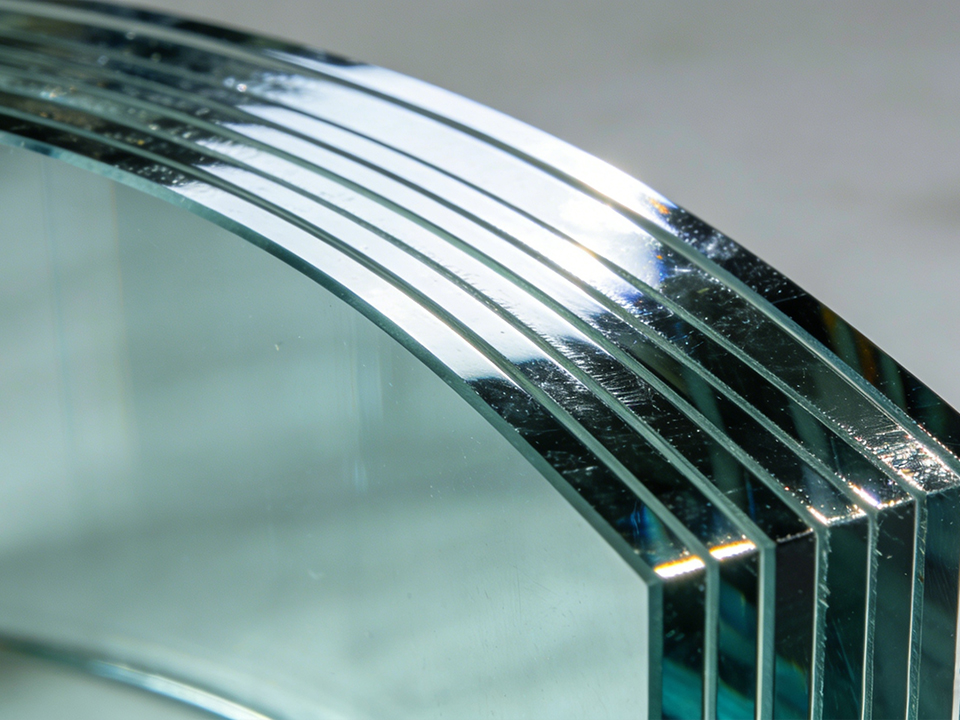
Curved insulated glass units are multi-pane sealed assemblies primarily aimed at thermal and acoustic performance, while curved laminated glass is a bonded multi-ply build focused more heavily on retention, impact behavior, post-breakage safety, and sometimes acoustics depending on interlayer selection and make-up. Better? That’s the wrong framing. Better for heat loss isn’t always better for fallout protection, and better for appearance isn’t always better for procurement sanity.
How do I choose the best curved glass curtain wall suppliers?
The best curved glass curtain wall suppliers are the firms that can prove radius capability, distortion control, lamination and coating compatibility, mock-up discipline, delivery protection, replacement planning, and documented experience with the same glass build-up and system-performance targets your project actually requires. I’d trust a shop that talks about reject rates, mold logic, and remake lead times way before I’d trust one that leads with pretty project photos.
Is a curved glass facade always the low-carbon choice?
A curved glass facade is not automatically the low-carbon choice because facade carbon depends on glazing area, module size, frame content, glass build-up, transport distance, service life, local grid conditions, and whether the added embodied impact is truly offset by operational savings over time. I’ll put it more bluntly: sometimes the greenest move is less glass, fewer specials, and a longer-lasting assembly—not a shinier spec sheet.
If you’re buying this category for real, don’t open with “best price.” Open with the radius schedule, lite matrix, target U-value, SHGC, acoustic criteria, safety class, mock-up expectations, and replacement assumptions. That’s when the serious suppliers lean in—and the brochure merchants start sweating.