Reliable Glass Manufacturing For Industrial & Architectural Projects
We are a leading glass manufacturer based in China, specializing in high-quality glass solutions for industrial and architectural applications. With years of experience and ISO certification, we provide fast, tailored quotes and responsive support for procurement professionals, engineers, and project managers worldwide.
Lynn Lee
Founder
Reliable Glass Manufacturing For Industrial & Architectural Projects
We are a leading glass manufacturer based in China, specializing in high-quality glass solutions for industrial and architectural applications. With years of experience and ISO certification, we provide fast, tailored quotes and responsive support for procurement professionals, engineers, and project managers worldwide.
How to Choose Glass Thickness for Nonstandard Openings
Last year, I got one of those RFQs everybody in glass knows too well: weird opening, vague sketch, no proper support notes, and a buyer asking for the “most economical” thickness as if the panel were a tile sample instead of a stressed, fabricated lite that can bow, chatter, chip at the arris, or fail inspection once the opening stops being theoretical and starts living in a real building. Happens a lot.
And the first question is usually wrong. Not “what looks clean?” Not “what’s standard?” And definitely not “what’s the thinnest we can get away with?” I frankly believe the only useful starting point is uglier than that: what load, impact risk, hardware prep, and edge condition is this piece of glass actually walking into?
Table of Contents
The first question is usually wrong
But the market still treats glass thickness like it’s a style toggle. It’s not. It’s a structural and safety call wrapped in a finish schedule.
That’s why the April 2024 ASTM E1300 update matters—it exists because vertical and sloped glazing are supposed to be selected against real wind and snow loads, not catalog instinct or what somebody “usually runs” in the shop.And the 2024 code clarification covered in structuremag made another uncomfortable point: in hazardous locations, every pane in a multipane assembly has to be safety glazing—not just the pane somebody upgraded because the owner could see it. That shortcut? I’ve seen it before. It’s junk thinking.
Start with the opening, not the catalog
A lot of people pricing glass thickness for custom openings look at width and height and stop there. Big mistake. A 36 x 72 lite and a 24 x 108 lite can look similar on paper, sure, but one may behave fine while the other turns twitchy the second you add a long free edge, a hinge notch, a clamp bite that’s too optimistic, or a bottom condition that isn’t doing half the work the drafter assumed it would.
From my experience, the ugly stuff starts around the details fabricators care about and spec writers often bury: exposed edge length, hole spacing, radius quality, hardware pocket location, bite, setting blocks, and whether the lite is trapped, semi-frameless, or basically being asked to “act stiff” because the budget won’t allow the right build-up. That’s not engineering. That’s wishcasting.
What actually determines glass thickness
Yet this is where buyers want a neat answer, and neat answers are usually the ones that cost money later. How to choose glass thickness for a nonstandard opening comes down to a pile of variables working against each other—size, aspect ratio, support, load, fabrication, impact exposure, and code. Not one thing. A pile.
And code gets rude fast. Under U.S. federal rules, shower doors, bathtub enclosures, and sliding glass doors fall under Category II architectural products, which is why pretending a wet-area panel is “just another custom lite” is a fast way to spec the wrong substrate. So when somebody asks me, “what thickness glass do I need for a nonstandard opening,” I don’t answer until I know whether the opening is decorative, traffic-adjacent, wet-zone, exterior, or getting drilled like Swiss cheese for hardware.
When tempered glass stops being optional
Here’s the ugly truth: once the opening is near a tub, inside a shower, part of a door set, or sitting where a person can hit it, tempered glass thickness stops being a preference conversation and starts becoming a compliance conversation.
Usually.
That’s also why I don’t love the showroom mentality. People pick the prettiest sample, then backfill the performance logic later. Wrong order. If the job is a shower or screen application, I’d rather lock the right safety substrate first and then solve the look with custom patterned shower glass or tinted shower screen glass. Better workflow. Fewer dumb surprises.
Why a glass thickness chart keeps lying to people
A chart can’t see holes. Or edge drag. Or field slop.
That’s why a generic glass thickness chart is useful only until the opening gets interesting. It can’t see whether the panel has one long free edge, a corner chop, a notch near a hinge, a clamp zone that’s too tight, or a walking surface close enough to turn a simple window into a hazardous location. It definitely can’t see installer behavior—which, let’s be honest, belongs in the calculation more often than anybody admits.
And real recalls keep proving that support assumptions are where systems go sideways. In the 2023 CPSC recall for certain MI sliding glass doors, about 1,900 units were affected because the glass could separate from the frame during hurricane conditions, with recalled products sold for about $2,000 to $7,000. That’s not a cosmetic defect. That’s a failure in a glazed system under real loading.
My practical starting points for nonstandard openings
No, this table isn’t stamped engineering. It’s a triage tool. Still useful.
Opening condition
Typical starting point
Where I usually escalate
Small decorative interior lite, fully framed, no human impact risk
1/4 in.
Go thicker if the aspect ratio gets extreme or edge exposure increases
Narrow sidelite or tall custom insert near circulation
3/8 in. tempered
Escalate to laminated or thicker if near stairs, doors, or large unsupported edges
Frameless or semi-frameless custom shower panel
3/8 in. tempered
Move to 1/2 in. for larger spans, doors, exposed edges, or heavier hardware
Oversized irregular interior partition with cutouts/notches
1/2 in. tempered
Move to laminated build-up when break-retention matters
Exterior custom opening with wind exposure
Engineer from load tables
Common outcomes land in 1/2 in. to 3/4 in. tempered/laminated depending on span and pressure
Security-driven opening
Laminated specialty build-up
Use multi-ply security or ballistic glass panels when threat level, not style, drives the spec
My bias is simple—I go thicker sooner on tall, skinny, drilled, or heavily handled lites. Not because thick glass is glamorous. Because callbacks are expensive.
Specialty glass changes the product, not the math
But buyers mix this up all the time. They choose anti-reflective coated glass for clarity, or low-E glass for solar control, and then act like the coating choice solved the structural question. It didn’t. Coatings change optical and thermal behavior. They don’t cancel span, deflection, or stress concentration.
And the wider injury picture isn’t small, either. CPSC’s FY2024 annual report puts home structures and construction materials at an estimated 3,857,638 emergency-department-treated injuries, with 20% hospitalized overall and 36% for people 65 and over. Different bucket, yes. Same lesson. Building-material decisions stop being abstract very quickly.
The mistakes that blow up budgets fastest
From my experience, three mistakes keep showing up.
First—pricing by area instead of behavior. Lazy math.
Second—treating hardware prep like a side note. Every hole, notch, and cutout changes the stress story, and not in a friendly way.
Third—chasing minimum thickness because somebody wants the glass to “disappear.” I get it. Clean sightlines sell. But once the lite starts oil-canning, flexing at the free edge, or looking nervous every time the door closes, that sleek look doesn’t feel premium anymore. It feels underbuilt.
FAQs
What thickness glass do I need for a nonstandard opening?
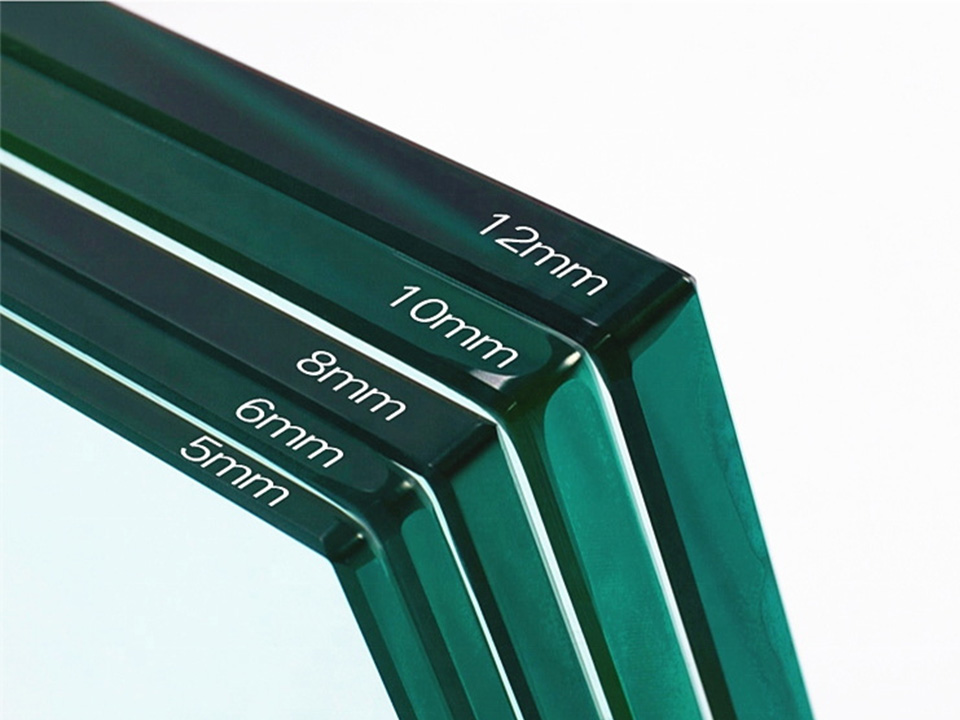
The right thickness for a nonstandard opening is the thinnest glass build-up that still satisfies load, deflection, impact, fabrication, and code requirements for that exact shape, support condition, and location, which means the answer depends far more on span and hazard exposure than on a generic chart. So, no, there isn’t one universal answer. A small framed decorative lite might sit comfortably at 1/4 inch, while a tall cutout-heavy custom panel may need 1/2 inch tempered or a laminated build-up.
Is 3/8-inch glass enough for custom openings?
A 3/8-inch glass panel is often enough for many custom openings only when the geometry is favorable, the support is reliable, the edges are controlled, the hardware is appropriate, and the location does not trigger a more demanding structural or safety-glazing requirement. It can work. But I wouldn’t blindly run 3/8 inch on a tall narrow lite, a frameless door, or anything with aggressive edge exposure and hardware prep.
Do irregular openings always require tempered glass?
Irregular openings do not always require tempered glass, but they frequently require safety glazing when the panel sits in a hazardous location, functions as part of a door or enclosure, or includes fabrication details and exposure conditions that make ordinary annealed glass a bad bet. That’s why showers, sliding systems, and traffic-adjacent custom lites so often end up in tempered or laminated territory.
What is the difference between tempered glass thickness and laminated glass thickness?
Tempered glass thickness refers to the nominal monolithic glass dimension after heat treatment, while laminated glass thickness refers to the full build-up of multiple glass plies plus interlayers such as PVB or ionoplast that improve retention and post-break behavior. Same nominal number on paper. Different animal in the field.