Reliable Glass Manufacturing For Industrial & Architectural Projects
We are a leading glass manufacturer based in China, specializing in high-quality glass solutions for industrial and architectural applications. With years of experience and ISO certification, we provide fast, tailored quotes and responsive support for procurement professionals, engineers, and project managers worldwide.
Lynn Lee
Founder
Reliable Glass Manufacturing For Industrial & Architectural Projects
We are a leading glass manufacturer based in China, specializing in high-quality glass solutions for industrial and architectural applications. With years of experience and ISO certification, we provide fast, tailored quotes and responsive support for procurement professionals, engineers, and project managers worldwide.
How to Manage Glare and Reflectivity Risk on Glass Facades
This gets expensive. I’ve seen teams obsess over SHGC, visible light transmission, spacer specs, edge deletion, and coat-side trivia for half a day, then wave off the one question that later detonates budgets: will this façade throw a hard specular bounce into someone’s face, windshield, terrace, or tower sightline at the worst possible hour? That question lands late. Too late.
And no, I don’t buy the “we’ll monitor it after handover” line. That’s not risk management. That’s hope wearing a blazer.
Table of Contents
The hard truth: most glass facade glare problems are designed in, then purchased in
Here’s the ugly truth. The industry still treats reflectivity like an aesthetic side quest, when it’s really a performance liability hiding inside the elevation package, and once a shiny concept rendering gets approved, the project team starts acting as if the coating stack, orientation, and receptor exposure will somehow behave politely in the field. It won’t. It never does.
From my experience, glare failures usually start with three boring mistakes: no receptor map, no seasonal sun check, and a spec that gets VE’d into mush. Then the mock-up happens under one sky condition, somebody says it “looks premium,” and the job rolls downhill.
The FAA’s framing is useful because it cuts through design vanity. It distinguishes glint from glare and notes that pilots routinely encounter glare from glass-façade buildings, parking lots, and water bodies; if ocular impact shows up after construction in airport settings, mitigation lands back on the sponsor. That’s not fluffy language. That’s liability language.
Where glass façade reflectivity actually becomes dangerous
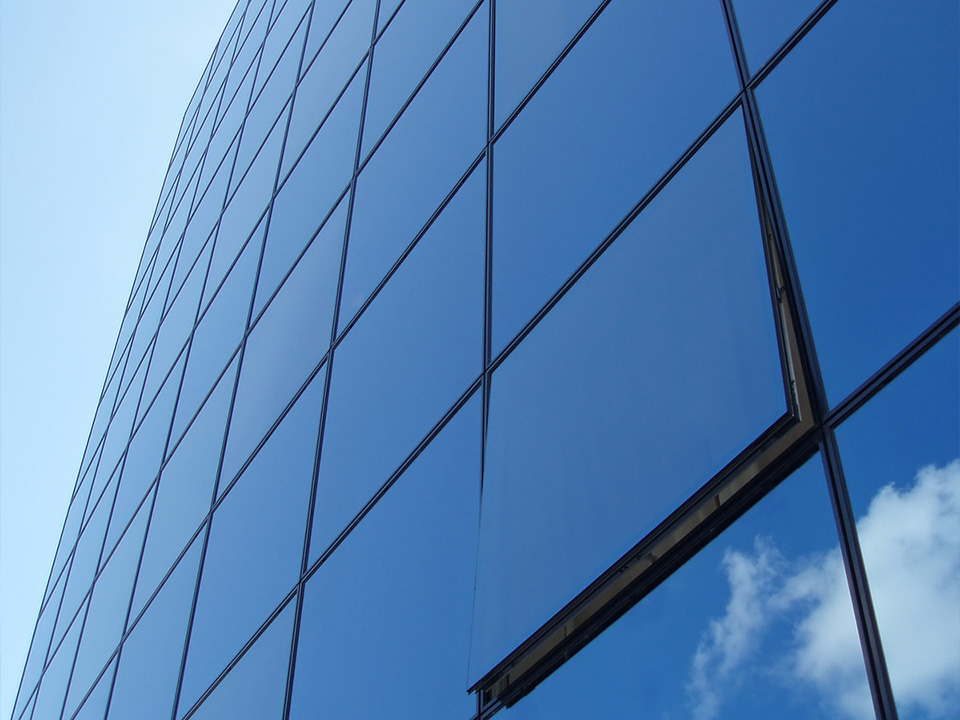
But not every reflection is a problem. A soft, broken reflection from textured glazing is one thing; a broad, smooth, mirror-like return from a tall curtain wall facing low winter sun is another animal entirely, especially when it lands on a signalized turn lane, a neighboring office floor, a school drop-off choke point, or a residential balcony where people can document the pattern day after day.
That repeatability matters. One complaint is noise. Ten complaints with photos, timestamps, and a predictable 8:05 a.m. blast? That becomes a file, then a hearing, then a redesign conversation nobody budgeted for.
I frankly believe architects underrate low-level glass risk. Glass railings, skybridges, podium corners, and amenity decks create nasty eye-level reflections because the bounce is lower, sharper, and more personal. Drivers notice it. Pedestrians notice it. Residents definitely notice it.
And there’s a second layer people ignore: wildlife. The U.S. Fish & Wildlife Service says more than one billion birds collide with glass in the U.S. each year, which tells you reflective glass isn’t just a human comfort issue; it’s a high-volume collision problem tied to how glass mirrors sky, vegetation, and open habitat.
The specs that actually reduce reflected solar glare
I don’t start with product brochures. I start with geometry.
If the geometry is bad, the coating alone won’t save you. If the receptor is sensitive, a pretty sample in a conference room won’t save you either. The fix is usually a stack of moves—lower external reflectance, diffusion, broken-up reflection geometry, and shading where the solar path says the façade will misbehave.
That’s why I look at custom coated energy-saving glass as a starting point, not a finish line. Same with architectural IGU units for façades. If the package isn’t being tested by orientation, receptor, and time of year, those specs are just paper. And when the hot spot sits at human eye level, acid-etched tempered glass finishes often do more honest work than another glossy pitch deck claiming “balanced aesthetics and performance.”
The 2024 guidance trail points in the same direction. California’s July 1, 2024 CALGreen supplement includes bird-friendly design material naming etched or fritted glass and related treatment approaches, while recent public-sector guidance keeps circling the same toolbox: patterning, surface treatment, screens, louvers, and coatings that reduce dangerous reflection behavior instead of merely dressing it up.
Strategy
Best use case
What it fixes
Hidden catch
My verdict
Lower-reflectance coated IGU
Main curtain wall elevations
Cuts mirror effect without changing façade language too much
Can be value-engineered out late
Start here
Acid-etched or frosted treatment
Podiums, lobbies, bridges, eye-level zones
Diffuses harsh reflections fast
May alter design intent
Excellent for known hot spots
Fritted or patterned glass
Bird-risk zones and repeat glare paths
Breaks specular reflection and adds visual signal
Pattern acceptance can become a design fight
Underused and effective
Laminated treated glass
Railings, balustrades, amenity edges
Helps where low-angle reflections hit people or traffic
Needs careful detailing and visual review
Very smart for railing packages
External fins, screens, or louvers
Solar-exposed façades with predictable angles
Stops the problem before it reaches the glass plane
Why anti-reflective glass façade specs still fail in procurement
Yet this is where projects go sideways. Not in design concept. In procurement.
I’ve watched good façade intent die in the submittal phase because nobody locked the exterior reflectance threshold by elevation, nobody tied alternates to a renewed glare study, and everyone pretended the approved mock-up would somehow cover every sun angle, every seasonal shift, every adjacent receptor, every bit of finish substitution that arrived later in the buyout cycle. It doesn’t. It can’t.
So I ask the annoying questions early. What’s the maximum acceptable exterior reflectance on the east elevation at winter low sun? Which receptor outranks the others—the driver, the neighbor, the tenant, the tower view, the pedestrian queue? If a coating changes, who reruns the study? And if the answer is “we’ll sort it out post-award,” I already know where this is going.
This is exactly why Laminated glass for railings and balcony edges shouldn’t be treated like a minor accessory line item. Same story for Customized project glass for façade packages. Custom is only useful when it’s tied to a real exposure map. And if the brief also includes impact resistance or threat mitigation, security glazing glass needs to be reviewed in the same risk conversation, not split into a separate silo where one team fixes breakage while another team accidentally buys reflectivity trouble.
What 2024 regulators are signaling, whether the industry likes it or not
When city staff and public review documents start using hard numbers and plain language around reflectivity, that’s the market telling you the old “looks fine to us” routine is dying. In Palo Alto’s 2024 bird-safe design discussion, draft language called for reflective materials on building façades and exteriors to have a reflectance level of 20 percent or below. That’s not vague. That’s a threshold.
And once thresholds start appearing in public review records, owners should pay attention. Because planning staff, neighbors, consultants, and plaintiff-side experts all read the same documents. They all learn the same language. They all get better at asking why your project ignored it.
A glint and glare assessment worth paying for
Most assessments are too soft. There, I said it.
A report that says the façade is “unlikely to cause issues” after a thin modeling exercise is basically a comfort blanket for people who don’t want bad news before permit. I want annual-hour mapping, receptor-specific review, worst-case sun windows, mitigation scenarios, and a plain-English statement of who gets hit, from which elevation, for how long, and under what seasonal conditions. No mush. No consultant fog.
A recent façade-glare review in Building and Environment makes the same point in a more diplomatic way: evaluation methods for reflected solar glare from building façades are still fragmented, and façade-specific assessment needs sharper methodology. I read that as an academic version of this sentence: a lot of people are still winging it.
So here’s my rule. No exposed façade with meaningful glare risk should hit procurement without one model, one mock-up plan, one receptor hierarchy, and one signed decision on acceptable reflectivity by elevation. Simple. Brutal. Necessary.
FAQ
What is glass facade glare?
Glass facade glare is intense, reflected sunlight or high-contrast light caused by sunlight hitting a building’s glass surface. This phenomenon can create uncomfortable dazzling, cause solar gain (heat buildup), and pose safety hazards for pedestrians, drivers, or surrounding buildings by causing intense hot spots or reducing visibility.After that basic definition, the practical issue is timing and receptor exposure—because a reflection that lasts fifteen minutes every morning can trigger more trouble than a brighter reflection that almost nobody sees. The FAA’s glare framing is the right mental model for that.
What is reflected solar glare?
Reflected solar glare is a continuous or near-continuous bright light source produced when direct sun hits a reflective surface and is redirected toward an observer, causing ocular stress, reduced visibility, nuisance conditions, or in some settings a documented operational safety concern rather than a mere architectural annoyance. In plain English: the sun hits the glass, the glass kicks it somewhere hostile, and somebody has to live with it. That “somebody” is usually obvious if you bother to map receptors first.
What is the best glass for glare control?
The best glass for glare control depends on the application, with anti-reflective (AR) coated glass being superior for maximum clarity and light transmission, while anti-glare (etched) glass is better for diffusing harsh, direct light. AR coating is ideal for display screens and displays, whereas etched glass works best for reducing glare in bright, high-light environments
How do you reduce glare on glass façades without replacing the whole façade?
Reducing glare on glass façades without replacement is best achieved by applying specialized anti-reflective window films, external shading devices like awnings or louvers, or by applying specialized coatings to the existing glass. These solutions reduce solar heat gain and intensity, improve interior visibility, and can protect exterior spaces from damage