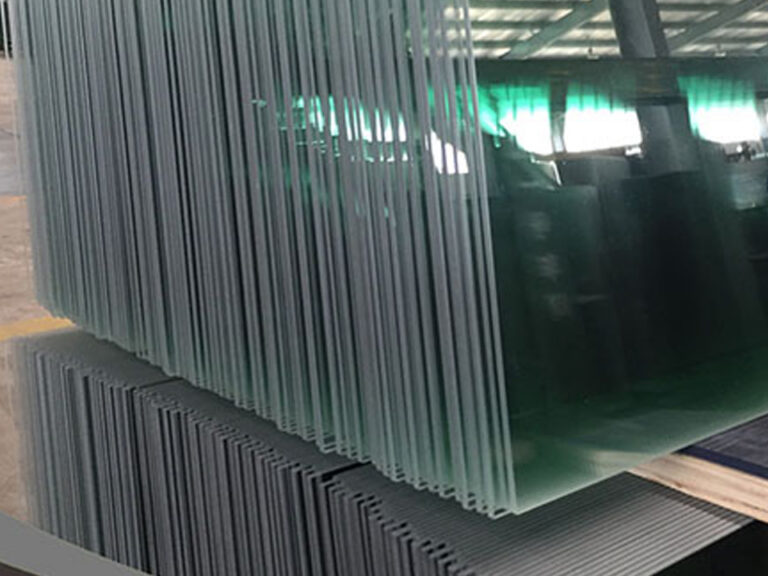
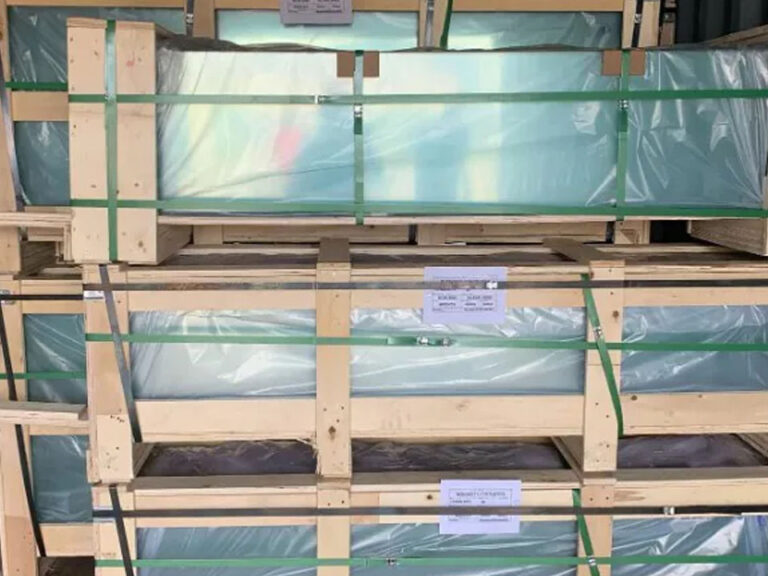
Jesteśmy wiodącym producentem szkła z siedzibą w Chinach,
Specjalizujemy się w wysokiej jakości rozwiązaniach szklanych do zastosowań przemysłowych i architektonicznych.
Dzięki wieloletniemu doświadczeniu i certyfikatowi ISO zapewniamy szybkie, dostosowane do potrzeb oferty oraz sprawne wsparcie dla specjalistów ds. zaopatrzenia, inżynierów i kierowników projektów na całym świecie.
Jesteśmy wiodącym producentem szkła z siedzibą w Chinach,
Specjalizujemy się w wysokiej jakości rozwiązaniach szklanych do zastosowań przemysłowych i architektonicznych.
Dzięki wieloletniemu doświadczeniu i certyfikatowi ISO zapewniamy szybkie, dostosowane do potrzeb oferty oraz sprawne wsparcie dla specjalistów ds. zaopatrzenia, inżynierów i kierowników projektów na całym świecie.
Building glass can arrive looking completely appropriate from the outside and still present issues that become pricey after installment. A damaged edge concealed by product packaging, a mismatched Low-E covering, an incorrect density, or a damaged shielding glass unit can cause rework, timetable hold-ups, and arguments over who pays.
Examine it prior to approval.
When getting glass, we are not merely inspecting whether the sheets look tidy. We are validating that the provided product matches the authorized submittals, order, task specifications, appropriate security demands, and supplier’s documents. The difference issues since a distribution receipt is not evidence of product consistency.
One of the most efficient glass assessment list establishes three points: what got here, what problem it arrived in, and whether the evidence supports approving it. Everything else is additional.
1. What Should a Building Glass Receiving Inspection Cover?
A getting examination is a documented assessment of delivered building glass and its going along with records to establish whether the shipment matches the order and gets here without unacceptable damages or disparities.
The assessment should cover these 8 areas:
Delivery identity: Supplier, order, shipment note, project number, and set or crate identification.
Product specs: Glass type, small thickness, dimensions, amount, and configuration.
Aesthetic problem: Scrapes, chips, cracks, stains, inclusions, and other observable flaws.
Side problem: Coverings, corner damages, subjected cracks, and problems that could influence handling or efficiency.
Coatings and surface areas: Low-E coating recognition, surface area contamination, scrapes, and surface disparities.
Fabrication details: Holes, notches, cut-outs, brightened edges, and positioning.
Protecting glass units (IGUs): Spacer alignment, sealant condition, visible contamination, and device identification.
Paperwork and personality: Certificates, traceability, photographs, nonconformance reports, and approval standing.
Not every check relates to every product. A monolithic tempered lite, a laminated curtain-wall panel, and a double-glazed Low-E IGU have various building and construction details and failing settings. We need to examine against the real spec rather than compel every item via a the same checklist.
2. Prepare Prior To Discharging: The Step A Lot Of Teams Underestimate
The examination starts before the very first cage is opened up.
Review the authorized store drawings, purchase order, glazing timetable, packing checklist, and appropriate technological submittals. Recognize required glass make-ups, thicknesses, dimensions, heat therapy, interlayers, coatings, edgework, and performance characteristics. Mark any project-specific tolerances or approval requirements that require verification.
After that develop a risk-free dumping area, validate that the unloading tools appropriates for the tons, and examine the product packaging for influence damage, busted restraints, water direct exposure, or evidence that the cage has actually shifted en route.
Do not treat an unstable crate as an evaluation opportunity. Quit and make the lots secure before opening up or removing restrictions. In a recorded OSHA case dated June 20, 2024, glass panels moved while employees were opening a delivery cage; one employee died and another was hospitalized. The OSHA crash record highlights why safe dumping have to precede regular quality checks.
Our getting procedure ought to consequently appoint duty for two different decisions: whether the load can be securely handled and whether the product satisfies the project requirements. A top quality assessor should never ever be anticipated to resolve an unsafe tons with improvised handling.
3. The Total Glass Examination List
Use the following checklist for every delivery or clearly identified assessment lot. Tape-record the outcome as Pass, Fail, Not Relevant, lub Hold for Verification, and affix proof where required.
3.1 Verify Delivery Identity and Quantity
[] Verify the provider and shipment area.
[] Match the purchase order and distribution note.
[] Validate cage numbers, labels, and set identification.
[] Count the provided systems versus the packing list.
[] Determine missing, copied, or improperly identified panels.
[] Examine whether substitute panels or partial shipments are clearly determined.
[] Record busted packaging, disturbed restrictions, and noticeable impact marks.
Amount discrepancies should be documented before the delivery is distributed around the site. Otherwise, a scarcity can come to be challenging to identify from a setup loss or an inner handling occurrence.
3.2 Verify Glass Kind, Thickness, and Dimensions
[] Confirm the specified glass kind: hardened, heat-strengthened, completely solidified, laminated flooring, or protecting glass.
[] Validate nominal thickness against the approved submittal.
[] Inspect size and height versus the relevant illustrations and tolerances.
[] Confirm laminated glass accumulation, including the defined interlayer.
[] Confirm IGU configuration, such as 6 mm glass/ 16 mm dental caries/ 6 mm glass, just where that configuration is specified.
[] Confirm required tint, frit pattern, opacity, or ornamental finish.
[] Examine openings, notches, cut-outs, edgework, and alignment versus authorized construction illustrations.
[] Validate irreversible markings or item recognition where called for.
Do not assume two visually identical panes are interchangeable. A 6 mm heat-treated lite and a 6 mm hardened lite are not comparable simply because their dimensions match. Neither does a matching thickness confirm the right warm therapy, interlayer, layer, or safety-glazing classification.
Where thickness dimensions are needed, make use of an ideal tool and a defined technique. Where structure or warmth therapy can not be developed aesthetically, demand traceable supplier documentation or ideal verification rather than presuming.
3.3 Inspect Glass Encounters, Edges, and Corners
This is where a regimented glass damages examination checklist gains its maintain.
[] Evaluate easily accessible faces for scratches, rub marks, digs, discolorations, and surface contamination.
[] Inspect edges for chips, coverings, cracks, and impact damage.
[] Check out corners for fractures or damage connected with lifting and transport.
[] Try to find noticeable incorporations, bubbles, or various other blemishes against the specified item top quality.
[] Look for finishing scrapes, discoloration, or other noticeable inconsistencies.
[] Check laminated systems for noticeable interlayer defects or separation.
[] Inspect IGUs for noticeable internal contamination, spacer displacement, or apparent seal damages.
[] Picture every suspicious flaw with an identification label and range where useful.
Not every noticeable mark is a rejectable issue. Approval depends upon the glass type, item top quality, issue qualities, watching problems, contract needs, and applicable standards.
That difference is especially vital for surface area assessment. The 2021 IIBEC Interface case study, “What (Not) to Anticipate When You Are Anticipating New Fenestrations”, defines an examination of 300 shielding glass panels in which 29 required elimination and substitute after surface blemishes were recognized. That is about 9.7% of the evaluated panels. The figure is a case-specific outcome, not an industry-wide flaw rate, yet it demonstrates the prospective cost of inadequate evaluation and irregular acceptance choices.
3.4 Verify Coatings, Laminates, and Insulating Glass Units
Specialty glazing requires checks past a quick visual check.
[] Verify the specified Low-E covering or solar-control product.
[] Confirm layer area and alignment versus the producer’s documentation and store drawings.
[] Look for noticeable coating damages, unusual staining, or irregular appearance.
[] Verify the specified laminated glass building and interlayer type.
[] Inspect IGU spacer positioning and noticeable border sealer problem.
[] Seek noticeable wetness, contamination, or thought seal failing.
[] Examine curved glass for the needed curvature, orientation, and recognition.
[] Validate that ornamental patterns, frits, and nontransparent locations match the authorized examples or drawings.
An obtaining inspection can not develop every performance building. For instance, visual examination alone does not confirm an IGU’s thermal performance, gas focus, long-lasting seal resilience, or a laminated panel’s effect resistance. These insurance claims require the appropriate documentation, test evidence, or defined verification procedures.
For jobs entailing complicated assemblies, verify the gotten building and construction prior to acceptance. Pertinent instances include personalized curtain-wall laminated glass for security applications, warm-edge energy-saving glass in custom dimensions, and laminating-ready curved tempered glass. These items show why arrangement and handling requirements must be checked against the order instead of inferred from look.
3.5 Testimonial Documents and Traceability
[] Match tags and product codes to approved submittals.
[] Acquire required certifications of consistency or maker declarations.
[] Verify set, production, or traceability details where defined.
[] Inspect that any type of needed examination reports represent the supplied product.
[] Tape-record variances, missing out on papers, and unsolved questions.
[] Make sure the examiner’s name, day, and disposition are videotaped.
The governing agreement and territory identify which documents are obligatory. In the United States, specs may reference ASTM C1036 for level glass, ASTM C1048 for heat-strengthened and fully toughened up level glass, and ASTM C1172 for laminated building glass. Relevant versions, item extent, and project-specific needs have to be verified rather than thought.
4. Exactly How to Check Building Glass Upon Shipment: A Practical Series
A repeatable series is much more trustworthy than relying on a seasoned examiner’s memory.
Testimonial the order. Determine needed items, amounts, measurements, and approval criteria.
Safeguard the dumping area. Validate that the pet crate and tons can be taken care of safely.
Analyze the packaging. Tape-record impact marks, busted restrictions, water direct exposure, and suspicious activity.
Validate identification and quantity. Reconcile tags, packaging checklists, and order.
Examine available surface areas and edges. Follow a consistent visual evaluation technique.
Confirm product-specific information. Examine finishes, manufacture, laminates, IGUs, and markings as suitable.
Document disparities. Link each issue to a panel ID, dog crate number, location, and photograph.
Assign a disposition. Accept, decline, or hold the impacted material pending evaluation.
Shop approved glass appropriately. Use appropriate supports, separation products, and defense from site damage.
Shut the evaluation document. Retain the evidence with the distribution and high quality paperwork.
If damage is located, stay clear of cleaning, fixing, or mounting the damaged panel before the problem has been documented and the responsible parties have actually settled on the following step. Any kind of instant activity needed to secure individuals or avoid further damage takes concern.
5. Glass Delivery Approval Standard: What Pass, Fail, and Hold In Fact Mean
A glass quality control checklist is only helpful when various assessors reach regular decisions. “Looks appropriate” is not a defensible acceptance standard; neither is rejecting every noticeable blemish without taking into consideration the product requirements.
We must divide visible condition from legal reputation. Tape-record what the assessor sees initially, after that figure out whether that problem breaks an applicable requirement.
Assessment thing
Pass
Fail
Hold for verification
Amount and identification
Suits order and packing listing
Validated scarcity or incorrect item
Labels or records conflict
Measurements and thickness
Within defined tolerances
Outside defined limitations
Measurement or resistance is uncertain
Glass deals with
Satisfies relevant visual standards
Verified nonconforming imperfection
Problem classification is challenged
Edges and corners
No undesirable damages
Split or chip breaches needs
Level or acceptability doubts
Layer and look
Suits approved requirements
Incorrect coating or confirmed damage
Positioning or covering identity is unverified
Szkło laminowane
Construction matches the specification
Wrong accumulation or validated nonconformity
Documentation is missing out on
Shielding glass units
No identified inappropriate flaw
Validated nonconformity
Suspected seal concern requires analysis
Certificates and traceability
Required records are full
Confirmed product or documents nonconformity
Needed evidence is exceptional
These groups are a functional site-control structure, not a replacement for the contract’s official acceptance stipulations.
A hold is not an acceptance. It is a regulated status that stops unsure product from relocating right into setup while the group gets the evidence required to make a defensible decision.
For each declined or held panel, identify the flaw, record the legal need included, notify the vendor, and acquire a documented personality. Relying on the situations, that disposition might be replacement, repair service where technically allowed, more assessment, or an officially authorized concession.
6. Relevant Criteria: Know What They Do– and What They Do Refrain from doing
Building and construction glass examination requirements provide technological recommendation factors, yet their ranges differ. A common mistake is mentioning a standard as if it instantly defines every receiving-inspection demand.
ASTM C1036: Addresses level glass requirements, with needs depending on the applicable item classification and version.
ASTM C1048: Addresses heat-strengthened and totally toughened up flat glass within its specified extent.
ASTM C1172: Addresses laminated building flat glass.
ANSI Z97.1 and 16 CFR Component 1201: May relate to security glazing, depending upon the application and controling jurisdiction.
The approved spec establishes which stipulations relate to a particular shipment. Assessors ought to confirm the relevant edition, item classification, specified quality level, and legal resistances prior to making a final decision.
There is an additional restriction worth stating clearly: getting assessment is not an alternative to item credentials or structural layout testimonial. A pane can get here without visible damage and still be the wrong item for the desired wind lots, impact risk, thermal requirement, or façade arrangement.
Jobs involving expert glazing need likewise specific paperwork. As an example, factory-direct multilayer ballistic glass and blast-mitigation glass with enhanced retention require product-specific efficiency evidence. An aesthetic obtaining check can not develop ballistic resistance or blast performance.
7. Usual Getting Assessment Failings That Produce Expensive Disagreements
Checking just the beyond the pet crate
Packaging can hide damage to specific panels. Conversely, damaged packaging does not immediately establish that every pane within is defective. Videotape the exterior problem, open the crate under risk-free problems, and examine the components using a defined tasting or evaluation plan.
Making use of inconsistent lights and watching problems
Visual results can transform with illumination, watching angle, range, and history. Utilize a consistent method that straightens with the applicable spec or test procedure. Do not use one universal checking out distance to every glass item and flaw kind.
Dealing with photos as complete evidence
Photos are useful, but a photo without panel identification, scale, location, and context may want to develop seriousness or traceability. Set pictures with a composed summary and the applicable approval standard.
Presuming a certification eliminates assessment
Documents and physical inspection response different questions. Certificates can establish declared item attributes and traceability; a getting evaluation identifies evident damage, scarcities, and disparities. Neither process makes the other unnecessary when both are needed.
Authorizing for delivery without tape-recording exceptions
A signature might document receipt, yet its contractual impact depends upon the delivery terms and appropriate legislation. Videotape noticeable damages and scarcities quickly, maintain pertinent pictures and shipment documents, and adhere to the agreement’s alert demands. Do not assume that a common signature automatically maintains– or waives– every insurance claim.
Storing approved glass inaccurately
The assessment does not end when a panel passes. Poor storage, inadequate separation, direct exposure to water, or unpredictable assistances can damage previously appropriate product. Maintain ideal storage conditions, safeguard the load, and protect panel recognition through installation.
8. Glass Receiving Inspection Document: Minimum Information to Capture
A repeatable examination record makes the difference in between a quality process and an informal aesthetic check. We advise taping enough details for one more qualified person to reconstruct the inspection and recognize why the delivery was accepted, turned down, or placed on hold.
Applicable drawing, specification, or conventional
Personality
Accepted, denied, or held for confirmation
Restorative action
Supplier notice, replacement, reinspection
Authorization
Inspector, date, reviewer, closure status
For large shipments, the inspection strategy need to likewise recognize whether every panel or a defined example will be taken a look at. Sampling have to be set in advance and suitable to the item threat and agreement; it ought to not be improvisated after issues show up.
The record needs to continue to be linked to the delivery throughout storage, setup, and bargain. That traceability helps identify making flaws from transportation damages and damages brought on by subsequent website handling.
9. Frequently Asked Concerns About Architectural Glass Obtaining Assessment
What is a glass examination checklist?
A glass inspection checklist is a structured record of the checks used to confirm supplied glass versus order, accepted drawings, product specs, and appropriate approval requirements. It covers shipment identification, amount, dimensions, noticeable damages, item configuration, paperwork, and final personality to ensure that examiners can make regular, deducible choices.
Exactly how do you inspect building glass upon shipment?
Building glass delivery assessment is a controlled procedure that begins with checking the delivery documents and securing the dumping area, adhered to by identification, dimensional verification, visual exam, and product-specific checks. Assessors record discrepancies, compare findings with appropriate acceptance criteria, and officially identify the delivery or influenced panels as accepted, declined, or held for testimonial.
What defects should be checked throughout inbound glass inspection?
Incoming glass inspection is the exam of delivered glazing for visible defects and specification inconsistencies prior to the material goes into installation. Usual checks consist of cracks, chips, edge damages, scrapes, stains, additions, finishing damages, wrong measurements, incorrect glass make-up, visible IGU contamination, and missing out on documentation, with approval figured out by the pertinent product needs.
Which criteria put on architectural glass evaluation?
Building glass assessment standards are technological specs or regulatory requirements utilized to examine specified facets of glass items and their desired applications. Depending upon the product and jurisdiction, pertinent referrals might consist of ASTM C1036 for flat glass, ASTM C1048 for heat-strengthened and totally toughened up level glass, ASTM C1172 for laminated glass, and relevant safety-glazing requirements.
Should damaged glass be accepted if the issue is small?
Broken glass should be approved only when its problem complies with the relevant requirements and the called for acceptance procedure permits it. A problem that appears small might affect side honesty, appearance, safety, or contractual compliance, so assessors must document the condition, examine it against defined standards, and acquire an authorized personality when acceptability remains unsure.
That is accountable for glass damages uncovered at delivery?
Responsibility for glass damages uncovered at shipment depends on the contract, shipment terms, proof of the product’s problem, and the conditions in which the damage happened. Assessors ought to document the packaging and panels, preserve appropriate delivery documents, alert the liable parties promptly, and avoid designating obligation exclusively on the basis of when the flaw was uncovered.
10. Last Checklist: Before Releasing Glass for Installment
Prior to authorizing off the receiving evaluation, verify the following:
[] The supplied amount matches the order.
[] Item identification and requirements have actually been validated.
[] Called for aesthetic, side, and dimensional checks are full.
[] Specialty glazing needs have been checked where appropriate.
[] Called for certifications and traceability documents are readily available.
[] Flaws and inconsistencies have been photographed and taped.
[] Declined and held panels are recognized and set apart suitably.
[] Supplier notices and rehabilitative actions are documented.
[] Accepted glass is saved securely and safeguarded from subsequent damages.
[] The examination record has been finished and accredited.
Shield Your Project Before Installation Starts
The greatest glass receiving inspection procedure is not the one with the lengthiest list. It is the one that recognizes the appropriate issues, uses regular approval requirements, protects evidence, and avoids doubtful product from being mounted prior to the problem is fixed.
For contractors, façade specialists, representatives, and purchase teams, that indicates aligning assessment procedures with the approved requirements and the actual glazing system being provided.
If your job needs architectural glazing in common or specialist arrangements, examine the pertinent item requirements and documents before positioning an order. Establish the inspection needs early, communicate them to the provider, and make the obtaining list part of your task’s quality assurance procedure– not a second thought when damage is currently costly to deal with.