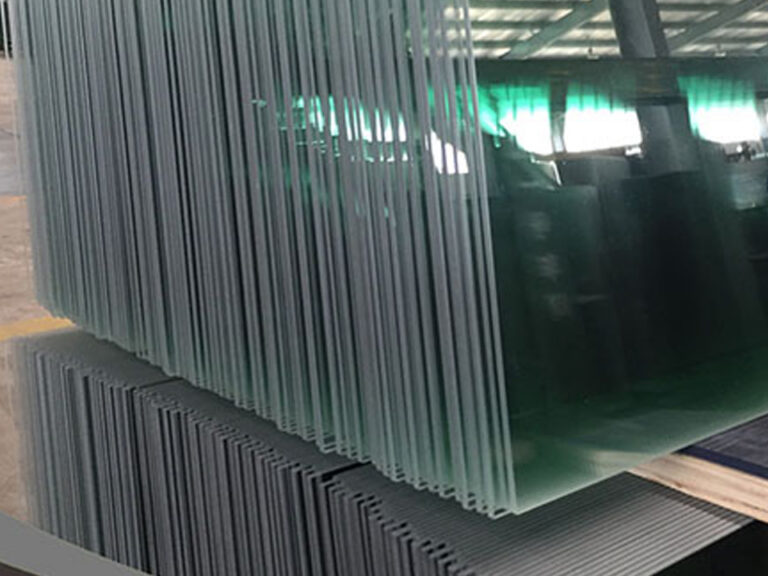
Somos um fabricante líder de vidro com sede na China,
Especializada em soluções de vidro de alta qualidade para aplicações industriais e arquitetónicas.
Com anos de experiência e certificação ISO, fornecemos orçamentos rápidos e personalizados, bem como um apoio ágil a profissionais de compras, engenheiros e gestores de projeto em todo o mundo.
Somos um fabricante líder de vidro com sede na China,
Especializada em soluções de vidro de alta qualidade para aplicações industriais e arquitetónicas.
Com anos de experiência e certificação ISO, fornecemos orçamentos rápidos e personalizados, bem como um apoio ágil a profissionais de compras, engenheiros e gestores de projeto em todo o mundo.
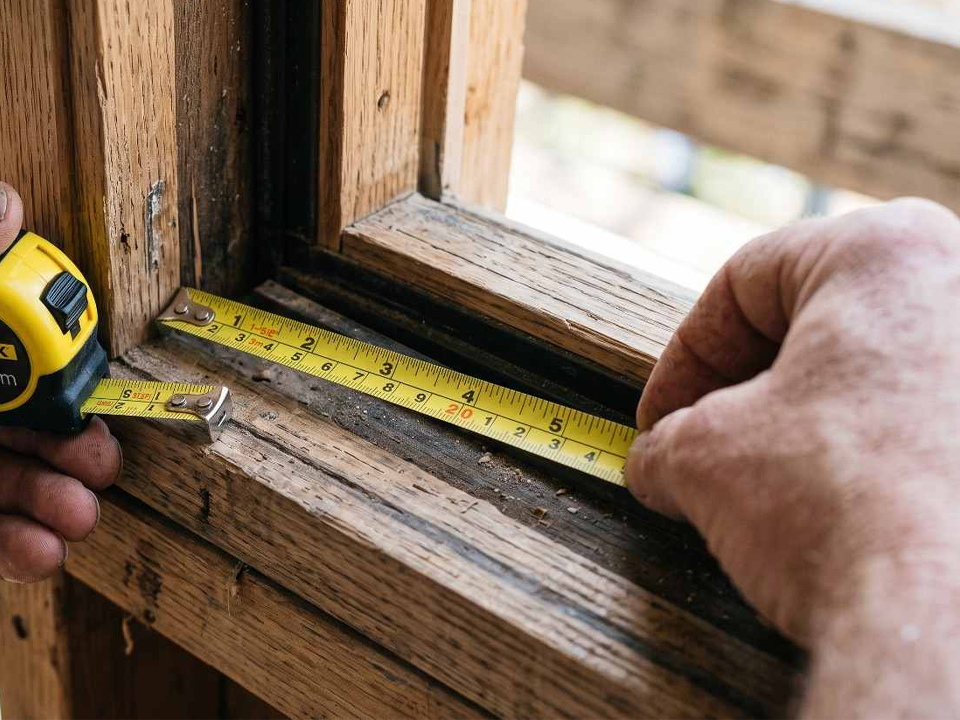
Measure the glass-retaining pocket at three points across and three points vertically, use the smallest width and height, verify the diagonals, and then apply only the clearance specified for that sash or glazing system. For a sealed double-pane unit, record the complete unit thickness and construction as well. Always state dimensions width first, then height.
That is the short answer. It is also where many expensive mistakes begin.
Glass is unforgiving.
I have seen people measure the bright, visible rectangle, subtract an internet-standard fraction, and discover—after the replacement arrives—that they ignored the glazing bite, the setting-block space, or the 7/8-inch overall thickness of the insulated glass unit. What looked like a tape-measure job became remanufacturing.
Why gamble on a fraction that may belong to somebody else’s window?
The hard truth is that “window size,” “daylight size,” “tight size,” “glass size,” and “order size” are not interchangeable. A supplier needs the finished glass dimensions. An installer may first have only the frame opening. So when people ask how to measure window glass—or how to measure a window frame for glass—I first separate the field measurement from the final order size. The gap between those two numbers is determined by the actual glazing system, not by folklore.
The Measurement You Need Depends on the Glass You Have
Before touching the tape, identify the assembly. A traditional wood sash may hold one annealed pane with putty and points. A vinyl sash may contain a sealed insulated glass unit, or IGU, trapped behind snap-in glazing beads. A bathroom window near a tub may require tempered or laminated safety glass. A decorative unit may have a pattern orientation that turns width-versus-height into a very visible mistake.
I use this first-pass classification:
Single-pane glass: One lite, commonly 3/32 or 1/8 inch thick in older residential work.
Insulated glass unit: Two or more lites separated by a spacer and sealed around the perimeter; overall thickness often matters as much as width and height.
Safety glass: Tempered or laminated material required in specified hazardous locations; it cannot be treated like ordinary annealed glass.
Coated or decorative glass: Low-E, tinted, low-iron, patterned, or fritted glass whose surface, color, direction, and make-up must be recorded.
Special geometry: Arches, trapezoids, circles, radius corners, bent glass, holes, and notches that require a template or shop drawing.
This is not product trivia. In June 2023, a U.S. Department of Energy and Pacific Northwest National Laboratory high-R-window field-validation presentation estimated that thermal gains and losses through windows account for roughly 25% of building HVAC consumption; it also calculated 2.3 quadrillion Btu of annual technical savings potential for high-R residential window solutions. Measuring only length and width can preserve the fit while quietly destroying the thermal specification.
If the replacement is part of an IGU, document Low-E orientation, spacer color, grid pattern, gas fill, and overall thickness before ordering. Custom-size Low-E glass for IGU production is ordered from a specification, not from two naked numbers; coating orientation and edge preparation affect fabrication.
Tools I Trust—and the Ones I Do Not
Use a steel tape graduated to at least 1/16 inch, a digital caliper or glass-thickness gauge, a framing square, a permanent marker, a notebook, cut-resistant gloves, safety glasses, and masking tape for stabilizing cracked glass. For larger openings, a laser can cross-check a reading, but I do not use a consumer laser as the sole source for glass cutting size.
A cloth sewing tape? No.
It can sag, stretch, and ride over glazing details, while a worn hook on a steel tape can also introduce error, so check the tape against a known rule and use the same instrument for every measurement in the set. How much tolerance do you think a rigid pane has when the frame is out of square?
Record inches as fractions consistently—31 13/16 inches, not “31.8”—or use millimeters throughout. For reference, 1/16 inch is 1.6 mm, 1/8 inch is 3.2 mm, and 1/4 inch is 6.4 mm. Never switch unit systems halfway through a worksheet.
How to Measure Single-Pane Window Glass
Remove loose shards only if the area can be made safe, and do not pry against a cracked pane under tension. If the pane remains intact, remove the stops or putty carefully enough to expose the edge. The most dependable reference is the old glass itself, provided it was correctly fitted and has not lost an entire edge.
When the old pane cannot be measured, work from the glazing pocket—the rabbet or channel into which the glass sits:
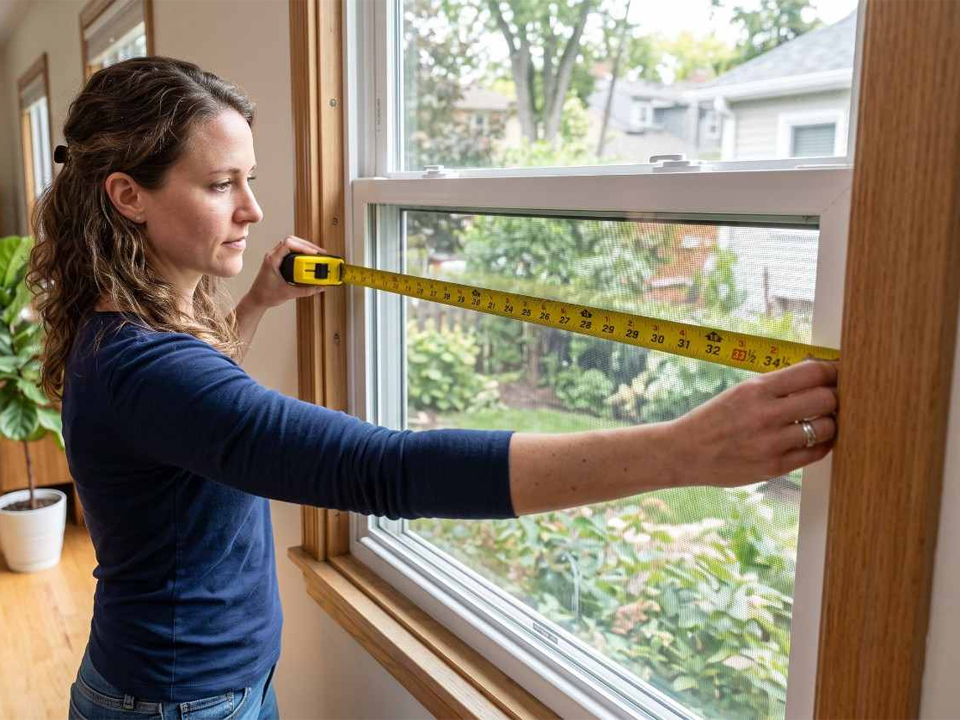
Measure the pocket width at the top, middle, and bottom.
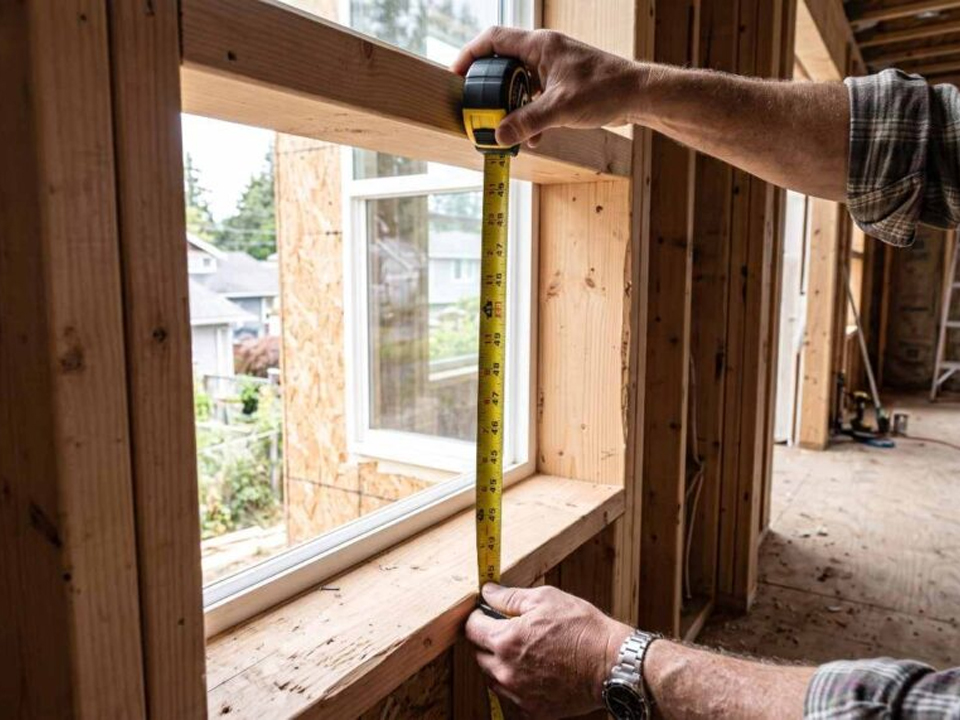
Measure the pocket height at the left, center, and right.
Write down all six readings. Do not average them.
Use the smallest width and the smallest height as the tight opening.
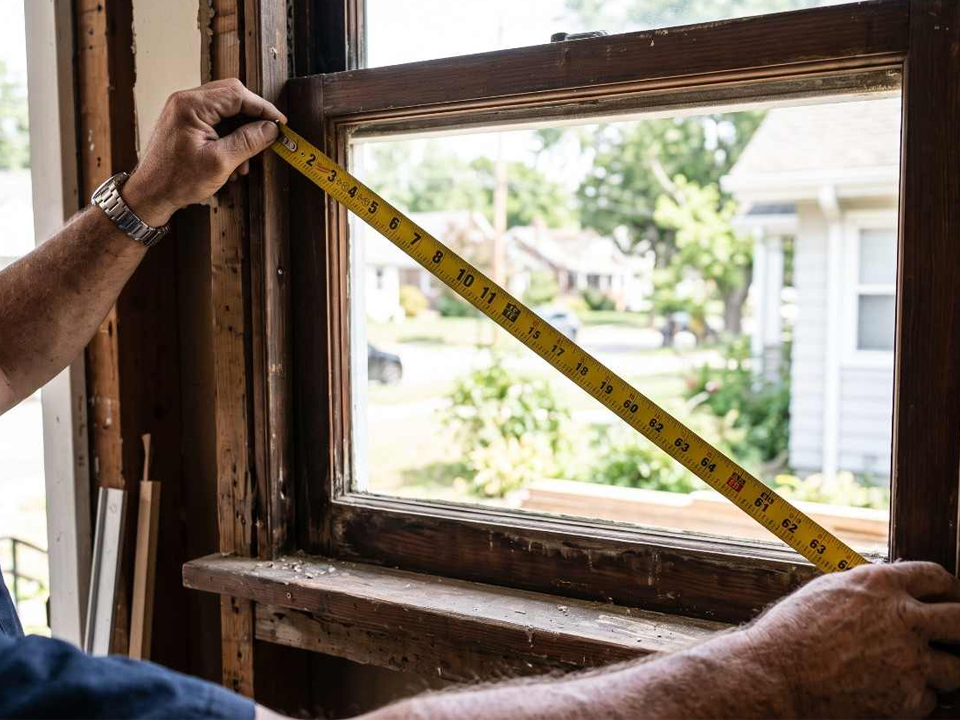
Measure both diagonals to expose an out-of-square sash.
Ask the glass fabricator for the required edge clearance, then calculate the final glass cutting size.
Suppose the smallest pocket width is 31 13/16 inches and the smallest height is 47 13/16 inches. If—and only if—the fabricator specifies a total deduction of 1/8 inch from each dimension, the order becomes 31 11/16 × 47 11/16 inches. That leaves 1/16 inch per side in a perfectly centered pane. It is an example, not a universal allowance.
How to Measure an Insulated Glass Unit
With an IGU, width and height are merely the beginning. The best method is to remove the glazing beads, take out the unit safely, and measure the sealed unit edge to edge. Measure the overall thickness with calipers. Then identify each lite, the spacer, any grid, and the Low-E surface.
Do not puncture or dismantle the seal to investigate it. An IGU commonly contains dry air or argon (Ar); the perimeter seal and desiccant-controlled cavity are part of the product. Once that seal fails, condensation between the panes is not a cleaning problem—it is unit failure.
If removal is not practical before ordering, measure the sash pocket and determine the glazing bite: the amount of glass hidden behind the beads on each edge. But I will be blunt: visible daylight dimensions plus a guessed overlap are second-best data. Bead profiles vary, and old sash can distort.
For replacement window glass measurements, record:
Finished width × height, always in that order
Overall IGU thickness
Individual lite thicknesses, if known
Spacer width, color, and material
Low-E coating and its surface position
Gas fill, commonly argon (Ar), if specified
Tempered or laminated safety requirement
Grid pattern, bar width, color, and alignment
Tint, pattern direction, edgework, holes, or notches
A warm-edge spacer is not a cosmetic extra. A January 2023 DOE utility playbook reported that PNNL lab-home tests of Low-E storm windows produced average heating-load savings of 11% and cooling-load savings of 8%; other DOE field validations cited annual heating-and-cooling bill savings of up to 30% and whole-house air-leakage reductions of 10% or more. Those figures concern complete window interventions, not a promise for one replacement pane, but they show why reproducing the original thermal make-up matters. Review custom-size warm-edge energy-saving IGUs when perimeter temperature, condensation resistance, and spacer selection belong in the order.
Window Glass Replacement Measurement Worksheet
This is the compact field sheet I would want attached to a quotation. The sample window pane dimensions show the logic; replace them with actual readings.
Field
Reading 1
Reading 2
Reading 3
Order-basis value
Pocket width
31 7/8 in. top
31 13/16 in. middle
31 7/8 in. bottom
31 13/16 in. minimum
Pocket height
47 15/16 in. left
47 7/8 in. center
47 13/16 in. right
47 13/16 in. minimum
Diagonals
57 1/2 in.
57 5/8 in.
Difference: 1/8 in.
Flag squareness
Espessura do IGU
7/8 in.
Confirm twice
—
7/8 in.
Supplier deduction
1/8 in. total
Written confirmation
—
Apply once per dimension
Example order size
—
—
—
31 11/16 × 47 11/16 in.
Add a sketch showing interior and exterior faces. Label the top. Photograph the spacer stamp, safety mark, Low-E detector result, muntin layout, and every measurement with the tape visible. A two-minute photo record can settle a two-week argument.
Replacement Glass Sizing: How Much Smaller Should Glass Be Than the Frame?
There is no defensible universal deduction. Many conventional single-pane jobs use approximately 1/8 inch total clearance in width and height; other pockets, vinyl sash systems, large lites, setting-block designs, and IGUs may require different allowances. The fabricator’s written requirement wins.
Too tight is dangerous. Glass expands with heat, wood swells with moisture, vinyl moves, and imperfect frames rack under load. Edge contact can create concentrated stress and breakage. Too loose is not clever either: inadequate bite can reduce retention, compromise weather sealing, or leave the pane poorly supported.
The phrase “subtract 1/8 inch” also hides a common ambiguity. Does it mean 1/8 inch from the total width, leaving 1/16 inch on each side, or 1/8 inch from every side, reducing the total by 1/4 inch? Write the final size. Never transmit only the deduction.
Safety Glass, Coatings, and Shapes Change the Order
The U.S. Consumer Product Safety Commission’s 16 CFR Part 1201 regulates architectural glazing in products such as storm doors, shower and bathtub enclosures, and sliding patio doors; the Commission voted 5–0 in 2016 to update the test procedures by incorporating ANSI Z97.1-2015. Local building codes may impose additional safety-glazing rules near doors, floors, stairs, tubs, and other impact zones. Measure first, yes—but identify the legally required material before buying.
Tempered glass must be cut, drilled, notched, edged, and shaped before tempering. It cannot be trimmed afterward. Laminated glass typically bonds layers with polyvinyl butyral (PVB) or another interlayer, so overall thickness and edge treatment must be specified. And for curved work, a tape dimension cannot fully describe the part; radius, arc length, chord, rise, bend direction, and a full-size template may be needed. Made-to-order curved tempered glass illustrates why drawings, holes, cutouts, radii, and handed curves belong in the fabrication record.
Pattern direction matters too. If privacy or decoration is being matched, record which face carries the texture and whether the pattern runs vertically or horizontally. Patterned insulated glass options for decorative glazing should be specified with orientation, make-up, and dimensions together—not selected after the size is already released.
The Errors I See Most Often
First, measuring trim rather than the glazing pocket. Second, measuring once. Third, averaging a bowed opening when rigid glass must clear the narrowest point. Fourth, reversing width and height. Fifth, copying the nominal window size from a label and assuming it equals the actual glass.
Then come the IGU mistakes: omitting overall thickness, treating a failed sealed unit as two independent panes, overlooking a Low-E surface, mismatching grid spacing, and ordering from daylight size without verifying bead overlap. These are not tiny clerical errors. They produce unusable glass.
One more unpopular opinion: if the pane is large, overhead, severely cracked, structurally glazed, fire-rated, curved, or located in a regulated safety zone, DIY measurement is false economy. Bring in a glazier who can deglaze, identify, and template the assembly without guessing.
The Best Way to Measure a Window for Replacement Glass: Final Check
Read the order aloud: width, height, thickness, glass type, treatment, coating surface, spacer, grid, edgework, quantity. Compare it with the sketch. Check the narrowest measurements again with the same tape. Confirm the deduction in writing.
Então pára.
Do not “round for convenience,” silently convert fractions to decimals, or add an installation allowance twice because both the estimator and fabricator thought the other person had not done it. Is five more minutes of checking really slower than replacing a custom unit?
Perguntas mais frequentes
How much smaller should replacement glass be than the frame?
Replacement glass should be smaller than the tight glazing-pocket dimensions by the edge clearance required for the specific sash, glass type, pane size, and installation method; while 1/8 inch total per dimension is common in some single-pane work, it is not safe to assume without the fabricator’s confirmation.
Measure three widths and three heights, base the calculation on the smallest of each, and write the final order size rather than an ambiguous “deduct 1/8” note.
Can I measure the visible glass without removing the glazing beads?
Visible glass can provide a preliminary estimate, but it does not reveal the hidden glazing bite beneath the beads, the true edge-to-edge size, the setting clearance, or—in an insulated unit—the full spacer and seal geometry, so it should not be treated as final ordering data unless the sash manufacturer supplies the exact conversion.
If pre-removal measurement is unavoidable, identify the sash model, measure bead-to-bead at several points, determine the designed overlap, and have the supplier accept the calculation before production.
Do I measure the window frame or the old pane?
The old pane is the best direct reference when it was correctly sized and remains complete, whereas the exposed glazing pocket is the better reference when the old glass is broken, chipped, previously miscut, or unavailable; in either case, verify the frame at multiple points and confirm the required clearance independently.
Do not measure casing, trim, or the exterior outline of the sash. Those dimensions describe the window assembly, not the replacement glass.
What measurements are needed for double-pane replacement glass?
A double-pane replacement requires finished width, finished height, overall IGU thickness, individual glass make-up, spacer specification, Low-E coating and surface, gas fill, tempering or lamination, tint, grid pattern, and any edge details, because matching only the outer dimensions can produce a unit that fits the opening but fails the sash or performance specification.
When possible, photograph the spacer code and measure the removed unit with calipers. Replace the sealed IGU as an assembly; do not attempt to separate and reuse its lites.
Can tempered glass be cut after I measure it?
Tempered glass cannot be cut, drilled, notched, ground, or resized after the heat-treatment process because disturbing its balanced surface and core stresses usually causes the entire lite to fragment, which means every dimension, hole, corner radius, edge finish, and orientation must be finalized before the fabricator tempers it.
If a tempered panel arrives oversize, the fix is remanufacture—not a glass cutter. Look for a permanent safety mark and confirm local code requirements before ordering.
Get an Order-Ready Glass Specification
Measure twice. Specify once.
Send the six opening measurements, diagonals, overall thickness, interior/exterior sketch, photographs, glass type, safety treatment, coating surface, spacer, grid, edgework, and quantity with your quotation request. If any field is uncertain, say so before fabrication begins. A disciplined window glass replacement order costs far less than a beautifully made pane that is 1/8 inch wrong.