Reliable Glass Manufacturing For Industrial & Architectural Projects
We are a leading glass manufacturer based in China, specializing in high-quality glass solutions for industrial and architectural applications. With years of experience and ISO certification, we provide fast, tailored quotes and responsive support for procurement professionals, engineers, and project managers worldwide.
Lynn Lee
Founder
Reliable Glass Manufacturing For Industrial & Architectural Projects
We are a leading glass manufacturer based in China, specializing in high-quality glass solutions for industrial and architectural applications. With years of experience and ISO certification, we provide fast, tailored quotes and responsive support for procurement professionals, engineers, and project managers worldwide.
And I don’t mean interns or first-year estimators. I mean grown-up project teams, full submittal chains, experienced buyers, facade consultants who should know better, and procurement people who keep treating processed glass like it’s just another commodity line item, even though one bad assumption here can ripple into re-fabrication, field delays, ugly optics, and the kind of owner call nobody wants to take on a Friday afternoon. It happens. Constantly.
Because “tempered glass vs heat-strengthened glass” sounds like a simple comparison, and simple comparisons are catnip for people who don’t want to think past a data sheet. But the real split isn’t simple. Not even close. It’s about code exposure, fracture pattern, fallout risk, visual distortion, thermal stress, lamination strategy, post-breakage behavior, fabrication sequence, and whether the lite has to protect a body, a facade line, or both at once.
Table of Contents
The shortcut mindset is the real problem
Spec says safety glass. Shop drawing note gets fuzzy. Somebody in sourcing decides the cheaper processed option is “basically the same.” Then the field team, who had no part in the original decision, gets handed a problem that was baked in weeks earlier—usually by someone staring at a spreadsheet instead of a glazing schedule.
Here’s the ugly truth: too many people think this is a strength contest. It isn’t. Strength matters, yes, but if that’s all you’re comparing, you’re not really specifying glass. You’re shopping for a headline. And headlines don’t tell you how the panel breaks, whether the fragments stay captured, whether the optic quality is going to look awful at 4:30 p.m. sun angle, or whether you’ve just crossed into a code issue by swapping a compliant safety-glazing path for something that merely sounds similar.
Tempered glass is usually the default conversation when the code requires safety glazing in hazardous locations because its break pattern—those small granular particles—is part of why it gets used where human impact is on the table. Heat-strengthened glass does something different. It offers more strength than annealed, sure, but it breaks in larger pieces, more like annealed glass, which can actually be useful in the right laminated build-up.
Not everywhere. And that’s exactly the point.
What the code is actually asking
They care about what the glass does in the opening, under the condition that matters, for the risk category that triggered the requirement in the first place. That’s why this whole “what is the difference between tempered and heat-strengthened glass” question gets mangled so often: people answer it like a materials quiz when it’s really a compliance-and-performance question.
In the usual door, sidelite, shower, railing, and other hazardous-location scenarios, the code path typically pushes you toward safety glazing logic first. That’s why tempered glass building code discussions are common in those applications. Human impact. Injury reduction. Tested behavior. Pretty direct.
Heat-strengthened glass code requirements usually show up when you’re dealing with facade design, thermal loading, laminated assemblies, overhead glazing, sloped systems, and other spots where the post-breakage condition matters almost as much as the pre-breakage strength. That is not fringe stuff. That’s mainstream facade work.
And I frankly believe this is where spec language gets laundered into nonsense. Someone says heat-strengthened is “almost tempered.” Fine. Almost is not a code category. Almost won’t save you when an opening requires actual safety glazing.
Tempered glass vs heat-strengthened glass, without the brochure fluff
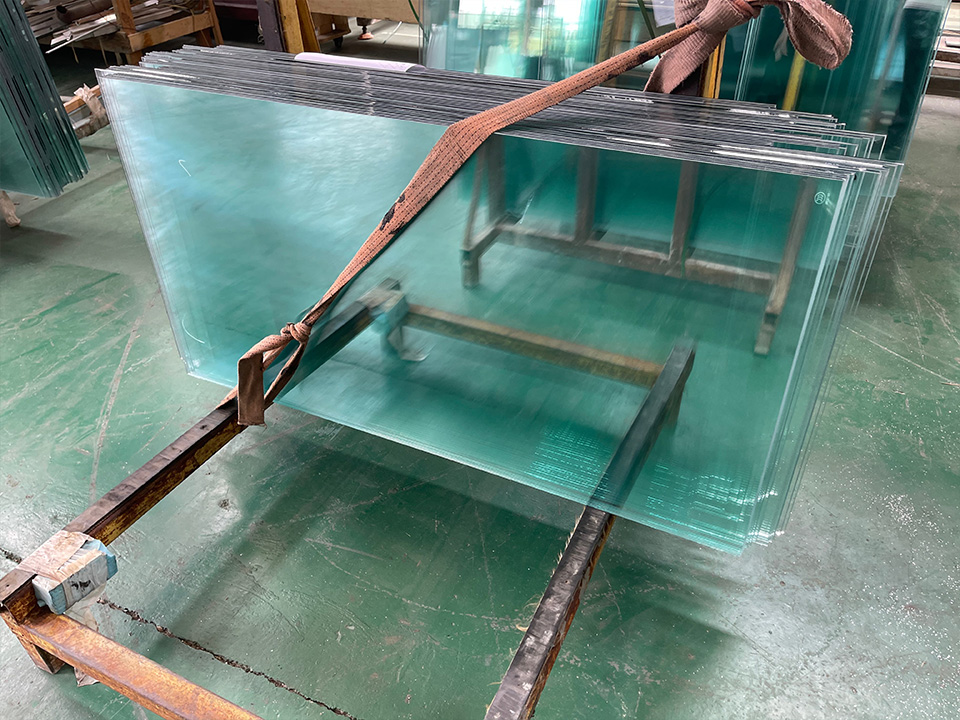
Tempered glass is heat-treated to a higher surface compression level. Heat-strengthened glass is also heat-treated, but to a lower level. So yes, tempered is generally stronger. That’s the easy part. Everyone parrots that part. The harder part—the part that matters in real jobs—is how that treatment changes fracture behavior, optical quality, and the way the lite behaves after failure.
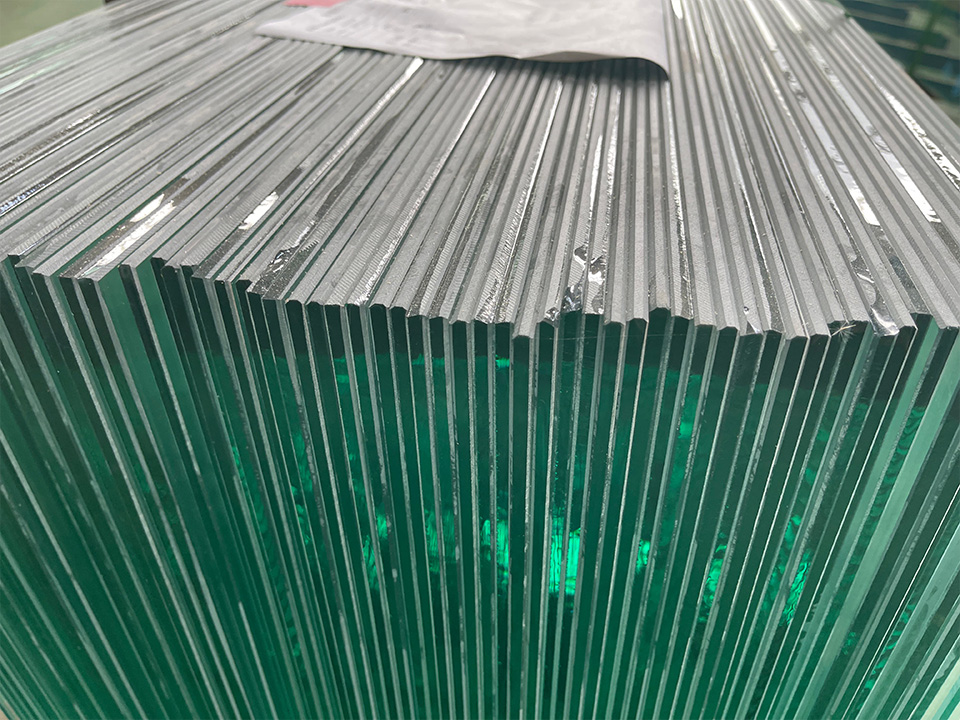
Tempered breaks into those small cube-ish fragments people associate with safety glass. Heat-strengthened breaks into larger pieces. In monolithic form, that matters one way. In laminated form, it matters another. Larger fragments retained by an interlayer can be a feature, not a defect, depending on the assembly and the design intent.
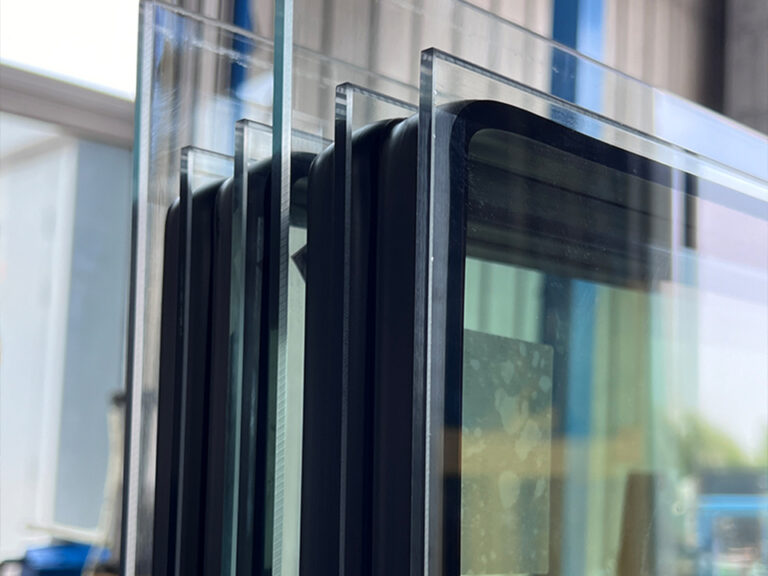
On facade packages, especially the more serious ones, I keep coming back to project-spec custom laminated glass build-ups because laminated assemblies change the whole conversation. Fragment retention. Redundancy. Fallout risk. Acoustic side benefits. Suddenly you’re not just picking a processed lite; you’re engineering failure behavior.
Breakage behavior is where the amateurs get exposed
Or worse—it’s mentioned in one sterile sentence and then buried under load tables and generic claims about durability. But if you’ve ever had to explain a broken lite to an owner, a GC, or a property manager who wants to know why one panel disappeared from the opening while another cracked and hung together, you know this is not a side note.
Monolithic tempered glass is great in the right impact-safety situations. No argument there. But once it lets go, it can evacuate the opening fast. Heat-strengthened laminated glass can behave very differently. It may crack, yes, but the retained fragments and interlayer can keep the assembly more coherent—which, in curtain wall or overhead conditions, is often exactly what you want.
That doesn’t make heat-strengthened “better.” I hate that word in glazing. Better for what? A shower door? Probably not. A high-exposure laminated facade zone where fallout and visual control matter? Maybe absolutely.
And that’s why diverse shower glass customization available lives in a different world from a laminated facade spec. Same broad material family. Totally different performance logic.
Visual quality—the thing architects pretend not to obsess over
They just don’t always say it plainly in the early meetings, because nobody wants to admit that after all the talk about performance and resilience and specification rigor, half the emotional reaction to the installed glass still comes down to whether the facade looks clean, flat, quiet, and expensive—or wavy, streaky, and weirdly rainbowed under polarized light.
Tempered glass often shows more roller-wave, quench pattern, and anisotropy than heat-strengthened glass. Not every lite. Not every elevation. But enough that it becomes a real design issue on low-iron, large-format, reflective, or highly exposed systems. Once the sun hits, the truth shows up.
That’s why some teams prefer heat-strengthened glass inside laminated facade makeups when they’re chasing a more controlled visual result. Less visual noise. Better flatness. Fewer “why does that bay look different?” calls after handover. If clarity matters, products like custom and useful ultra-clear tempered glass and custom size bulk supply low-iron tempered glass need to be specified with open eyes. Low-iron plus heat treatment plus size plus light conditions—that mix can expose every aesthetic compromise in the line.
Use cases that make sense—and the lazy ones that don’t
Tempered glass applications make sense in doors, entrances, shower enclosures, many interior partitions, and other code-defined hazardous locations where human impact protection is the first gate. It also makes sense where thermal stress is a concern and safety glazing is still required. That’s the obvious lane.
Heat-strengthened glass use cases usually land better in laminated curtain wall systems, thermally stressed facade zones, overhead and sloped glazing, and assemblies where larger retained fragments can support a safer or more serviceable post-breakage condition. Also—this gets ignored too often—it can be the smarter visual choice when fully tempered distortion would be too noticeable for the design standard.
They drop monolithic heat-strengthened glass into locations that require safety glazing by code because someone heard it was “stronger than regular glass.” That’s not analysis. That’s campfire knowledge. Or they specify fully tempered everywhere because it feels safer, then act surprised when the facade reads with distortion and the owner starts circling visual defects in punch-list photos.
The blanket spec is usually a confession. It says nobody wanted to do the hard thinking.
Tempered, heat-strengthened, laminated: the comparison that actually helps
Most comparison charts are too neat.
Real projects aren’t neat. Still, a table helps if it’s honest about what matters.
Assuming it equals tempered for code impact safety
Ignoring interlayer spec
Using it without validating code path
That table helps.
But only if people read the last row. Because the most expensive glass mistakes usually don’t come from ignorance alone. They come from overconfidence.
Procurement changes everything
This is where theory goes to die.
On paper, glass selection looks clinical—thickness, heat treatment, coating, interlayer, code note, done. In actual purchasing, though, the decision gets tangled up with furnace capacity, lead time, oversize limitations, hole placement, notch geometry, edgework, lamination sequence, packing method, fabrication yield, crate damage risk, site access, and the simple but deadly question of whether the person issuing the PO actually understands what the opening requires.
From my experience, “hardware sourcing” teams often get dragged into glass decisions without being given the right context, which is how you end up with a value-engineered substitution that looks harmless until someone notices the assembly no longer behaves the way the original design intended. Then it’s not a material issue anymore. It’s a remake. A sequencing issue. A site headache. A freight problem. Maybe a warranty fight too.
That’s why I’d rather work with a supplier that actually understands manufacturing services than one that just fires off a tidy quote and disappears the moment you ask about edge deletion, distortion tolerance, or the sequencing of cutouts before tempering.
Heat-soaked tempered glass gets oversold
“Just heat soak it.” As if that closes the loop. As if one extra process step magically turns every tempered-glass risk profile into a solved problem. It doesn’t. Not even close.
Heat soaking can reduce the chance of spontaneous breakage associated with nickel sulfide inclusions in tempered glass. That’s useful. Very useful, sometimes. But it’s not magic, and I get irritated when it’s pitched like a universal shield instead of what it actually is: a risk-reduction measure that belongs in a broader conversation about consequence, accessibility, panel size, location, and replacement pain.
Boring questions are usually the ones that save the job.
The only rule I actually trust
Not the brochure. Not the sales deck. Not the line item that happens to be easier to explain in a procurement meeting. Choose for the way the glass behaves when something goes wrong—because on enough projects, something eventually does.
If you select glazing only for initial strength, you’re thinking like a catalog. If you select it for how it cracks, whether it stays in place, what it looks like under hard light, how it performs inside an IGU, how it reacts to thermal load, and what the owner will face after breakage, then you’re finally doing real specification work.
For early-stage selection, I still like starting with the broader glass products range because it forces the assembly conversation before the product-label conversation. And when the project is messy—which is most projects—I also look at case studies because I’d rather see what a supplier has actually supported than listen to polished copy about “solutions.”
FAQs
Is tempered glass stronger than heat-strengthened glass?
Tempered glass is generally stronger than heat-strengthened glass because it is processed to a higher surface compression level, which improves impact and thermal resistance and causes it to fracture into small granular pieces, making it the more common choice where code-driven safety glazing is required in hazardous human-impact locations.
Yes. Usually. But don’t stop there. Stronger doesn’t automatically mean smarter for the assembly. I’ve watched teams chase the bigger strength number and miss the fact that the post-breakage behavior or visual quality was the thing that actually mattered.
Is heat-strengthened glass safety glass?
Heat-strengthened glass is not typically treated as monolithic safety glazing in the same way tempered glass is, because although it is stronger than annealed glass, it breaks into larger shards rather than the small particles associated with tested safety-glazing performance in many code-regulated hazardous locations.
Usually, no. That’s the clean answer. And it’s where bad assumptions spread fastest, because people hear “heat-treated” and think they’ve covered themselves. They haven’t. Not if the opening actually requires a true safety-glazing path.
When should I use heat-strengthened glass instead of tempered glass?
Use heat-strengthened glass instead of tempered glass when the project benefits more from improved flatness, reduced optical distortion, and larger retained fragments in a laminated assembly than from monolithic impact-safety behavior, especially in curtain walls, overhead glazing systems, and thermally stressed facade conditions.
That’s the honest version. If the glass is part of a laminated facade build-up and appearance plus retention matter, heat-strengthened can be the smarter play. If it’s a shower door, an entry, or another impact-prone hazardous location, tempered is usually where the conversation begins.
Can laminated heat-strengthened glass outperform monolithic tempered glass?
Laminated heat-strengthened glass can outperform monolithic tempered glass in applications where post-breakage retention, acoustic performance, visual control, and assembly integrity matter more than monolithic shatter-safety behavior, particularly in facade systems, overhead glazing, and higher-consequence architectural openings.
Yes—absolutely, in the right job. That’s why laminated vs tempered vs heat-strengthened glass isn’t a ranking exercise. It’s a failure-mode exercise. Different assemblies are solving different problems, and pretending otherwise is how specs go sideways.
Does tempered glass always need heat soaking?
Tempered glass does not always need heat soaking, because heat soaking is a project-specific risk-mitigation step used mainly to reduce spontaneous breakage exposure in higher-consequence installations rather than a mandatory requirement for every tempered lite or every building type.
No. And honestly, I wish the industry would stop treating it like a ceremonial upgrade. Use it when the consequence of spontaneous breakage justifies it. Don’t use it as a substitute for thinking.
Final call
If your team is still arguing over tempered glass applications, laminated makeups, oversized facade lites, or the right path for heat-strengthened glass code requirements, don’t guess and don’t let the cheapest substitution drive the decision. Start with the contact page and get the opening type, code exposure, thickness, fabrication limits, and breakage expectations pinned down before somebody orders the wrong lite and calls it value engineering.