We are a leading glass manufacturer based in China,
Specializing in high-quality glass solutions for industrial and architectural applications.
With years of experience and ISO certification, we provide fast, tailored quotes and responsive support for procurement professionals,engineers, and project managers worldwide.
We are a leading glass manufacturer based in China,
Specializing in high-quality glass solutions for industrial and architectural applications.
With years of experience and ISO certification, we provide fast, tailored quotes and responsive support for procurement professionals,engineers, and project managers worldwide.
How to Clean Outside Windows that You Can’t Reach [9 different ways]
A ground-floor pane forgives clumsy technique, but an exterior window above a porch roof, behind a fixed sash, or twenty feet over concrete turns a harmless cleaning job into an access problem with chemical, glass-surface, electrical, and fall risks.
Why gamble with it?
For most homes, the best way to clean outside windows you cannot reach is simple: tilt or remove the sash if its manufacturer designed it to open inward; otherwise work from the ground with a telescopic washer and squeegee or a purified-water pole. Fixed high-rise glass, unstable ladder positions, overhead wires, and roof access belong to an insured professional.
I will be blunt. A streak is cosmetic; a fall is not. The window-cleaning trade sells plenty of ingenious tools, yet some of them merely move the hazard from your feet to a falling object, a crushed fingertip, a damaged coating, or a robot dangling over a sidewalk.
The fast answer: match the method to the access problem
Use the least complicated option that lets your torso and both feet stay in a protected position.
An operable tilt-in or removable sash: Clean the exterior face from indoors.
A window up to roughly 12–16 feet above level ground: Use a telescopic window cleaning pole with a microfiber washer and squeegee.
Multiple second-story windows: Consider a water-fed brush and purified water, provided no electrical lines are nearby.
An apartment window that opens but does not tilt: A correctly sized magnetic cleaner, U-shaped pole, or tethered robot may work.
A fixed pane above reliable ground-based reach: Hire a professional with the right access system.
Do not confuse “reachable with a ladder” with “safe for me to reach.” Those are different tests.
Before cleaning, identify the glass and set a stop line
Start with the window label, corner etch, purchase record, or building manual. A typical double-pane insulated glass unit, or IGU, has four numbered surfaces: surface #1 faces outdoors, #2 and #3 face the sealed cavity, and #4 faces the room. Many soft Low-E coatings are protected on #2 or #3, but exposed hard coats, applied films, reflective layers, sealants, and aftermarket treatments require product-specific care.
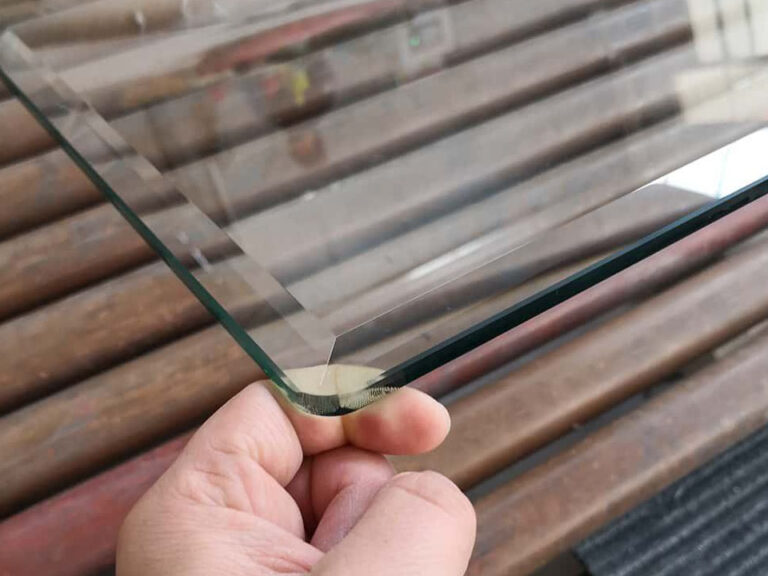
Tempered glass is stronger against impact and thermal stress than annealed glass, but it is not magically scratch-proof. Fabricating debris can be trapped on the surface, and a scraper may drag that debris across the pane. The larger the lite, the more expensive the mistake; oversized tempered curtain-wall glass illustrates why surface identification and controlled handling belong in the cleaning plan.
Texture changes the method too. A squeegee cannot maintain a clean edge over ribs, pebbles, or obscure patterns, so custom patterned window glass needs a soft brush, a thorough rinse, and microfiber drying where accessible.
Then set your stop line. Mine is conservative: no leaning past the waist, no standing on a sill or roof edge, no improvised human tether, no metal pole near conductors, no work over pedestrians, and no ladder on wet, soft, sloped, or uneven ground.
The numbers support that caution. The U.S. Bureau of Labor Statistics’ 2023 Census of Fatal Occupational Injuries, released December 19, 2024, recorded 885 fatal workplace falls, slips, and trips; 725 were falls to a lower level. Among building and grounds cleaning and maintenance workers, 85 deaths, or 25.2% of the occupation’s fatalities, came from falls, slips, and trips. These are broad occupational figures, not a count of household window-cleaning incidents, but they expose the scale of the hazard.
NIOSH’s January 23, 2024 ladder guidance adds a more actionable finding: in about 40% of ladder-injury cases, the base slid because the extension ladder had been set at the wrong angle. Its recommended setup is about 75 degrees, commonly expressed as the 4-to-1 rule: move the feet one unit out for every four units of vertical rise.
Professionals face a much higher legal bar than “I tied off somewhere.” OSHA rule 29 CFR 1910.140 says a professional window-cleaner positioning system uses two separate window anchors during cleaning and requires each window anchor to support at least 6,000 pounds, or 26.5 kN. A radiator, curtain rod, window handle, furniture leg, or homemade eye bolt is not an equivalent anchor.
Build a low-residue cleaning kit
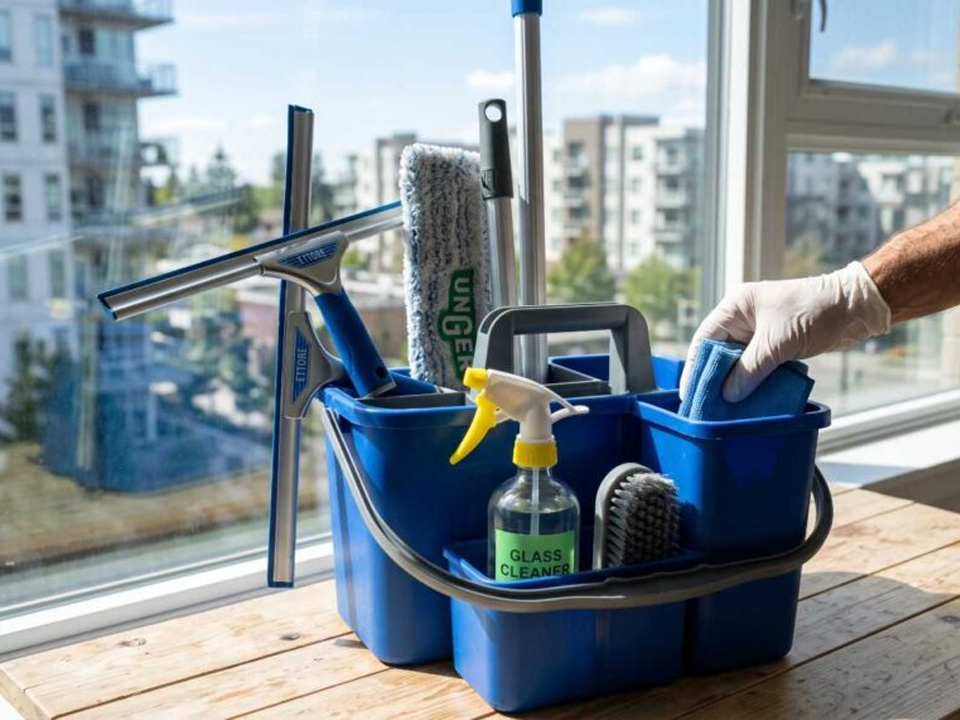
Fancy chemistry is overrated. For ordinary, manufacturer-approved uncoated glass, start with 2 U.S. gallons (7.6 L) of clean lukewarm water and about 1 teaspoon (5 mL) of mild, dye-free dish detergent. That is enough surfactant to loosen oily soil while keeping residue manageable.
Use:
one bucket for wash solution and one for rinsing the washer;
a clean microfiber sleeve or soft, nonabrasive brush;
a sharp rubber squeegee sized for the pane;
lint-free microfiber cloths for edges and frames;
a telescopic pole and angle adapter when required;
a total dissolved solids, or TDS, meter for a purified-water system;
nitrile gloves, eye protection, and slip-resistant footwear;
a manufacturer-approved tool tether wherever an outside component could fall.
For spot-free water-fed cleaning, aim for 0–10 parts per million TDS at the brush. Ordinary tap water can dry as visible calcium carbonate, CaCO₃, and magnesium residue. If old mineral deposits remain on confirmed uncoated glass, test a hidden area with equal parts water and household white vinegar, normally about 5% acetic acid or CH₃COOH before dilution, allow roughly two minutes of contact, then rinse fully. Stop if the glass has film, coating, etched decoration, sensitive stone below it, or incompatible sealant.
More chemical is not more clean. Never mix sodium hypochlorite bleach, NaOCl, with ammonia, NH₃, or acids; never use steel wool, melamine foam, a razor blade, or polishing powder unless the glass manufacturer expressly approves the exact material and method.
Work on an overcast, dry day when possible. Direct sun bakes detergent onto hot glass; strong wind twists long poles and redirects runoff. I prefer to start at the least visible pane, because a one-square-foot test patch tells the truth faster than a product label.
9 ways to clean hard-to-reach outside windows
1. Tilt, pivot, or remove the sash from inside
This is the first method to investigate because the building provides the access. Many double-hung windows have tilt latches; some casement and sliding systems permit a sash or panel to be removed under a defined manufacturer procedure.
Place towels below the opening, remove the screen, vacuum loose grit from tracks and weatherstripping, then operate the sash exactly as its manual specifies. Support it with both hands. Wash the exterior face with the mild solution, squeegee from a dry top edge in overlapping passes, wipe the rubber after each pass, and dry the perimeter before locking the sash back into its frame.
Cost: roughly $0–$25 for basic cleaning supplies. Finish quality: excellent. But stop if the sash binds, lacks obvious release hardware, feels too heavy for one person, or forms part of a fixed IGU or curtain wall. Forcing hardware can distort the frame and compromise the weather seal.
2. Use a telescopic washer and squeegee from the ground
A telescopic pole is the best-value answer for many first- and second-story windows. Consumer aluminum poles commonly extend 12–16 feet; professional modular systems can go farther, but stiffness, weight, wind loading, and control deteriorate as length increases. An Ettore REA-C-H-style pole, microfiber washer, swivel adapter, and squeegee is a typical configuration. Budget about $30–$100 for a capable residential setup.
First rinse or brush away loose grit. Wet the washer without flooding it, scrub the frame edge and glass in overlapping strokes, then rotate to the squeegee. Pull from top to bottom with the channel angled so dirty water moves toward the uncleaned area. Overlap each pass by roughly 1 inch (25 mm), and finish the bottom edge with a barely damp microfiber pad.
Keep the pole as upright as practical. If you must push it nearly horizontal over a deep porch, your leverage and blade pressure will be poor; that is the method telling you it has reached its limit.
3. Clean with a purified-water-fed pole
A water-fed pole sends deionized or reverse-osmosis-treated water through a hose to a soft brush. The brush agitates dirt, the pure water rinses it away, and the pane air-dries without a squeegee because very little dissolved mineral content remains.
This method suits repeated exterior window cleaning across two stories and some three-story façades from controlled ground positions. Scrub the upper frame first, rinse it, scrub the glass including corners, and give the pane a final top-to-bottom rinse while keeping the brush off dirty frame edges. Check the output with a TDS meter; 0–10 ppm is a useful working target, while rising readings warn that resin or filters need service.
Entry-level hose-fed brush kits may cost $100–$500. Full professional carbon-fiber, reverse-osmosis, and deionization systems can run from roughly $1,000 to well above $4,000. They also bring a hidden hazard: a long wet pole and hose near overhead electricity. Maintain the utility and equipment manufacturer’s required clearance; if conductors are anywhere near the work zone, stop.
4. Use a garden hose and low-pressure spray attachment
For dusty but not greasy glass, a hose can handle the rinse and reduce the amount of pole work. Use a fan pattern, not a concentrated jet. Pre-rinse from top to bottom, apply a modest amount of compatible soap with a hose-end reservoir or pole washer, agitate the glass, rinse the frame and pane thoroughly, then remove tap water with a pole-mounted squeegee before minerals dry.
Here is the hard truth: “spray and walk away” products often trade labor for spots. They work best with soft water, shade, simple frames, and modest soil. Hard municipal or well water can leave CaCO₃ residue, especially on sun-heated glass.
Do not substitute a pressure washer. High pressure can drive water past gaskets, disturb old sealant, strip finishes, damage screens, and expose a failing IGU edge seal. A window is a weather-managed assembly, not a concrete driveway.
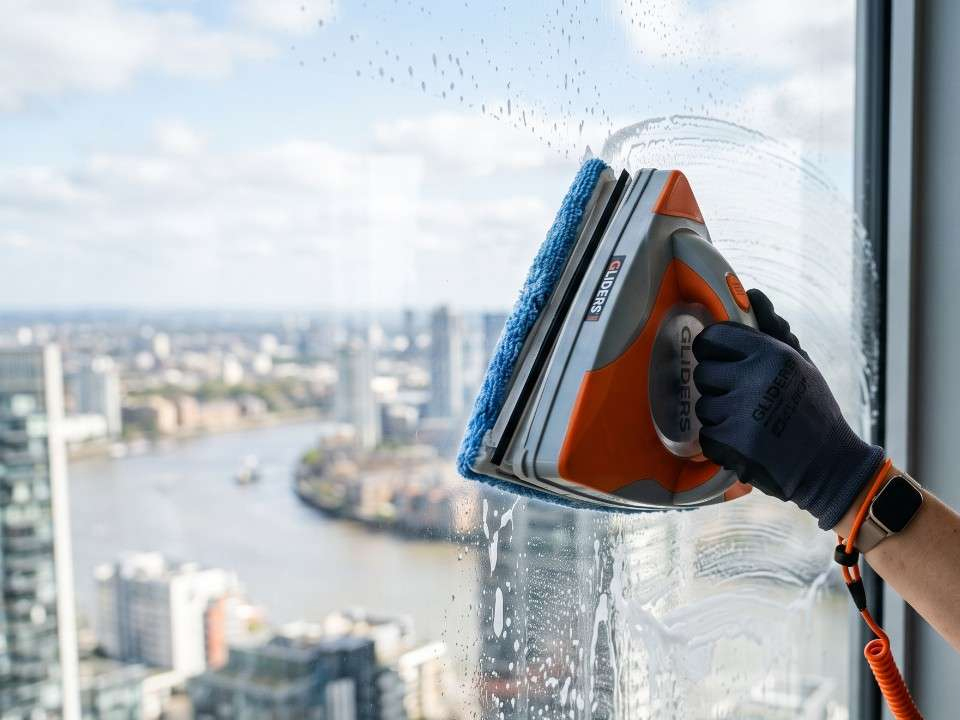
5. Use a correctly rated magnetic window cleaner
A magnetic window cleaner sandwiches the glass between an indoor cleaning half and an outdoor cleaning half. As you move the inside unit, magnets pull the outside unit along, allowing both faces to be washed from the room.
My view is unpopular with gadget sellers: these tools are oversold. Magnet strength must match the entire glass assembly, not a guessed pane thickness. Products may be rated for bands such as 3–8 mm single glass, 8–18 mm glazing, or 20–28 mm double glazing; the Tyroler Glider D-3, for example, is marketed for approximately 0.8–1.1 inches. A mismatch can make the outer half drag, detach, or snap violently against the glass.
Measure from the glazing specification, not the frame. Attach the outside unit’s safety cord exactly as instructed, clear the ground below, keep fingers away from the mating faces, and test movement at a low corner before adding solution. Use only on smooth, intact glass approved by both the window and cleaner manufacturers. Avoid cracked panes, unknown coatings, textured surfaces, and pacemaker proximity warnings stated by the product maker.
6. Clean from inside with a U-shaped telescopic pole
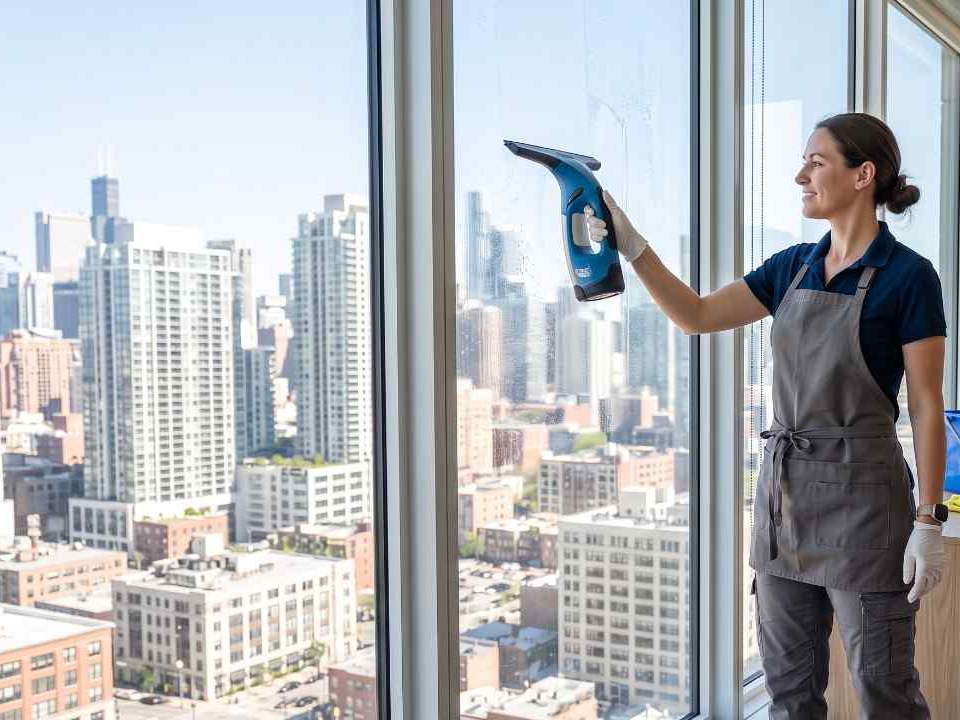
A U-shaped or reverse-curved pole reaches through an open sliding or casement window and turns the cleaning head back against the outside face. It can solve an apartment layout where the sash opens but the body cannot safely approach the exterior surface.
Fit a microfiber pad, dampen it rather than saturating it, tether the tool to a manufacturer-approved interior point, and keep your head, shoulders, hips, and both feet inside. Work from the far upper corner toward the opening. Switch to a dry pad or compatible curved squeegee for the final pass. Typical kits cost about $20–$70.
The technique is awkward, and that is not a character test. Stop if the pole forces you to lean out, the window restrictor must be defeated, wind catches the head, the tool could fall onto people or vehicles, or the exterior face extends beyond controlled reach. Notify building management before dropping water down any shared façade.
7. Attach a tethered window-cleaning robot
A suction robot travels across vertical glass using powered drive pads or tracks. The HOBOT-2S is a useful example of the category, not an endorsement: its published specifications list 72 W power, 6.0 kg of suction force, two 26 mL tanks, a 20-minute backup battery, 64 dB noise at 1 meter, and a minimum workable pane of 40 × 40 cm.
Clean and inspect the pads, connect power, secure the supplied safety rope to the fixed point specified by the manufacturer, place the robot on dry intact glass, and run the recommended pattern. Keep the area below closed until the machine and tether are back inside. Residential robots commonly fall in a rough $250–$500 planning range.
The battery is backup time, not permission to operate untethered. A robot also cannot solve every “unreachable” pane: someone still has to place and recover it safely. Avoid damaged glass, loose gaskets, heavy rain, strong wind, incompatible frameless edges, and any setup where the safety rope depends on a curtain rod, window handle, movable furniture, or another unrated object.
8. Use an extension ladder only within a controlled setup
The ladder is method eight for a reason. I would not send an inexperienced person up one merely to improve curb appeal, especially when a ground-based pole or a professional quote is available.
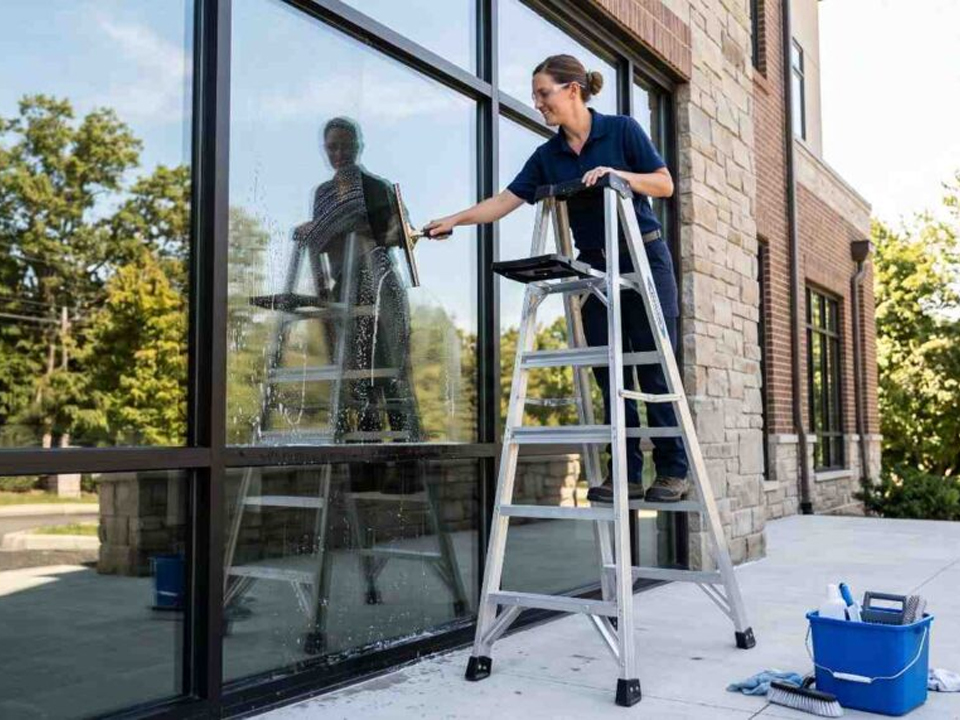
If a ladder remains appropriate, inspect its rails, feet, locks, rope, rungs, duty rating, and labels. Place it on level, firm, dry ground at about 75 degrees using the 4-to-1 rule. Use a compatible stand-off so the ladder bears on a sound structural area, never the glass. Keep three points of contact, keep your belt buckle between the rails, and climb down to reposition instead of reaching sideways.
Carry no open bucket while climbing; raise light tools only by an approved line after positioning. Have another adult control the ground area. Never use a metal ladder or conductive tool near electrical lines, never stand above the manufacturer’s highest permitted rung, and never move from the ladder onto a roof for this task.
Remember NIOSH’s 2024 warning: a bad setup angle was associated with base sliding in about 40% of ladder-injury cases. If the feet can move, the weather shifts, the window is above comfortable reach, or you cannot keep three points of contact, come down.
9. Hire an insured professional window cleaner
This is not surrender. It is the correct method for fixed high-rise glazing, third-story or setback panes beyond controlled pole reach, atriums, sloped roofs, damaged frames, overhead conductors, rope access, lifts, and any job above an occupied public area.
Ask for a certificate of general liability insurance and, where applicable, workers’ compensation coverage. Request the access method in writing: water-fed pole, mobile elevated work platform, rope descent, suspended scaffold, or another engineered system. Confirm glass compatibility, runoff control, pedestrian exclusion, hard-water treatment, and whether tracks, screens, frames, mineral removal, and post-construction debris are included.
OSHA’s 6,000-pound window-anchor requirement and two-anchor rule show why a consumer harness is not a shortcut to professional rope work. Tall façades also combine wind load, panel movement, coatings, sealants, and access hardware; clear tempered glass specified for high-rise façade systems is part of an engineered envelope, not an invitation to step onto a ledge.
For U.S. budgeting, a routine house may fall around $150–$400, while complex multi-story work can run $300–$1,000 or more; local labor, pane count, storms, screens, access, staining, and insurance requirements move the price sharply. Get a written site-specific quote. One honest estimate beats a suspiciously cheap promise followed by unsafe work or change orders.
Comparison table: reach, finish, cost, and risk
Method
Practical reach
Approximate equipment or service cost
Expected finish
Best use
Main stop condition
Tilt or remove sash
Inside-accessible windows
$0–$25
Excellent
Tilt-in double-hung or removable sliding sash
Heavy, fixed, jammed, or undocumented sash
Telescopic washer and squeegee
About 12–16 ft for many consumer poles
$30–$100
Excellent with practice
First and second story from level ground
Pole must be held nearly horizontal or cannot maintain blade pressure
Hard water, leaking seals, no way to remove rinse water
Magnetic cleaner
Any pane on which both halves can be safely installed
$25–$120
Fair to very good
Smooth glass with known total thickness
Wrong magnetic rating, coating, crack, texture, drop zone
U-shaped pole
Limited by opening and curved handle length
$20–$70
Fair to good
Opening apartment windows
Leaning, wind, defeated restrictor, people below
Tethered robot
Accessible placement on suitable panes
$250–$500
Good, with edge touch-up
Large smooth panes
No approved tether point, damaged glass, unsafe placement
Extension ladder
Usually one or two stories within ladder rating
$150–$500 including stand-off and accessories
Excellent
Isolated window on firm, level ground
Wet or uneven base, power lines, overreach, wind, no helper
Insured professional
Water-fed pole, lift, scaffold, or rope-access range
About $150–$400 routine home; more for complex work
Excellent when scoped well
Fixed, high, risky, stained, or commercial glazing
Uninsured contractor, vague access plan, no glass assessment
Costs are broad U.S. planning ranges, not quotations. Reach figures describe equipment capability, not a guarantee that a particular site is safe.
Frequently asked questions
What is the best way to clean outside windows you cannot reach?
The best way to clean outside windows you cannot reach is to stay on the ground and use the least complex method that fits the window: tilt the sash inward first, choose a telescopic washer and squeegee second, use a purified-water pole for greater height, and hire a professional when those options fail.
That order minimizes fall exposure without sacrificing finish. Magnetic tools, curved poles, and robots are conditional solutions, not universal upgrades.
How do you clean outside windows from inside?
Cleaning outside windows from inside means using a tilt-in sash, removable screen and sash, U-shaped pole, magnetic tool, or tethered window robot while your torso and both feet remain inside; it does not mean sitting on the sill, leaning past the frame, or tying a rope around yourself.
Keep the opening controlled, tether any exterior device as its maker directs, and block the drop zone below. In an apartment, obtain building approval before releasing water or placing equipment outside.
Do magnetic window cleaners work on double-glazed windows?
A magnetic window cleaner works on double-glazed windows only when the product’s rated magnetic range matches the entire sealed-unit thickness, including both glass lites and the spacer gap; a tool built for 3–8 mm single glass may barely move, detach, or slam dangerously on a 24 mm IGU.
Read the IGU specification or ask the window supplier. Frame width is not a dependable measurement of glass thickness.
Can second-story windows be cleaned without a ladder?
Second-story windows can be cleaned without a ladder by using a 12–24-foot telescopic pole, a water-fed brush supplied with low-TDS purified water, a safely fitted inside-access tool, or a professional service; the right choice depends on setbacks, rooflines, overhead electricity, glass coating, wind, and whether the window opens.
A rigid pole used from flat ground is usually my first choice. Deep porch roofs and recessed dormers often defeat ordinary pole geometry.
What cleaning solution do professional window cleaners use?
A professional-style exterior window solution is usually purified water or a very dilute neutral surfactant mix, not a bucket of strong chemicals: for ordinary uncoated residential glass, start with roughly 5 mL of mild dish soap in 7.6 L of water, then rinse thoroughly and squeegee with a clean rubber blade.
Coated, filmed, tinted, etched, self-cleaning, and post-construction glass may require a different approved process. Manufacturer guidance outranks a universal internet recipe.
When should I hire a professional window cleaner?
You should hire a professional window cleaner when the glass is above reliable ground-based pole reach, sealed into a fixed high-rise façade, accessible only from a roof or exposed ledge, near overhead power lines, visibly cracked or loose, or surrounded by conditions that prevent a stable, dry, exclusion-controlled work area.
Also hire help when the problem is not dirt but mineral etching, seal failure, scratches, coating damage, or construction debris. Cleaning cannot repair failed glazing.
Choose the method that respects the glass and gravity
Start by identifying the window system. Test the mildest method on the least visible pane, keep your body out of the fall path, and stop as soon as the tool or access angle becomes hard to control. That is how to clean outside windows intelligently: the result should be clear glass, not a dramatic story.
Planning a façade, replacement program, or custom glazing package where cleanability, coatings, panel size, and long-term maintenance must be considered together? Bring the glass make-up, dimensions, safety requirements, coating position, and access assumptions to the specification stage, then request a project-specific review before production.