We are a leading glass manufacturer based in China,
Specializing in high-quality glass solutions for industrial and architectural applications.
With years of experience and ISO certification, we provide fast, tailored quotes and responsive support for procurement professionals,engineers, and project managers worldwide.
We are a leading glass manufacturer based in China,
Specializing in high-quality glass solutions for industrial and architectural applications.
With years of experience and ISO certification, we provide fast, tailored quotes and responsive support for procurement professionals,engineers, and project managers worldwide.
Managing Long-Lead Curved, Coated, and Jumbo Glass Orders
Not chemically, of course. Silica, soda ash, limestone, tin-side behavior, nickel sulfide risk, soft-coat vulnerability, edge stress, spacer geometry — all of that is measurable if the factory is honest and the buyer is disciplined. But commercially? Glass lies because it looks simple on a spreadsheet. One line item. One dimension. One thickness. One promised date. Then the curved lite misses radius, the Low-E coating sits on the wrong surface, the jumbo panel cannot fit the container route, and suddenly a clean procurement schedule becomes a jobsite hostage situation.
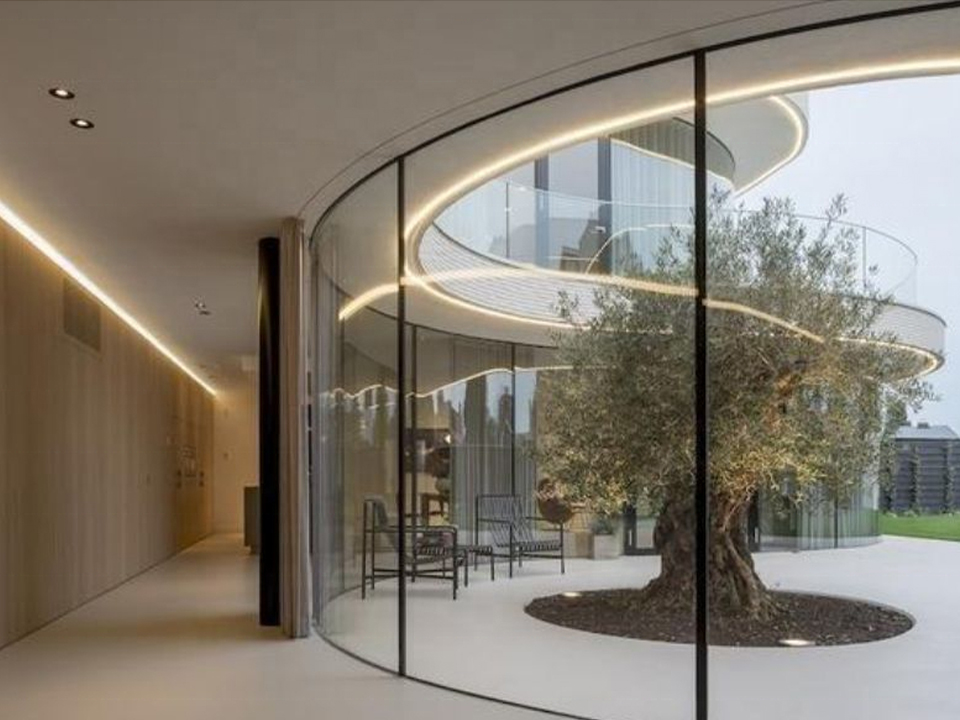
I have seen this pattern too many times: procurement teams buy architectural glass as if they are buying commodity flat stock, then act surprised when curved glass orders, coated glass procurement, and jumbo glass panels behave like engineered components. They are not accessories. They are schedule-bearing structural and visual assets.
And here is the hard truth: the factory is not always the problem.
Table of Contents
Why Long-Lead Glass Orders Fail Before Production Starts
The first failure usually happens in the email thread, not the furnace.
A buyer sends “12 mm tempered glass, curved, clear, polished edge” and thinks that is a specification. It is not. It is a polite invitation to disaster, because a serious curved or oversized architectural glazing order needs radius, chord, arc height, tolerance, surface orientation, edgework, hole position, coating surface, lamination make-up, heat treatment route, packaging method, project sequence, and inspection criteria.
Too much? Good. That is the point.
When we talk about long-lead glass orders, we are really talking about constraint stacking. Jumbo size reduces yield. Curving reduces tolerance forgiveness. Coating limits post-processing. Lamination adds autoclave timing. IGU assembly adds spacer, desiccant, gas fill, sealant, and unit labeling complexity. Export crating adds handling geometry. One weak instruction multiplies across the whole batch.
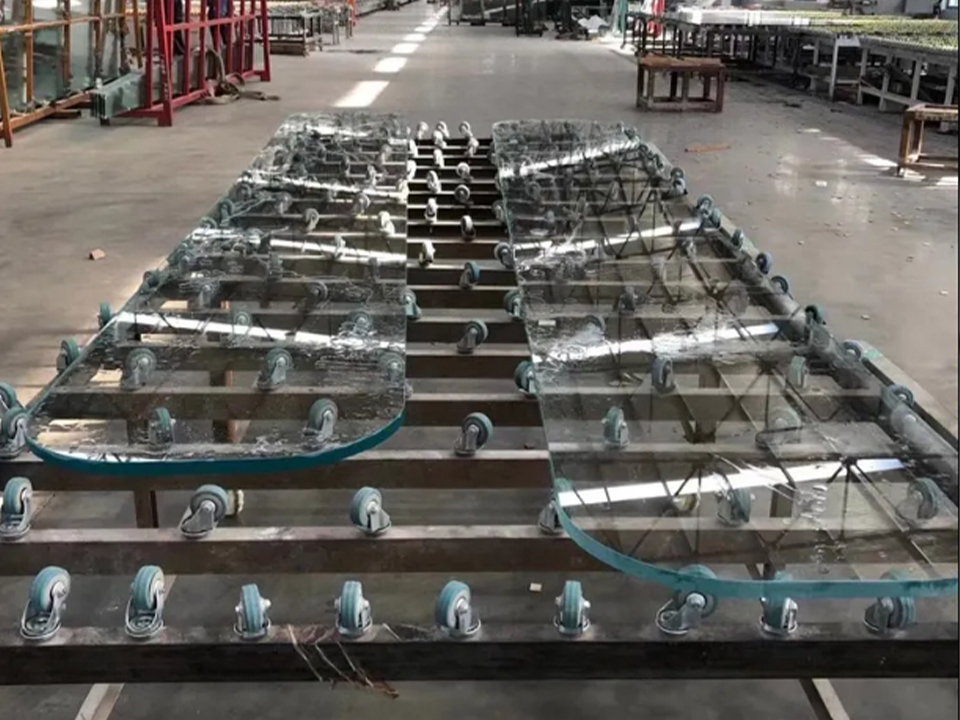
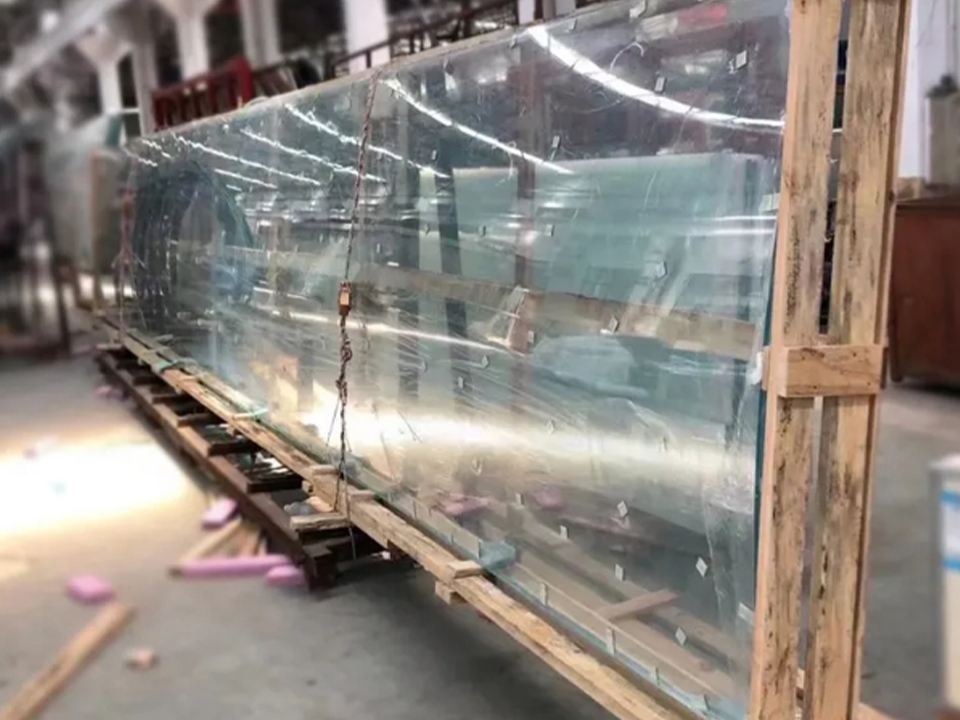
This is why I like factory pages that force buyers to think in systems rather than single products. For example, factory direct jumbo heat-soaked tempered glass is not just “big tempered glass.” It is large-format glazing with heat-soak processing, wind-load relevance, flatness control, edge durability, CNC options, IGU-ready use, batching, crate packing, and shop drawing coordination. That is procurement reality, not brochure language.
The Procurement Myth: “We Can Confirm Details Later”
No. You cannot.
The later you confirm, the more expensive your truth becomes. A coating direction correction after production release is not a small edit. A hole position revision after tempering is scrap. A radius change after bending setup is not “just a curve.” A change from standard clear to low-iron after visual mock-up approval can break color matching across elevations.
I have watched contractors argue over glass like it was a moral question. It was not. The problem was that nobody locked the build-up early.
For architectural glass, the purchase order should not be treated as the start of technical coordination. It should be the result of technical coordination. There is a difference, and it costs money.
Curved Glass Orders Need Geometry Discipline
Curved glass is where amateurs expose themselves.
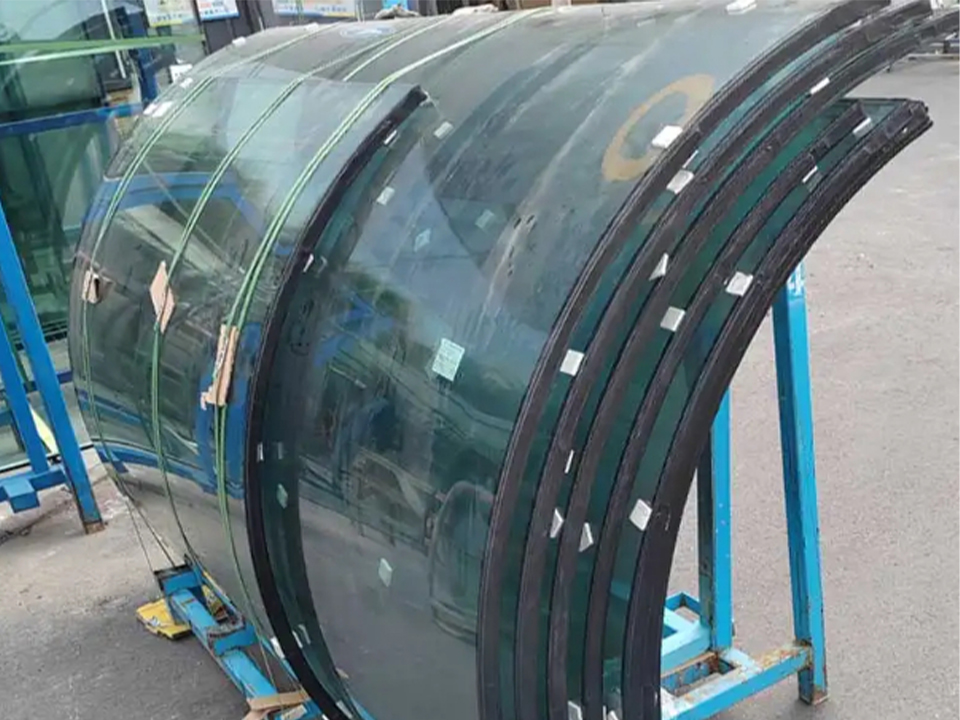
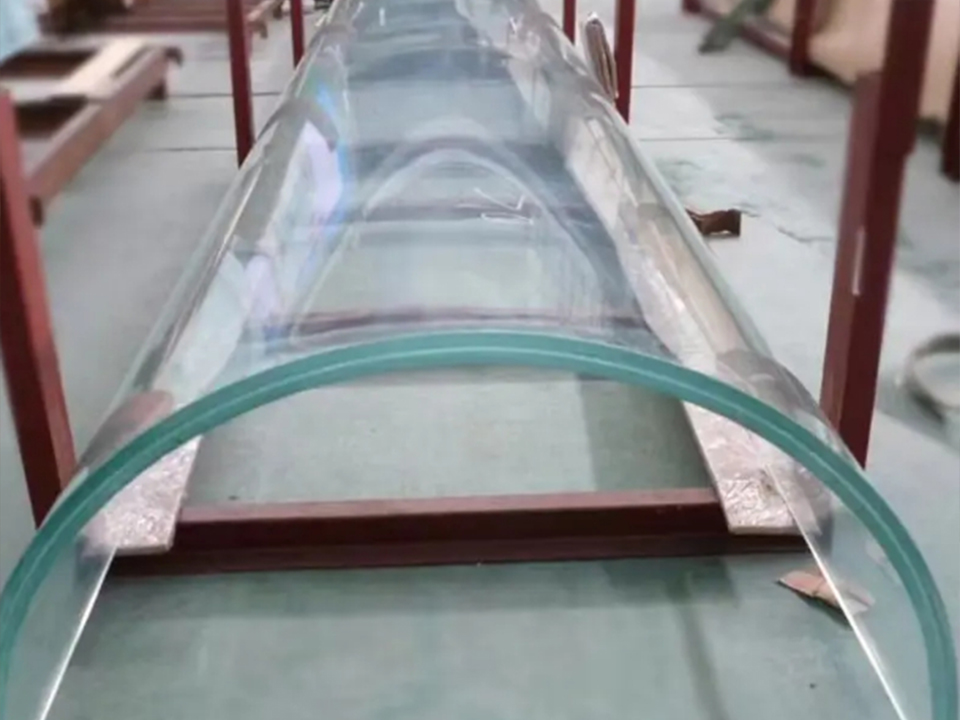
They ask for “curved tempered glass” and ignore whether the project needs cylindrical bending, spherical bending, hot bending, curved tempered, curved laminated, or a curved IGU build. They forget springback. They forget sightline distortion. They forget that edge polish before bending and edge polish after bending are not casual choices. They forget that templates lie when printed poorly, handled badly, or scaled through the wrong CAD export.
A proper curved glass order should include:
Requirement
Why It Matters
What I Ask For Before Release
Radius
Controls curve consistency and frame fit
Inner radius, outer radius, or centerline radius clearly identified
Chord length
Prevents vague “arc” interpretation
Confirmed in mm, not only on drawing scale
Arc height
Verifies real geometry
Cross-check against radius and chord
Glass make-up
Defines process route
Monolithic, laminated, coated, IGU, or safety build
And yes, I prefer receiving too much geometry over receiving a beautiful rendering. Renderings do not fit frames.
Coated Glass Procurement Is Mostly About Surface Control
Coated glass is where procurement gets lazy because everyone thinks “Low-E” means one thing.
It does not.
Low-E can mean pyrolytic hard coat, sputtered soft coat, single silver, double silver, triple silver, solar-control configuration, neutral appearance, high visible light transmission, low SHGC, or a coating package designed around thermal modeling. Then comes the real trouble: coating orientation. Surface #2 and surface #3 are not interchangeable just because the unit looks similar from across the warehouse.
For curtain wall vision areas and high-performance windows, custom high-performance Low-E insulating glass needs coating placement coordinated to the build-up, with unit IDs, sealing steps, handling protection, edge deletion, and traceability. That is not decorative detail. That is how you avoid producing expensive panels that technically exist but cannot be used.
But here is my unpopular opinion: many coated glass disputes are buyer-created. The supplier may be imperfect, but if the buyer does not confirm U-value target, SHGC target, VLT, exterior reflectance, interior reflectance, color family, coating surface, spacer type, gas fill, and mock-up approval condition, the buyer is gambling.
Architectural Glass is unforgiving when performance and appearance are both on the contract.
Jumbo Glass Panels Are a Logistics Product Before They Are a Design Product
Jumbo glass panels look impressive in a showroom. On a jobsite, they are a rigging plan with sharp edges.
The design team sees openness. The installer sees suction cups, crane access, wind windows, breakage exposure, crate tilt angle, and whether the loading dock can accept the pack without turning the delivery into public theater. That is why I tell buyers to ask boring questions early. Boring questions save projects.
Can the jumbo lite be produced in the requested size with the specified coating? Can it be tempered after drilling? Can it be heat-soaked? Can the polished edge survive export handling? Can it fit the crate? Can the crate fit the container? Can the container route avoid transshipment abuse? Can the panel be staged by elevation instead of random pack order?
This is where edgework custom finish extra-large tempered glass becomes relevant. Oversized storefront panels, lobby feature walls, curtain wall vision panels, and balustrades do not merely need glass cut large. They need controlled cutting, grinding, polishing, hole positioning, batch traceability, and export packing that respects the size of the risk.
I will say it bluntly: jumbo glass without packaging discipline is not a product. It is a claim waiting to happen.
The Hidden Schedule: Mock-Up, Approval, Production, Crating, Transit
The public schedule says “glass delivery in Week 18.”
The real schedule says: shop drawing review, structural calculation sign-off, coating sample approval, visual mock-up, color match approval, final dimensions, deposit, raw substrate allocation, cutting, edgework, CNC drilling, washing, tempering, heat-soak if required, coating or IGU assembly depending on route, lamination if required, final inspection, labeling, crate production, container loading, export documentation, transit, customs clearance, inland delivery, unpacking inspection, installation sequencing.
Which one did the project manager price?
In 2023 and 2024, the bids I reviewed became more aggressive, not more intelligent. More buyers asked for custom glass orders with shorter lead times while also demanding jumbo dimensions, coated performance, laminated safety, low-iron clarity, and zero visual variation. That combination is possible only when the release package is clean. Not perfect. Clean.
Clean means there is one approved drawing set. One revision status. One glass schedule. One naming convention. One packing logic. One person allowed to approve technical changes.
Anything else is theater.
Oversized Architectural Glazing Needs a Risk Register
I do not trust procurement plans that have no risk register.
For long-lead architectural glass, the risk register should be brutally specific. Not “supplier delay.” That is lazy. Say “coating substrate availability for 8 mm low-iron soft coat,” “radius tolerance risk at west atrium curved panels,” “hole alignment conflict with stainless spider fitting model,” “container loading limit for jumbo crate height,” “visual mismatch between Phase 1 and Phase 2 Low-E batches,” or “site storage risk due to delayed frame installation.”
Specific risk gets managed. Vague risk gets discussed until everyone is tired.
Risk Area
Bad Procurement Habit
Better Control
Curved geometry
Approving from renderings only
Require radius, chord, arc height, templates, and tolerance sign-off
Confirm crate size, container plan, unloading method, and site access
IGU sequencing
Mixing unit IDs late
Use elevation-based labels, packing lists, and floor-by-floor release
Edgework
Treating edges as cosmetic only
Define seamed, arrissed, ground, polished, holes, notches, and corner radii
Lamination
Assuming all interlayers behave alike
Confirm PVB, ionoplast, thickness, exposed edge needs, and structural role
Color consistency
Splitting batches casually
Lock batch strategy and review appearance under realistic lighting
This table is not glamorous. It is how grown-ups buy glass.
Warm-Edge IGUs and Low-E Units Should Be Released Like Assemblies
An IGU is an assembly, not a pane.
That sounds obvious until you see how people buy them. They obsess over glass thickness and ignore spacer selection, sealant compatibility, gas fill, desiccant quality, edge deletion, unit labels, and whether the installation team can match unit ID to opening ID without guessing in the rain.
For staged window and curtain wall projects, custom size wholesale warm edge IGU insulating glass fits the reality of repeatable project scheduling: custom unit sizes, warm-edge spacer technology, double or triple glazing options, Low-E or tinted selections, gas-fill choices, and traceability documents. That is what “How to manage custom glass orders” really means. It means managing parts, labels, surfaces, sequence, and evidence.
One missing label can waste more labor than a small price concession ever saved.
Laminated Glass Is Not a Backup Plan
Laminated glass is often treated as the safe option. That is half-right and half-dangerous.
It can improve post-breakage retention, support overhead glazing, help with guardrails, and make structural glass assemblies more resilient. But laminated architectural glass still needs intelligent make-up selection. PVB is not ionoplast. Monolithic tempered is not tempered laminated. A glass fin is not a balcony guard. A canopy is not a decorative screen. The interlayer, edge exposure, hole details, support conditions, and load assumptions all matter.
For load-sensitive assemblies, factory direct laminated glass for structural use is the kind of category that should trigger serious review: interlayer options, CNC drilling, point-fixed façade use, glass fins, balustrades, canopy safety glazing, and panel identification. These are not small purchasing notes. These are liability notes.
And no, lamination does not magically fix poor edgework or sloppy hole alignment.
Low-Iron Glass Is a Design Decision, Not a Luxury Checkbox
Low-iron glass gets oversold and under-specified.
It improves clarity by reducing the green tint associated with standard float glass, especially in thicker or layered builds. That matters in premium storefronts, skylights, display cases, shower enclosures, aquariums, and façade areas where color neutrality is visible. But it also needs batch control because “clearer” can make mismatches more obvious, not less.
When a project uses low-iron factory direct ultra-clear glass, I want the buyer to confirm whether the low-iron substrate is monolithic, tempered, laminated, IGU-ready, coated, or combined with another surface treatment. One word — low-iron — does not define the final product.
So ask the ugly question early: are we buying visual clarity, daylighting behavior, color neutrality, edge appearance, or client psychology?
Sometimes the answer is all four.
How to Manage Custom Glass Orders Without Getting Burned
Here is the working method I trust.
First, freeze the technical package before price negotiation gets too far. That means dimensions, tolerances, drawings, coating data, safety build-up, edgework, holes, notches, templates, sample approvals, standards, and inspection evidence. A cheap quote against a vague package is not savings. It is fiction.
Second, separate standard sizes from long-lead monsters. Do not let a few jumbo glass panels hold hostage an entire shipment of ordinary lites unless the site sequence requires it.
Third, require a release matrix. Every lite should have an ID, drawing reference, size, thickness, make-up, coating surface, edge finish, hole detail, quantity, area, crate number, phase, elevation, and installation location.
Fourth, force logistics into the procurement conversation before production. The crate is part of the product. The packing list is part of the product. The unloading plan is part of the product.
Fifth, keep one revision authority. I have seen more glass ruined by friendly “small updates” than by malicious suppliers.
The Buyer’s Pre-Release Checklist
Checkpoint
Minimum Requirement
My Hard Opinion
Drawing status
Approved-for-production shop drawings
Anything else is a quote, not an order
Glass make-up
Thickness, lamination, coating, IGU structure
“Same as sample” is not enough
Coating data
Surface number, VLT, SHGC, U-value target
Low-E without orientation is a lawsuit starter
Curved geometry
Radius, chord, arc height, template control
Renderings are not geometry
Jumbo handling
Crate size, lifting method, transit path
Logistics must be engineered
Edgework
Finish type, exposed edges, corner treatment
Edge quality is performance, not decoration
Labeling
Unit ID, crate ID, elevation sequence
Bad labels turn installers into detectives
Inspection
Dimensional, visual, seal, edge, coating checks
Evidence beats reassurance
Use this before issuing the deposit. Not after.
FAQs
How should I manage long-lead architectural glass orders?
Long-lead architectural glass orders should be managed as engineered production packages that combine approved drawings, exact glass make-ups, coating orientation, edgework details, logistics planning, inspection evidence, and phased release control before manufacturing begins. The goal is to remove ambiguity before the factory allocates substrate, furnace time, coating capacity, or crate planning.
After that, build a release matrix. Include every lite ID, size, quantity, coating surface, edge finish, hole detail, crate number, and installation location. Then protect that matrix like contract evidence, because that is what it becomes when something goes wrong.
What causes delays in curved glass orders?
Curved glass order delays are usually caused by incomplete geometry, unclear tolerance expectations, late template approval, coating conflicts, radius revisions, and mismatched framing assumptions between the shop drawing and the actual site condition. Curved panels need radius, chord, arc height, make-up, edgework, and installation orientation locked before production release.
The common mistake is treating curved glass like flat glass with a styling preference. It is not. Once bending, tempering, lamination, or IGU assembly enters the chain, every missing detail becomes expensive.
What should I confirm before ordering coated glass?
Before ordering coated glass, confirm coating type, coating surface number, visible light transmission, solar heat gain coefficient, U-value target, exterior reflectance, interior reflectance, edge deletion, spacer or sealant compatibility, mock-up approval conditions, and batch matching requirements. These details decide whether the glass performs correctly and looks consistent after installation.
Do not write “Low-E glass” and call it done. That phrase is too broad for serious coated glass procurement. Surface #2 and surface #3 can change performance, appearance, and compliance.
Why are jumbo glass panels harder to procure?
Jumbo glass panels are harder to procure because their size increases production yield risk, handling exposure, tempering and flatness sensitivity, edge damage probability, crate complexity, container constraints, unloading difficulty, and replacement cost if one lite fails inspection or breaks. They require logistics planning as much as fabrication planning.
A jumbo panel is not just a larger sheet. It is a larger liability. Treat crate design, lifting access, route planning, and site storage as procurement inputs, not afterthoughts.
How do I reduce risk when buying oversized architectural glazing?
Risk in oversized architectural glazing is reduced by freezing approved drawings early, separating long-lead items from standard lites, confirming coating and safety build-ups, using detailed unit labels, requiring factory inspection records, planning crate sequence, and assigning one authority for revisions. Clear release control prevents most avoidable failures.
I would rather delay release by three days than discover a wrong coating orientation after three containers arrive. That is not caution. That is arithmetic.
Final Word: Buy the Process, Not Just the Glass
The best buyers I know are not the ones who shout hardest about price. They are the ones who know when a 3 mm tolerance, a surface #2 coating note, a crate sequence, or a radius confirmation can save a six-figure headache.
Architectural Glass procurement is not glamorous work. It is disciplined work. And when long-lead curved, coated, and jumbo glass orders are managed properly, nobody applauds because nothing dramatic happens.
That is the win.
Send the drawings, glass schedule, target make-up, quantities, delivery phases, coating requirements, and packing constraints before requesting a final quote. The earlier the technical truth comes out, the cheaper it is to handle.