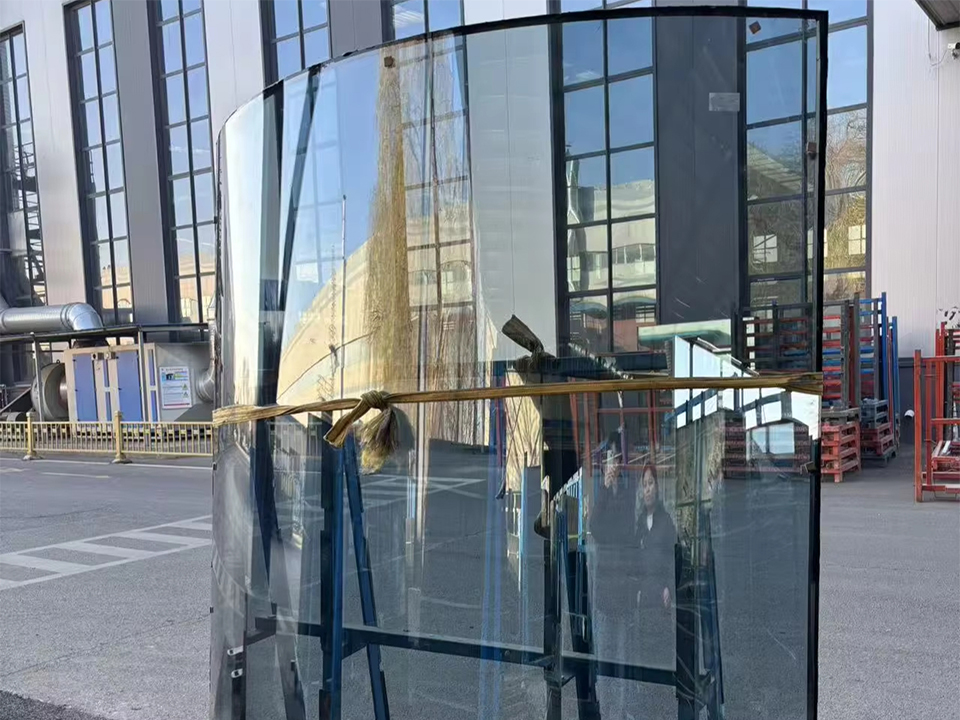
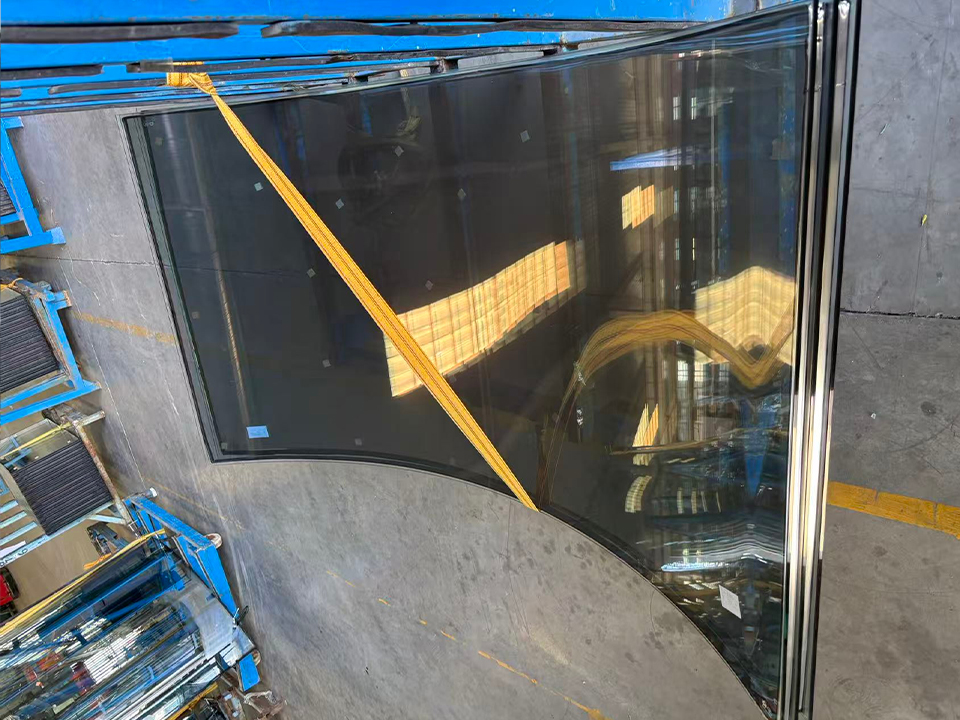
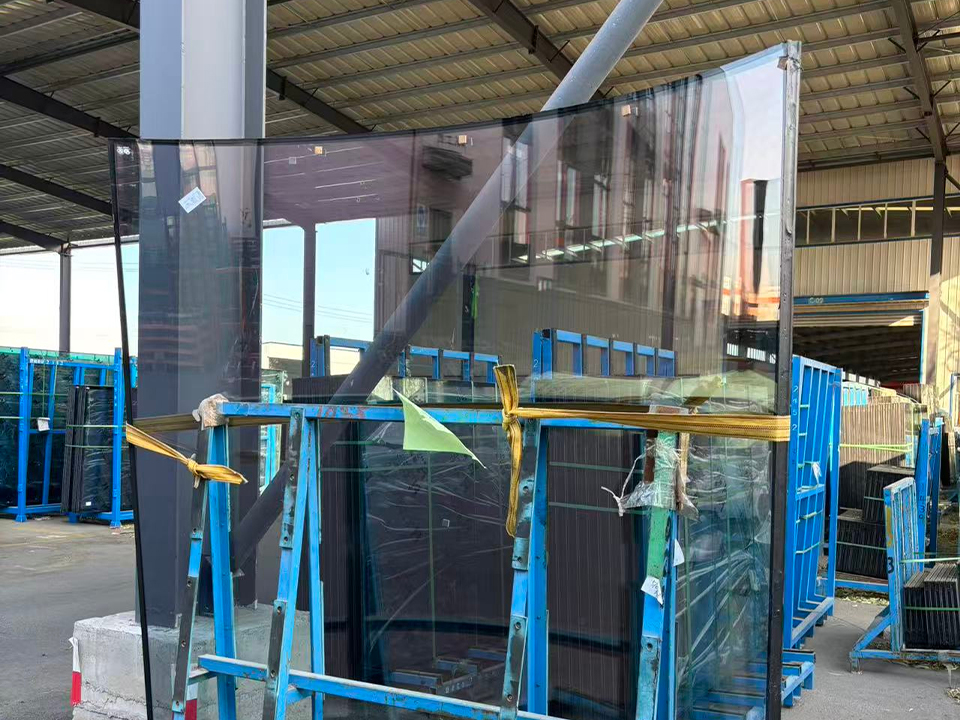
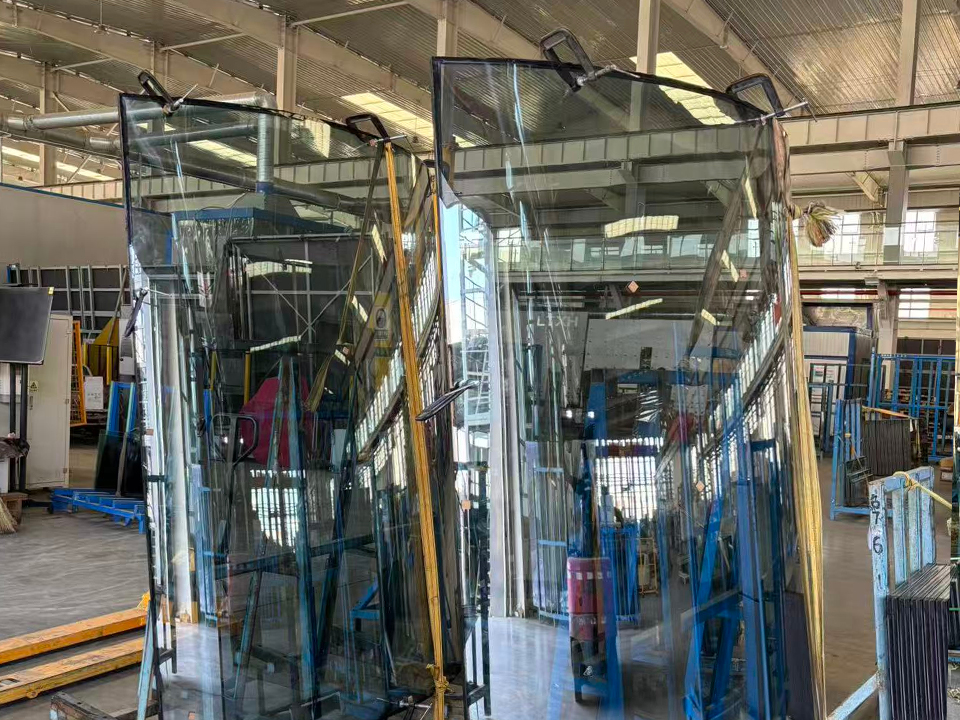
Jesteśmy wiodącym producentem szkła z siedzibą w Chinach,
Specjalizujemy się w wysokiej jakości rozwiązaniach szklanych do zastosowań przemysłowych i architektonicznych.
Dzięki wieloletniemu doświadczeniu i certyfikatowi ISO zapewniamy szybkie, dostosowane do potrzeb oferty oraz sprawne wsparcie dla specjalistów ds. zaopatrzenia, inżynierów i kierowników projektów na całym świecie.
Jesteśmy wiodącym producentem szkła z siedzibą w Chinach,
Specjalizujemy się w wysokiej jakości rozwiązaniach szklanych do zastosowań przemysłowych i architektonicznych.
Dzięki wieloletniemu doświadczeniu i certyfikatowi ISO zapewniamy szybkie, dostosowane do potrzeb oferty oraz sprawne wsparcie dla specjalistów ds. zaopatrzenia, inżynierów i kierowników projektów na całym świecie.
Czy powłoki Low-E można stosować na zakrzywionym szkle architektonicznym?
Tak, powłoki Low-E można stosować na zakrzywionych szybach budowlanych. Jednak rzeczywiste rozwiązanie jest bardziej skomplikowane: rodzaj powłoki, metoda gięcia, seria hartowania, odległość, układ komór, uszczelnienie krawędzi oraz projekt odporności zewnętrznej decydują o tym, czy końcowy produkt będzie funkcjonował jak system izolacyjny, czy też stanie się bardzo kosztownym lustrem z dołączonymi osłonami termicznymi.
Poniżej znajduje się pułapka.
Większość klientów pyta: “Czy można wyprodukować zakrzywione szkło Low-E?”, podczas gdy powinni zapytać: “Na którym etapie produkcji nakłada się powłokę Low-E, na jakiej powierzchni będzie ona spoczywać oraz jak po wygięciu zmieniają się współczynnik emisyjności, zmętnienie, trwałość uszczelnienia bocznego, anizotropia i współczynnik odbicia?”. Widzicie różnicę?
W rzeczywistości widziałem już, jak takie rozmowy schodziły na manowce w działach zakupów. Inżynier chce mieć estetyczną, wygiętą fasadę. Specjalista ds. energetyki dąży do obniżenia współczynnika U i znacznie lepszego współczynnika SHGC. Wykonawca szuka dostawcy, który szybko potwierdzi zamówienie. A fabryka, jeśli jest uczciwa, zaczyna zadawać niewygodne pytania dotyczące trwałości wykończenia, ograniczeń odległościowych, nasycenia cieplnego, falowania rolek, rozmieszczenia powłok oraz tego, czy szkło ma zostać zastosowane w postaci pojedynczej, wygiętej szyby, konstrukcji laminowanej, czy też szkło osłonowe na zamówienie w szybach zespolonych.
Właśnie tam zaczyna się właściwa historia.
Krótka odpowiedź: Tak, ale nie każde szkło Low-E nadaje się do gięcia
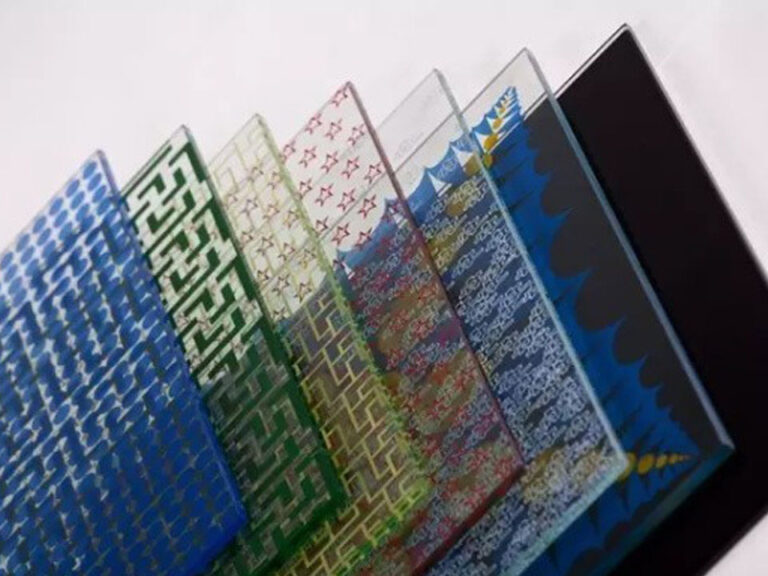
Szkło Low-E to szkło pokryte mikroskopijnie cienką warstwą metalu lub tlenku metalu, której zadaniem jest ograniczenie przenoszenia promieniowania cieplnego. W budownictwie oznacza to zazwyczaj lepszą izolację, znacznie lepszą ochronę przed nasłonecznieniem lub jedno i drugie, zwłaszcza gdy warstwa ta znajduje się wewnątrz systemu podwójnych lub potrójnych szyb ochronnych.
Powłoka jest cienka. Niezwykle cienka. Mówimy tu o warstwach w skali nanometrowej, często zawierających osady na bazie srebra w wysokowydajnych systemach powłok miękkich typu Low-E. To właśnie ta cienkość sprawia, że szkło Low-E działa. Jest to również powód, dla którego jego gięcie nie jest łatwą operacją.
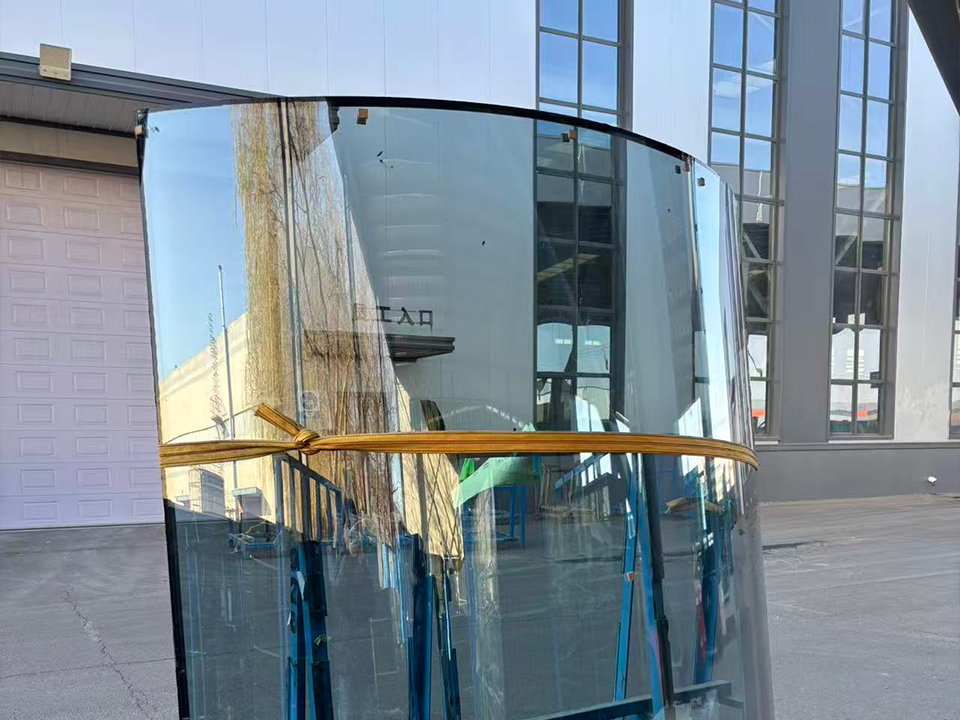
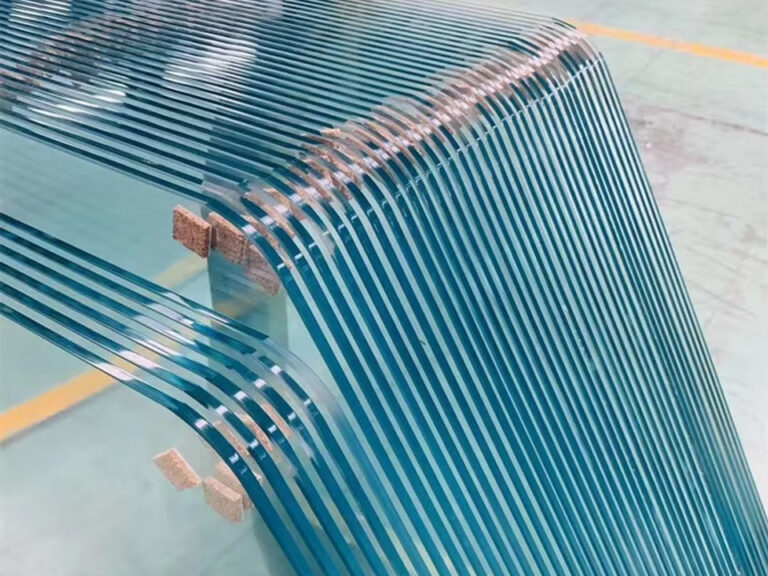
Trudna prawda: zakrzywione szkło budowlane jest twarde już przed nałożeniem jakiegokolwiek wykończenia.
Płaska szyba zachowuje się w przewidywalny sposób. Wygięta szyba – nie. Powoduje zniekształcenia optyczne, wydłużenie odbicia, problemy z sąsiednimi elementami, trudności związane z rozpiętością oraz wrażliwość na sposób montażu. Jeśli do wygiętej szyby dodamy powłokę Low-E, to obecnie zespół ds. elewacji zewnętrznej powinien kontrolować zarówno geometrię, jak i efektywność termiczną. Nie jest to niemożliwe. Po prostu nie jest to magia w przystępnej cenie.
Dlaczego warstwa Low-E na szkle zakrzywionym stanowi wyzwanie techniczne
Głównym problemem jest brak dopasowania. Szkło się wygina. Powłoki nie “wyginają się” w tak samo elastyczny sposób, zwłaszcza jeśli powłoka została nałożona na szkło jeszcze przed procesem gięcia.
Podczas gięcia na gorąco lub hartowania po gięciu powierzchnia szkła jest narażona na działanie wysokich temperatur, naprężeń oraz ryzyko uszkodzeń. Podczas gięcia na zimno szkło jest formowane podczas montażu lub laminowania, co powoduje powstanie trwałych naprężeń. Podczas laminowania warstwy pośrednie, takie jak PVB, SGP lub EVA, wprowadzają własne czynniki: ciepło, naprężenia, zabezpieczenie krawędzi oraz harmonię optyczną.
Zatem pytanie nie brzmi po prostu: “Czy powłoki Low-E można stosować na szkle zakrzywionym?”, ale: “Która powłoka Low-E, która metoda gięcia, jakie warunki ekspozycji elewacji i jakie postanowienia gwarancyjne?”.”
Istnieją trzy popularne trasy:
Podejście
Jak to działa
Idealny przykład zastosowania
Główne ryzyko
Moja opinia
Najpierw zagnij, potem ułóż warstwami
Szkło jest najpierw gięte, a dopiero potem nakładane warstwami
Specjalistyczne projekty klasy premium
Wysokie koszty, ograniczone możliwości, jednolitość warstwy obiektu
Wielowarstwowe szkło Low-E jest hartowane w postaci zakrzywionej lub wygiętej
Powtarzalne, wygięte panele elewacyjne
Uszkodzenia wykończenia, zamglenie, zmiana odcienia, zniekształcenie
Ma sens tylko w połączeniu z sprawdzonymi, poddającymi się obróbce wykończeniami
Zastosowanie: szkło Low-E wewnątrz wygiętej szyby zespolonej
Wygięte szyby zewnętrzne i wewnętrzne są montowane w szybach zespolonych z zabezpieczoną powierzchnią wykończeniową
Zakrzywione fasady, świetliki, pomieszczenia
Dopasowanie elementu dystansowego, obawy związane z uszczelnieniem, stopień zaawansowania próchnicy
Zazwyczaj jest to jedno z najbardziej rozsądnych rozwiązań
W przypadku wielu obiektów komercyjnych opowiadam się za trzecim rozwiązaniem. Nie dlatego, że wydaje się ono kosztowne, ale dlatego, że pozwala powłoce zachować ochronną powierzchnię w obszarze ubytków, zazwyczaj o powierzchni # 2 lub # 3, gdzie warstwy Low-E znajdują zastosowanie w wymagających projektach elewacyjnych.
Powłoka miękka a powłoka twarda typu Low-E: kwestia, którą broszury sprzedażowe często pomijają
Powłoka typu „Hard-Coat Low-E”, zwana również powłoką pirolityczną Low-E, jest nakładana w trakcie produkcji szkła float, gdy szkło jest jeszcze gorące. Łączy się ona znacznie mocniej z powierzchnią szkła i jest generalnie znacznie bardziej wytrzymała. Znacznie lepiej znosi trudne warunki eksploatacji. W niektórych przypadkach jest w stanie przetrwać etapy budowy, które zniszczyłyby bardziej miękkie powłoki.
Powłoka typu „Soft-coat Low-E” jest inna. Zazwyczaj nakłada się ją poza linią produkcyjną metodą napylania magnetronowego w próżni, przy czym najczęściej stosuje się warstwy na bazie srebra. Zapewnia to znacznie lepsze właściwości termiczne i przeciwsłoneczne, jednak powłoka jest znacznie bardziej delikatna. Zazwyczaj wymaga ona dodatkowej ochrony wewnątrz komory szyby zespolonej.
Ten kompromis ma znaczenie.
Jeśli ktoś twierdzi, że szkło Low-E z miękką powłoką można wygiąć bez przedstawienia odpowiednich dokumentów potwierdzających, poproś o informacje dotyczące badań przeprowadzonych konkretnie dla danego projektu. Zapytaj o rozpiętość. Zapytaj o powierzchnię pokrycia. Zapytaj, czy szkło nadaje się do obróbki cieplnej. Zapytaj, czy dostawca faktycznie wytwarzał już wcześniej szkło o tej samej gęstości, z tej samej rodziny wykończeń, o tej samej krzywiźnie i o tej samej konstrukcji szyby zespolonej.
A potem przyjrzyj się ich minie.
W przypadku pakietów elewacyjnych ukierunkowanych na oszczędność energii, potrójnie polerowane szkło ekranujące Low-E może zapewnić lepsze parametry termiczne niż standardowa, wygięta szyba z podwójną izolacją. Jednak szyby trójwarstwowe wiążą się z większą masą, skomplikowaną konstrukcją ramki dystansowej oraz większym obciążeniem i naprężeniami na zakrzywionych krawędziach. Wymagania muszą uwzględniać tę dodatkową masę.
Szkło gięte Low-E to nie jeden produkt. To cała seria.
Wyrażenie “wygięte szkło Low-E” brzmi jak nazwa kategorii produktu. Jednak tak nie jest. Jest to proces produkcyjny, w którym na każdym etapie kryją się zagrożenia.
W poważnym projekcie dotyczącym szkła Low-E o zakrzywionym profilu należy określić:
Skip one of these and you are not defining. You are gambling.
A helpful beginning factor is to divide the rounded glass construction scope from the energy-performance range. For example, a job group may resource factory direct curved solidified glass for geometry and safety and security performance, then incorporate that into a tested Low-E IGU setting up. That is cleaner than making believe a layer alone fixes the whole façade.
Where Curved Architectural Glass Actually Uses Low-E Coatings
The noticeable use instance is curved drape wall surface glass. However that is just one slice.
Low-E layer on rounded glass appears in:
Curved workplace façades
Hotel rooms
Airport terminals
High-end retail storefronts
Museum envelopes
Bent skylights
Winter season yards
Monitoring decks
High-end property bay home windows
Structural glass edges
Business instance is simple. Bent architectural glass offers visual dramatization. Low-E glass gives thermal control. Integrate them correctly and the building can maintain the shape the engineer desired without turning the inside right into a solar oven.
Yet there is a catch: curved glass makes reflection more visible, not less.
A flat exterior shows the city in reasonably steady aircrafts. A curved façade bends the reflected photo. If layer shade varies from panel to panel, the contour exaggerates it. If one set has a somewhat various outside representation, the structure will certainly show it. And every person will blame the glass.
They may be right.
For bent façades and larger envelope systems, I would certainly straighten the glass plan early with the curtain wall surface style rather than dealing with glass as a late purchase item. The difference in between a beautiful bent façade and a litigation-grade migraine is commonly buried in shop illustrations, not makings. This is where structural glazing glass curtain wall glass comes to be relevant, due to the fact that the support system need to respect the contour, the IGU edge, and the coated-glass limitations with each other.
Heat-Treated Low-E Glass: Needed, However Not Instantly Safe
Heat-treated Low-E glass consists of toughened up or heat-strengthened Low-E glass. In bent architectural applications, warm therapy is common because the glass may need strength, safety actions, wind-load resistance, thermal-stress resistance, or code compliance.
However warmth therapy is not a complimentary upgrade.
Toughening up can introduce roller wave. Curved tempering can introduce extra optical distortion. Coatings can affect home heating habits due to the fact that coated and uncoated surface areas absorb and show energy in different ways. In some heaters, coated glass requires adjusted convection, temperature accounts, loading instructions, and cycle control.
Small error. Large invoice.
A distributor should be able to describe whether the finishing is authorized for toughening up prior to flexing, during curved tempering, or after fabrication. If the solution is unclear, stop the conference. This is not documentation. This is the difference between durable exterior glass and a warranty conflict.
The Insider Examination: 5 Concerns I Would Certainly Ask Before Buying Curved Low-E Glass
I would ask these before authorizing a purchase order:
Has this specific Low-E covering been examined at the required radius?
Is the layer temperable, bendable, or only ideal after flexing?
Which glass surface area carries the finish in the final IGU?
What noticeable distortion and shade variant requirements apply?
Will the vendor supply examples from the intended manufacturing course, not a flat-glass display room example?
That last factor matters. A level Low-E sample informs you virtually nothing about just how a curved Low-E façade will look under real sky conditions. Blue sky, low sunlight, night lights, bordering buildings, and bent reflection can subject defects that never show up under stockroom lights.
For greater clarity projects, especially premium retail or gallery job, I would certainly take into consideration ultra-clear solidified glass lub low-iron flat solidified glass job requirements as part of the visual method. Reduced iron does not repair layer distortion. But it can decrease green glass body shade, which helps when the style requires a cleaner exterior tone.
The Information Behind the Debate
Power codes and façade performance requirements keep tightening. This is not a designer fad. Buildings take in a large share of international energy, and glass is one of one of the most visible powerlessness in the envelope.
The U.S. Department of Energy has specified that Low-E home window systems commonly set you back about 10% to 15% greater than routine windows however can minimize power loss by 30% to 50%. Reuters reported in 2024 that structures are responsible for about 37% of global emissions, with products and operations both under stress. A 2024 research study on laser-based bending of Low-E layered level glass discovered that coated bent glass can remain appropriate for building use, with near-infrared reflectance staying significantly greater than uncoated glass.
That does not imply every bent Low-E job is warranted. It suggests the modern technology is genuine, and the careless objections are dated.
The difficult concern is cost versus control.
Common Failure Points in Curved Low-E Coated Façade Glass
Right here is where rounded Low-E glass projects typically obtain hideous:
Failing Point
What It Resembles On Website
Likely Create
Prevention
Finish scratches
Great lines, haze, patchy representation
Poor handling or incorrect flexing route
Use accepted finishing and taking care of method
Shade inequality
Nearby panels look various
Set variant, finishing angle change, mixed manufacturing days
Mock-up complete exterior zone prior to authorization
Zniekształcenie optyczne
Wavy reflected skyline
Rounded tempering, tight radius, roller wave
Specify aesthetic tolerance before manufacturing
Seal failing
Misting inside rounded IGU
Edge stress and anxiety, poor spacer fit, sealant stress
Usage tried and tested bent IGU spacer and seal system
Thermal underperformance
Higher cooling/heating tons than designed
Incorrect finish surface area or IGU accumulation
Verify U-value, SHGC, VLT prior to purchasing
Breakage danger
Side splits, spontaneous failing
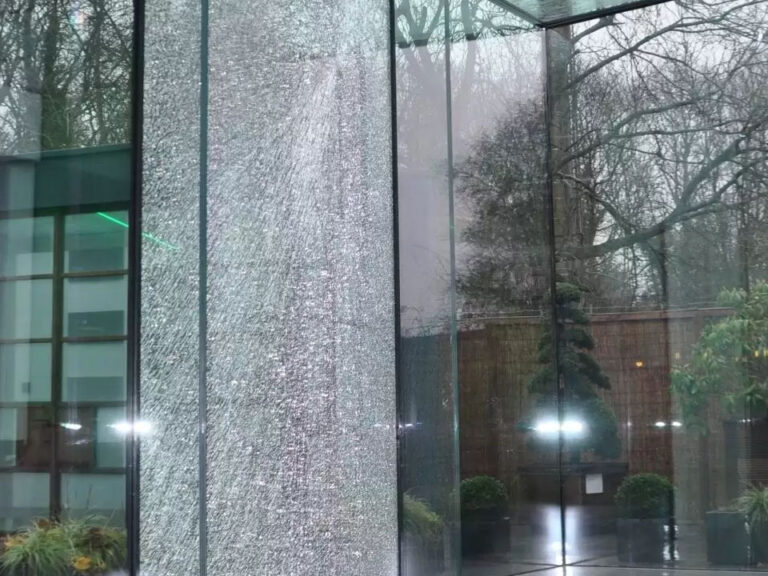
Stress and anxiety concentration, poor edgework, nickel sulfide risk
Define warmth soak where needed and inspect sides
The least extravagant line because table is edgework. Naturally, it is one of one of the most essential.
Curved glass sides are much less flexible than level glass sides. Add an IGU seal, architectural glazing bite, or laminated interlayer, and an inadequate edge can become the initial point of failure. This is why customized job need to be dealt with as a project-specific construction package, not a commodity SKU. For non-standard build-ups, personalized glass manufacture for job glass is not a nice add-on. It is the genuine item.
Can You Use Low-E Finish After the Glass Is Curved?
Yes, Low-E finishing can be applied after glass is curved in particular customized production settings, however it is typically expensive, much less available, and more challenging to scale than making use of approved layered glass in a controlled curved IGU procedure.
The tourist attraction is obvious. Bend the glass first, after that coat the last curved form. Theoretically, this avoids coating damages throughout bending. In practice, finish rounded surface areas consistently is more intricate than finish flat sheets. Throughput declines. Expense surges. Distributor options diminish.
For landmark tasks, possibly that is acceptable. For a normal business façade, probably not.
Many practical projects use a temperable Low-E covering system, a controlled bending process, or a rounded IGU assembly where the covering is safeguarded inside the dental caries. That is the path I would rely on first.
Should You Make Use Of Hard-Coat or Soft-Coat Low-E for Curved Architectural Glass?
Hard-coat Low-E is generally extra forgiving in fabrication and handling. Soft-coat Low-E typically offers better thermal and solar-control efficiency. For curved architectural glass, the appropriate option relies on whether the project focuses on longevity throughout fabrication, high energy performance, neutral look, low SHGC, or a certain appearance shade.
That is the clean solution.
My viewpoint? In significant industrial façades, soft-coat Low-E inside an IGU usually makes more feeling than subjected hard-coat monolithic glass, gave the maker has verified the curved IGU build-up. However, for some curved laminated or monolithic applications, specifically where handling durability matters greater than peak thermal worths, hard-coat can still be the much safer selection.
There is no universal victor. Any person selling one is selling convenience.
Requirements List for Architects and Professionals
Prior to approving Low-E layer on curved glass, call for the vendor to offer:
And please, do not approve based upon a solitary little example held under workplace lights. That is how bad façades get birthed.
CZĘSTO ZADAWANE PYTANIA
Can Low-E layers be utilized on bent building glass?
Low-E finishings can be made use of on bent building glass when the covering kind, bending technique, heat-treatment procedure, IGU structure, and covering surface area are engineered with each other. The safest usual strategy is to position a compatible Low-E finishing inside a rounded shielding glass device where it is safeguarded from handling, weather, and abrasion.
The main error is assuming flat Low-E glass and bent Low-E glass behave the exact same. They do not. Curvature changes tension, representation, construction limits, and aesthetic approval. A project-specific mock-up ought to be obligatory.
Is bent Low-E glass a lot more pricey than flat Low-E glass?
Bent Low-E glass is much more expensive than level Low-E glass due to the fact that it combines energy layer needs with rounded manufacture, tighter quality assurance, special delivery, and often customized IGU assembly. The cost boost depends on span, glass density, finish kind, order amount, and whether the device is laminated flooring, toughened up, or insulating.
The genuine price is not just the glass. It is tasting, being rejected risk, furnace configuration, rounded spacer job, product packaging, logistics, and site resistance administration. Cheap bent Low-E glass usually suggests someone got rid of testing from the procedure.
Which is better for bent glass: hard-coat or soft-coat Low-E?
Hard-coat Low-E is typically more sturdy throughout taking care of and manufacture, while soft-coat Low-E usually provides more powerful solar-control and insulation performance. For rounded building glass, hard-coat may suit simpler or exposed applications, while soft-coat is commonly much better protected inside a rounded IGU cavity.
The option must not be made by brand name preference. It needs to be made by distance, covering area, target U-value, SHGC, climate, exterior alignment, and vendor test background.
Can Low-E glass be tempered after covering?
Some Low-E glass can be tempered after finish, however just if the layer is particularly developed as temperable Low-E. Non-temperable finishes might be harmed by warm therapy, while temperable finishings require regulated furnace setups, appropriate positioning, and post-process assessment for haze, color change, distortion, and covering flaws.
This is just one of the most dangerous assumptions in procurement. “Low-E” does not instantly indicate “temperable Low-E.” The information sheet have to claim it. The provider must confirm it. The sample must show it.
Exactly how do you use Low-E layer to curved glass?
Low-E covering can be related to curved glass either by coating after flexing in specialized facilities or by bending authorized layered glass through a controlled manufacture course. In most business architectural jobs, the useful method is to make use of suitable Low-E layered glass inside a bent protecting glass system.
Finishing after flexing sounds cleaner, but it is commonly expensive and much less scalable. For repeat exterior panels, the far better industrial solution is generally an examined curved IGU system with the covering shielded in the dental caries.
Final Decision
So, can Low-E finishings be used on rounded building glass?
Yes. Definitely.
But just when the group quits dealing with Low-E glass as a sticker label and starts treating it as a technical layer in a total façade system. The layer is not the hero. The sequence is the hero: substratum, coating, bending, warmth therapy, lamination, IGU setting up, seal layout, aesthetic mock-up, and setup resistance.
That is the difficult truth. Curved Low-E glass works when it is engineered. It fails when it is simply purchased.
If you are planning curved Low-E covered façade glass, curved protected glass systems, or bent Low-E glass for a task, demand a project-specific build-up, coating-surface referral, distance review, and sample authorization prior to production. The earlier the glass plan is crafted, the fewer surprises you will acquire later.