Jesteśmy wiodącym producentem szkła z siedzibą w Chinach,
Specjalizujemy się w wysokiej jakości rozwiązaniach szklanych do zastosowań przemysłowych i architektonicznych.
Dzięki wieloletniemu doświadczeniu i certyfikatowi ISO zapewniamy szybkie, dostosowane do potrzeb oferty oraz sprawne wsparcie dla specjalistów ds. zaopatrzenia, inżynierów i kierowników projektów na całym świecie.
Jesteśmy wiodącym producentem szkła z siedzibą w Chinach,
Specjalizujemy się w wysokiej jakości rozwiązaniach szklanych do zastosowań przemysłowych i architektonicznych.
Dzięki wieloletniemu doświadczeniu i certyfikatowi ISO zapewniamy szybkie, dostosowane do potrzeb oferty oraz sprawne wsparcie dla specjalistów ds. zaopatrzenia, inżynierów i kierowników projektów na całym świecie.
Yet the sales pitch surrounding residential window tinting often collapses five separate engineering problems—solar heat, conductive heat loss, glare, ultraviolet exposure, and privacy—into one suspiciously neat promise that a darker sheet of polyester will fix all of them.
So why do so many estimates start with film color and end with a square-foot price before anyone records the glass type, coating surface, orientation, frame condition, or warranty?
That is the wrong process.
Residential window film can be a smart retrofit. It can also make a room gloomy, produce nighttime privacy failures, create thermal-stress concerns, or deliver an energy payback so weak that curtains would have been the more rational purchase.
My blunt view: good window tinting begins with diagnosis, not a sample ring.
What Residential Window Tinting Actually Does
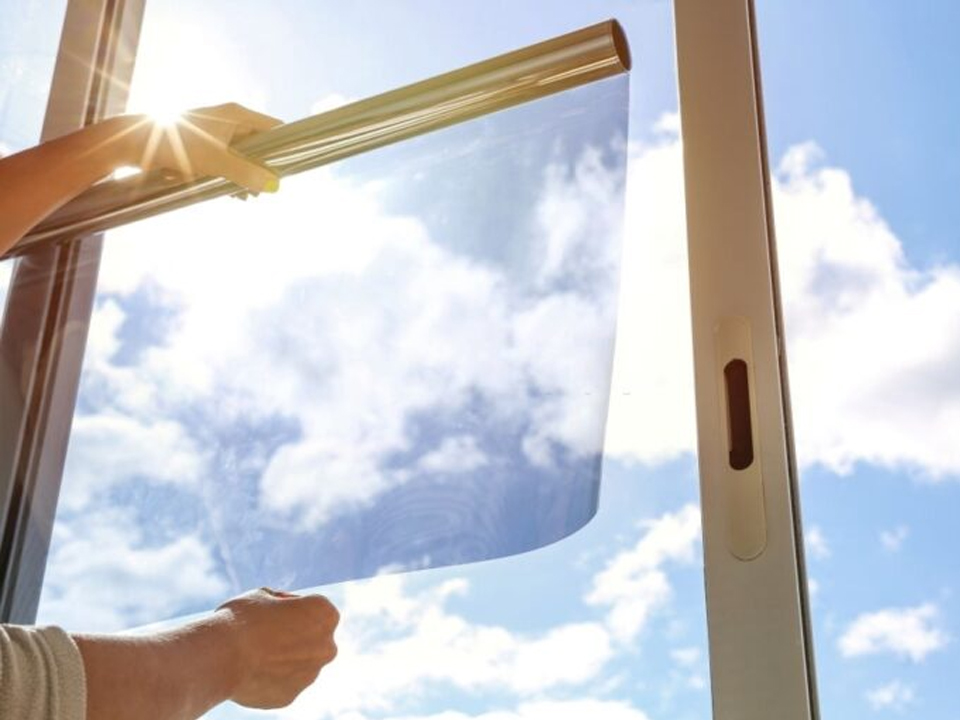
Residential window tinting applies a thin film—usually a multilayer polyethylene terephthalate, or PET, construction—to an existing glass surface. Depending on the product, the layers may contain dyes, metals, ceramics, ultraviolet absorbers, pressure-sensitive adhesive, and a scratch-resistant hard coat.
Film changes how a glazing system transmits, absorbs, and reflects solar radiation. It does not magically transform the underlying window.
A typical product may address one or more of these problems:
Excessive solar heat gain
Television or monitor glare
Ultraviolet exposure and interior fading
Daytime privacy
Decorative appearance
Fragment retention after breakage
Limited improvement in winter-facing emissivity
The distinction between film and glass matters. Factory-produced custom-cut tinted shower screen glass contains color or tint within the glazing product, whereas aftermarket film is bonded to an existing surface. They may look similar in photographs. Their construction, durability, safety classification, and replacement process are not the same.
The Real Benefits of Residential Window Tinting
The strongest benefits of residential window tinting are usually comfort benefits rather than dramatic whole-house energy savings.
Reduced solar heat
A solar-control film can lower the solar heat gain coefficient, or SHGC, of the complete window assembly. SHGC runs from 0 to 1: a lower figure means less solar energy enters as heat.
This can help south- and west-facing rooms that overheat during summer afternoons. But orientation changes the result. Tree cover, roof overhangs, neighboring buildings, window area, thermostat settings, and HVAC efficiency matter too.
Better glare control
Glare is often the easiest problem to solve because it is visible and localized. A film with lower visible transmittance, or VLT, reduces the amount of visible light reaching the room.
Darkness is not automatically quality, however. An excessively low VLT can make a bright room comfortable at 3 p.m. and unnecessarily dim for the other twenty-three hours.
Where the actual goal is high optical clarity with reduced surface reflection—not solar control—custom anti-reflective coated glass is a different product category worth understanding.
Redukcja promieniowania UV
Many reputable films claim ultraviolet rejection approaching 99%. That figure should be tied to a specified wavelength range and laboratory test method.
UV reduction can slow fading, but it cannot stop it. Visible light, heat, humidity, pigments, fabric chemistry, and material age also contribute to deterioration. Anyone promising “complete fade protection” is selling confidence, not physics.
Daytime privacy
Reflective film can make it harder to see into a home when exterior illumination is stronger than interior illumination.
Then night arrives.
Once interior lights become brighter than the street, the optical advantage can reverse. Reflective residential window film is not dependable nighttime privacy. Curtains, shades, frosted film, or electrically controlled switchable privacy smart glass address that problem more directly.
Start With the Existing Glass, Not the Film
The same film can perform safely on one window and poorly on another. Before approving house window tinting, identify:
Single-, double-, or triple-pane construction
Annealed, heat-strengthened, tempered, or laminated glass
Existing low-emissivity coating and its surface position
Insulated-glass-unit age and seal condition
Pane dimensions and edge damage
Exterior shading
Glass orientation
Frame material and color
Manufacturer warranty restrictions
A double-pane insulated glass unit, or IGU, commonly has four numbered surfaces. Surface 1 faces outdoors; Surface 4 faces the room. Low-e coatings may sit on Surface 2 or Surface 3, while retrofit film is commonly installed on Surface 4 or, for specially designed exterior products, Surface 1.
Adding an absorptive film changes pane temperature. On a compatible system, that may be acceptable. On the wrong glass, especially where edges are damaged or partially shaded, thermal stress becomes a legitimate concern.
And here is the hard truth: “safe for dual pane” printed in a brochure is not a glass analysis.
If the homeowner’s main objective is lower conductive heat transfer in both heating and cooling seasons, replacement low-e coated window glass may outperform a conventional solar film. It costs more, naturally, but it solves a broader envelope problem.
Types of Home Window Tinting
Film type
Best use
Typical strength
Main drawback
Dyed film
Appearance and basic glare reduction
Low reflectance and modest price
Color stability and heat rejection vary
Metallized film
Strong solar rejection
Reflects solar energy efficiently
Can look mirror-like and may affect some signals
Ceramic film
Heat control with lower reflectance
Better spectral selectivity and color stability
Higher material cost
Spectrally selective film
Bright rooms needing heat reduction
Higher VLT with lower SHGC
Premium pricing and subtle visual variation
Low-e film
Seasonal insulation support
Can reduce radiant heat transfer
Climate and glazing compatibility are decisive
Decorative or frosted film
Privacy and design
Predictable obscuration
Usually limited energy performance
Safety or security film
Fragment retention
Thicker construction and stronger tear resistance
Needs an attachment system for demanding security applications
Exterior film
Difficult or incompatible interior applications
Intercepts solar energy on the outer surface
Shorter exposure-driven service life
“Ceramic” deserves skepticism. It describes a broad material approach, not a universal performance grade. Two ceramic products can have substantially different SHGC, VLT, reflectance, thickness, warranty, and optical clarity.
Read the specification sheet.
The Numbers That Matter More Than Brand Names
A credible residential window tinting proposal should disclose performance for the film-on-glass system, not merely the film in isolation.
The National Fenestration Rating Council uses measures including U-factor, SHGC, and visible transmittance when evaluating fenestration performance. Lower U-factor indicates less heat transfer; lower SHGC indicates less admitted solar heat; VLT describes transmitted visible light.
Ask for these values:
Visible Transmittance (VLT): Percentage of visible light passing through the system.
Solar Heat Gain Coefficient (SHGC): Fraction of incident solar energy entering as heat.
Total Solar Energy Rejected (TSER): Combined reflected and absorbed solar energy that does not reach the interior.
Visible Reflectance: How mirror-like the window may look from each side.
Ultraviolet Transmittance: UV passing through the treated glazing.
Emissivity: Ability of the surface to radiate heat; lower values can improve radiant insulation.
Shading Coefficient: An older comparative metric sometimes retained in film literature.
Thickness: Often expressed in mils, where 1 mil equals 0.001 inch.
Warranty term: Product, labor, glass-breakage, and seal-failure coverage should be separated.
Do not compare products using infrared rejection alone. Manufacturers may report infrared performance at selected wavelengths rather than across the entire solar spectrum. TSER and SHGC are generally more useful for judging overall solar control.
What Recent Research Actually Shows
The evidence supports window film—but not universal savings claims.
A 2024 peer-reviewed experiment from National Cheng Kung University compared heat-absorbing film, reflective film, and clear glass across several orientations. Heat-absorbing film produced air-conditioning electricity savings of 1.2% to 1.9%, while reflective film ranged from 3% to 10.3%; the northwest-facing test produced the highest reflective-film result. Orientation materially changed performance.
That spread is more useful than a showroom promise of “up to 30% savings.” It shows why one percentage cannot describe every room, climate, film, and exposure.
A December 2023 cross-climate assessment of flexible photochromic retrofit films found annual energy savings around 1% to 4% at low window-to-wall ratios, rising to roughly 10% to 14% in cooling-dominated, lower-latitude conditions. The study also reported improved glare conditions but reduced daylight availability—precisely the tradeoff sales pages tend to bury.
NREL’s FY2024 window-film modeling documentation is also revealing. Its modeled measure used 100 commercial-building examples and treated triple-pane glazing, plus double-pane glazing in very cold regions, as inapplicable. That is not residential payback evidence, but it reinforces the point: climate and baseline glass can make the film attractive, marginal, or unsuitable.
The honest conclusion is less exciting and more useful: residential window film performs best where excessive solar gain is a documented problem.
Home Window Tinting Cost and Payback
Professional home window tinting commonly falls within these planning ranges, although height, access, film specification, removal work, local labor, and minimum service charges can move the final quote sharply.
Cost component
Practical planning range
Standard professional solar film
$6–$15 per sq. ft.
Specialty low-e or exterior film
$10–$20+ per sq. ft.
Safety or security film
$10–$25+ per sq. ft.
Small-project minimum
$250–$500
Existing-film removal
$2–$5 per sq. ft.
DIY film material
$1–$5 per sq. ft.
These are budgeting bands, not promises.
For a 200-square-foot glass area priced at $10 per square foot, the installed cost is $2,000. If verified annual electricity savings equal $120, simple payback is 16.7 years:
But energy is not the only benefit. If film makes an overheated office usable, reduces screen glare, or protects expensive flooring, the homeowner may accept a longer utility-only payback.
I would still reject any proposal that calculates savings without asking for utility rates, window orientation, glass area, HVAC type, climate, and current glazing performance.
How to Tint Home Windows Without Creating a Mess
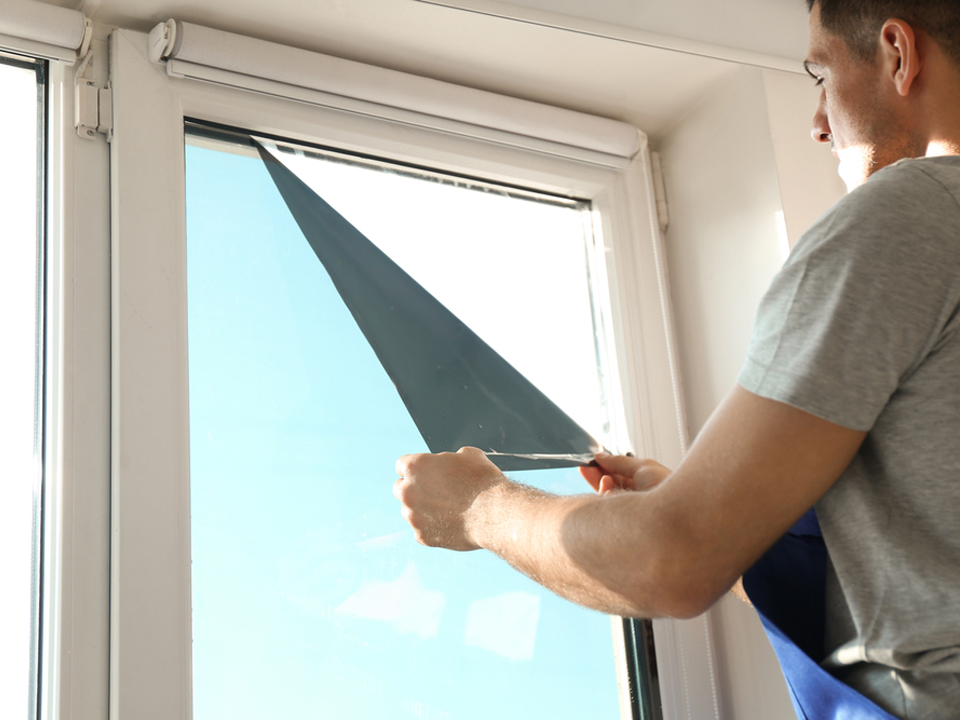
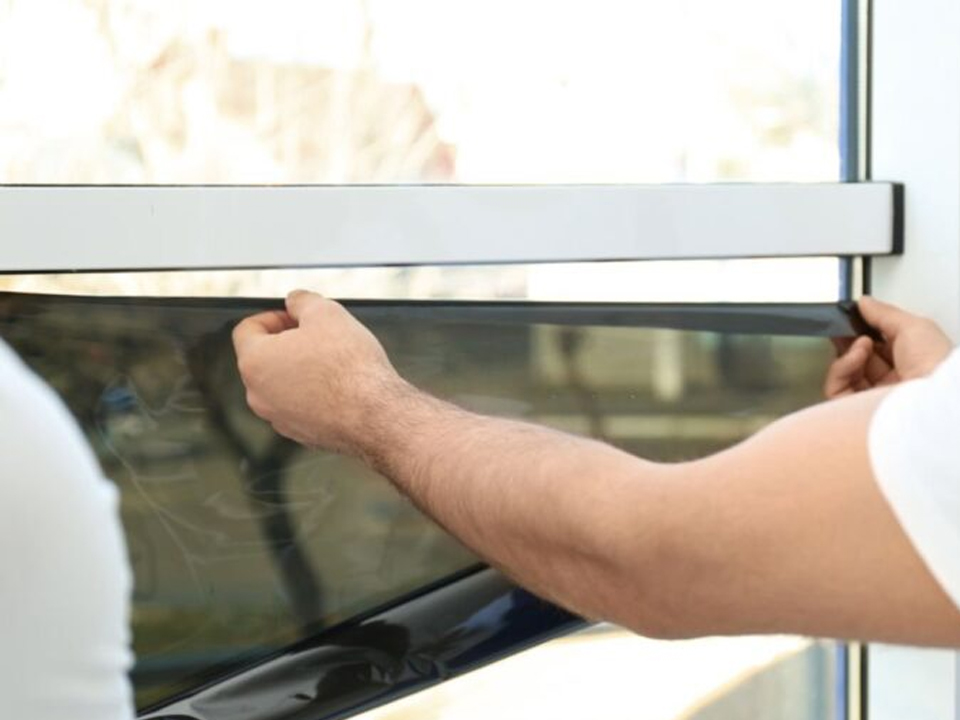
DIY installation is possible on small, accessible, rectangular panes. The basic sequence is straightforward:
Confirm that the film is compatible with the glass and existing warranty.
Measure the visible glass and cut the film slightly oversized.
Clean the pane and frame thoroughly, removing paint, silicone, dust, and adhesive.
Wet the glass using the solution specified by the film manufacturer.
Remove the release liner without touching the adhesive.
Position the film and squeegee from the center outward.
Trim the perimeter with the recommended edge gap.
Complete the final squeegee pass and allow the film to cure.
Simple steps. Unforgiving execution.
Contamination becomes a permanent speck. A weak squeegee pass leaves water pockets. A damaged edge lifts. And a blade used carelessly near seals, coatings, or tempered-glass fabrication debris can cause expensive damage.
Hire a professional for oversized panes, skylights, high windows, curved glass, old IGUs, coated glass, divided lites, or safety-film systems requiring structural attachment.
Privacy, Safety, and the Claims That Cross the Line
Security film can help hold broken fragments together. That does not automatically make a window forced-entry resistant, hurricane compliant, blast resistant, or bullet resistant.
Performance depends on film thickness, adhesive, glass type, framing, edge engagement, and attachment system. A film bonded only to the glass may keep fragments together while the complete filmed pane exits the frame.
For genuine ballistic applications, purpose-built bullet-resistant security window glazing uses engineered multilayer constructions designed around a specified threat level. Solar film is not a substitute.
U.S. safety rules also distinguish ordinary windows from hazardous glazing locations. A 2023 Consumer Product Safety Commission briefing states that 16 CFR Part 1201 covers glazing used in doors, bathtub and shower enclosures, and patio-type sliding doors; it estimated 1,092 firms were subject to related certification burdens. Applying film does not, by itself, prove that previously noncompliant glass has become certified safety glazing.
Homeowners should also check:
Glass and IGU seal warranties
Condominium or homeowners’ association rules
Historic-district restrictions
Local limits on highly reflective exterior finishes
Required safety glazing in doors and wet areas
Film manufacturer glass-breakage coverage
Installer licensing and insurance requirements
Is Residential Window Tinting Worth It?
Residential window tinting is usually worth considering when the problem is concentrated solar heat, persistent glare, daytime exposure, or UV-related fading—and when the existing glass passes a documented compatibility review.
It is less compelling when the homeowner expects:
Reliable privacy after dark
Major winter insulation from a standard solar film
Structural security without perimeter attachment
Bullet or hurricane resistance
Identical results on every orientation
A guaranteed whole-house utility reduction
Film to repair failed IGU seals or damaged glass
Use this decision test:
Your primary problem
Best first option
Przegrzanie po południu
Spectrally selective or solar-control film
Screen glare
Moderate-VLT glare-control film or shading
Daytime visibility from outside
Reflective or privacy film
Nighttime privacy
Shades, opaque film, or switchable glazing
Winter heat loss
Low-e film, interior insert, or better IGU
Failed double-pane seal
Replace the IGU
Break-and-enter delay
Security film with engineered attachment
Ballistic threat
Rated multilayer security glazing
Decorative bathroom tint
Factory-tinted or patterned safety glass
The best window tint for home windows is therefore not a universal SKU. It is the product that solves the measured problem while remaining compatible with the installed glazing.
Frequently Asked Questions About Residential Window Tinting
Is residential window tinting worth it?
Residential window tinting is worth it when a home has measurable solar-heat, glare, fading, or daytime-privacy problems and compatible glazing, because film can target those issues for far less than full window replacement; it is usually poor value when winter heat gain is beneficial or the existing IGU is already highly efficient.
Request system-level specifications and compare the installed cost against shades, exterior screens, low-e film, and replacement glazing.
How much does home window tinting cost?
Professional home window tinting typically costs about $6 to $15 per square foot for standard solar-control film, with small-job minimums often around $250 to $500; specialty low-e, decorative, safety, difficult-access, or exterior films can exceed $20 per square foot, so a site-specific written quote is the only reliable number.
Ask whether removal, high-access work, furniture moving, tax, edge sealing, and glass-breakage coverage are included.
What is the best window tint for home windows?
The best window tint for home windows is a glass-compatible, spectrally selective film chosen by climate, orientation, room use, and target performance—not simply the darkest film—because a sound specification balances SHGC, VLT, TSER, exterior reflectance, emissivity, warranty coverage, and the thermal-stress limits of the existing glazing.
For many living areas, high-VLT spectrally selective film offers a sensible balance between heat rejection and daylight.
Can double-pane windows be tinted?
Double-pane windows can be tinted only with a film expressly approved for that insulated-glass configuration, coating surface, frame condition, and climate, because absorption can increase pane temperature and thermal stress; the installer should identify the IGU, perform a glass-to-film compatibility check, and document both film and seal-warranty terms before installation.
Do not rely on a verbal “we do these all the time.” Put the approved glass configuration on the proposal.
Does residential window film provide privacy at night?
Reflective residential window film provides daytime privacy only when outdoor light is brighter than indoor light, because the brighter side sees the mirror effect; after dark, illuminated interiors are commonly visible from outside, so bedrooms and bathrooms still need shades, curtains, frosted film, or switchable glazing for dependable nighttime privacy.
A nighttime sample viewed from the street is more informative than a daytime showroom display.
How long does home window film last?
Quality residential window film commonly lasts 10 to 20 years indoors when the product matches the glass, installation is clean, edges remain protected, and maintenance avoids abrasive tools or harsh ammonia-based cleaners; exterior film usually has a shorter service life because rain, ultraviolet exposure, temperature cycling, and cleaning act directly on its hard coat and adhesive.
Actual coverage depends on the product, orientation, installation surface, climate, glass type, and whether labor is included in the warranty.
Get a Specification Before You Get a Sales Pitch
Before approving residential window tinting, request a written schedule showing each pane’s location, glass construction, proposed film, installation surface, VLT, SHGC, reflectance, warranty, and installed price.
Then ask one final question: what evidence shows this film is right for this glass?
If the contractor cannot answer it, keep shopping. If your project requires replacement low-e, privacy, decorative, or security glazing rather than an aftermarket film, submit the opening sizes, glass makeup, performance target, edgework, and quantity for a project-specific recommendation and quotation.