We are a leading glass manufacturer based in China,
Specializing in high-quality glass solutions for industrial and architectural applications.
With years of experience and ISO certification, we provide fast, tailored quotes and responsive support for procurement professionals,engineers, and project managers worldwide.
We are a leading glass manufacturer based in China,
Specializing in high-quality glass solutions for industrial and architectural applications.
With years of experience and ISO certification, we provide fast, tailored quotes and responsive support for procurement professionals,engineers, and project managers worldwide.
Radius Limits and Yield Risks in Curved Tempered Glass
I have watched curved tempered glass jobs go sideways for one dumb reason: somebody in design treats radius like a styling note, procurement treats it like a commodity, and the fabricator is left trying to bend physics, coatings, hole geometry, edge quality, and delivery dates into one neat PO that never had a chance. Why do we still pretend the bend is the easy part?
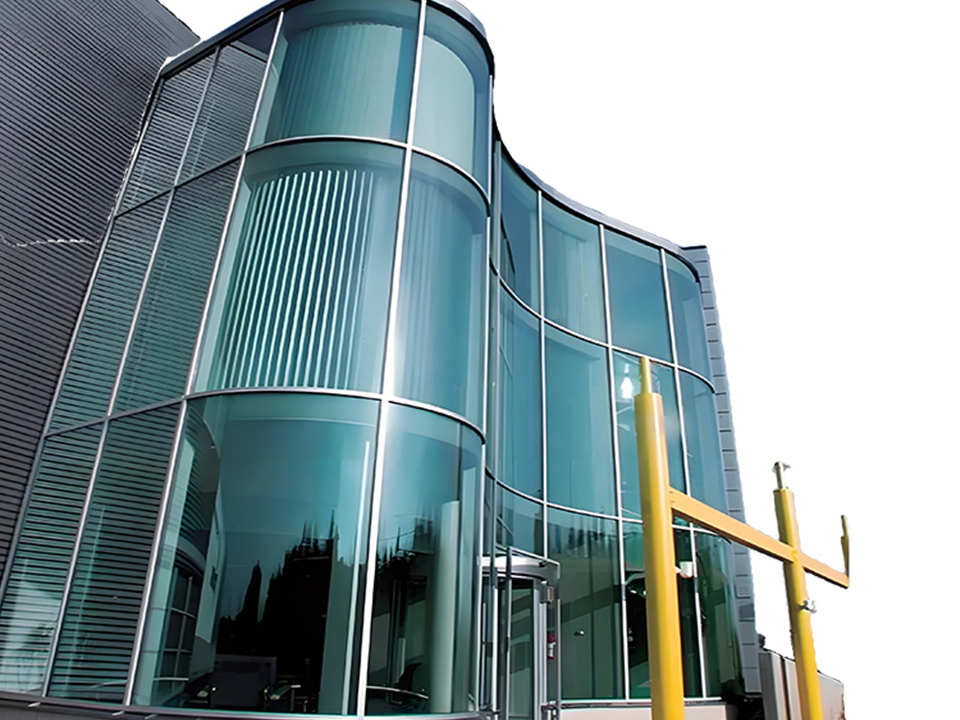
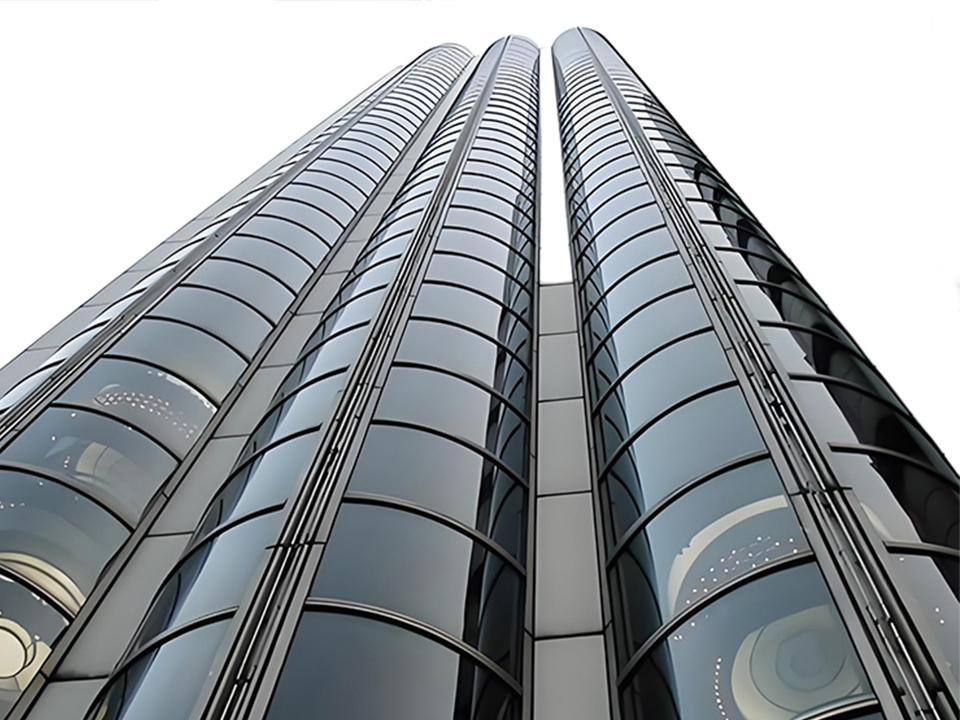
The hard truth is this: the market loves the look of bent tempered glass, but the factory lives with the scrap. And scrap is not abstract. It shows up as optical distortion, flat spots at the ends of the curve, coating damage, hole-position rejects, remake freight, and the sort of warranty language that tells you exactly where owners have already been burned.
Table of Contents
The radius limit is set by the process, not the CAD file
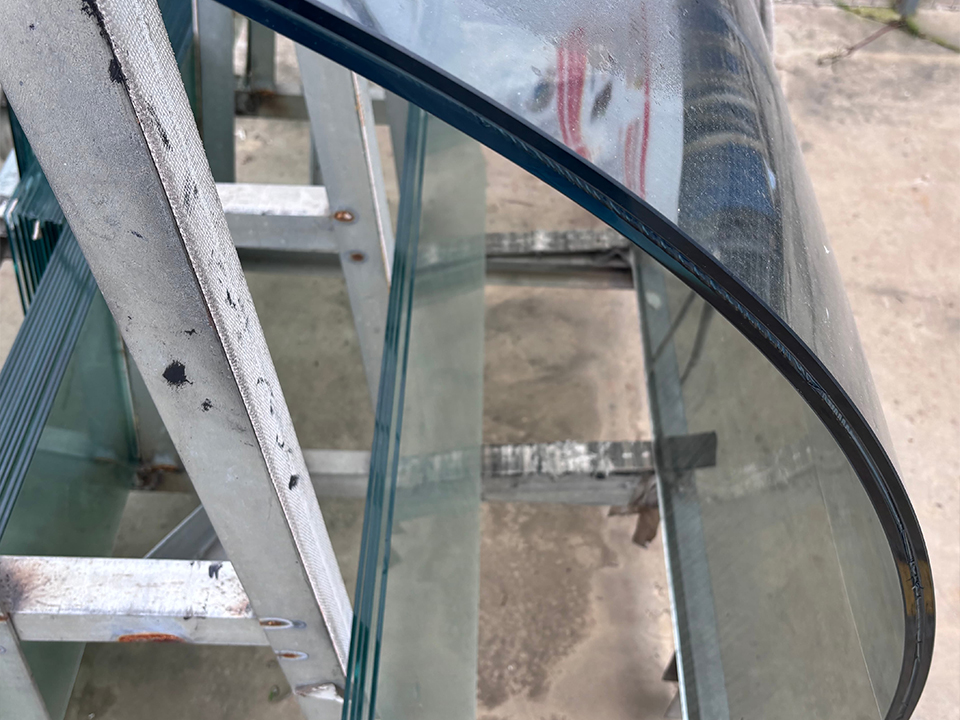
ASTM C1464-21 does not treat bent glass as a decorative afterthought; it explicitly frames bent glass as a different fabrication class and says optical quality depends on glass type, thickness, and the tightness of radius, with distortion risk getting worse once the glass is laminated or built into an IGU. That is the part too many architects skip. Radius is not just geometry. Radius is process selection. Radius is tolerance stacking. Radius is what decides whether your “thermally curved glass” vision becomes a clean delivery or a remake budget.
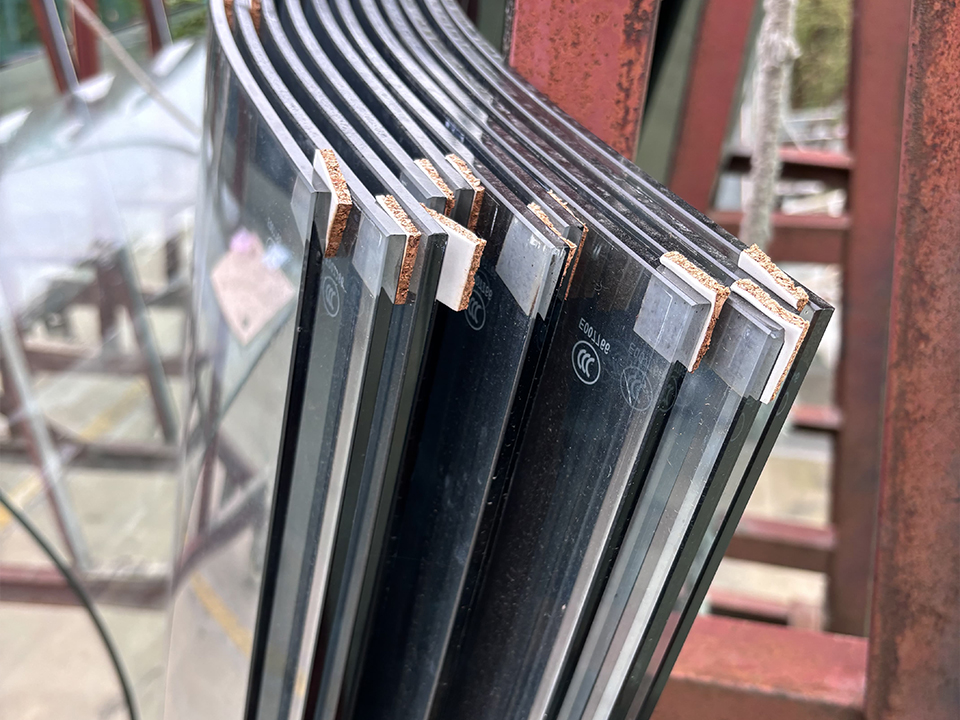
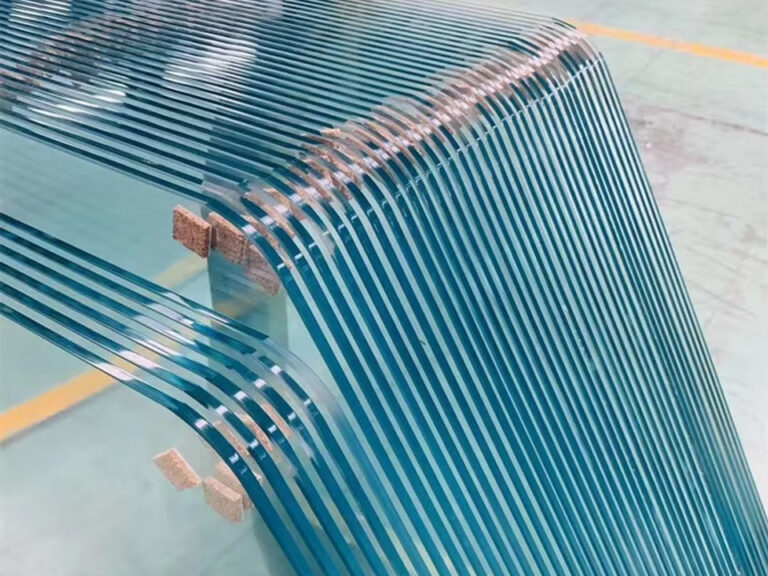
Here is the insider version. Supplier guidance for toughened curved glass commonly starts around a 1,000 mm minimum radius for 5 mm to 10 mm glass, rises to roughly 1,500 mm to 2,000 mm for 12 mm to 15 mm glass, and reaches about 2,000 mm for 19 mm glass; sedak, talking about its newer large-format bending line, also says minimum radius can be 1,000 mm depending on width. Those are not universal laws, but they are a blunt warning: thicker glass does not buy you unlimited curvature, and “can you bend it?” is not the same question as “can you bend it and still ship acceptable yield?”
And if you are pairing curvature with coatings, stop acting surprised later. Guardian’s bent-glass guidance says coated glass needs tighter review, warns that contact with a low-E coating can damage the surface, and says bends tighter than 80 inches, about 2,032 mm, should be reviewed and approved when SunGuard-coated glass is involved. So yes, if your build-up includes anti-reflective coated glass or performance-driven low-E glass options, the coating location is part of the risk model, not a footnote.
Yield dies at the edges first
Tiny flaws matter.
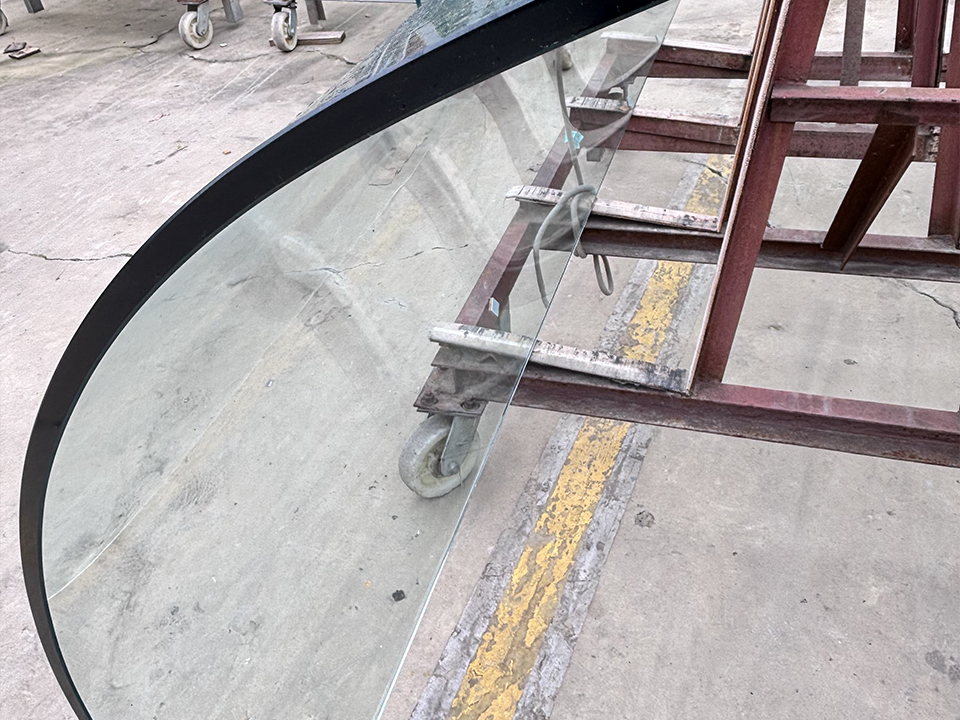
Most curved tempered glass yield risks are not cinematic. They are boring, repetitive, and expensive: edge damage, bad hole placement, overconfident radii, coating-side mistakes, and unrealistic expectations about visual quality. Specialist guidance for toughened curved glass says all toughened curves will have small flat areas at the ends, and it is unusually explicit about hole geometry: hole-to-hole spacing at least 4x thickness, corner-to-hole edge at least 4x thickness, and edge-to-hole at least 1.5x thickness. That is not paperwork filler. That is a fabrication survival guide.
I’ll say something fabricators mutter off the record all the time: buyers usually blame the bend when the real problem is the drawing. A radius that is barely possible on paper becomes much less forgiving once you add notches, frit, edge polish variation, coating restrictions, or a late demand for a cleaner reflected image in a premium lobby. And when someone says the shop can “fix it in tempering,” what exactly do they think tempering is supposed to fix?
The optics get uglier on concave and coated assemblies. Guardian notes that hot-bent coated glass is generally easier on convex designs, while concave IGUs may require a #3 surface coating strategy or a different bending process entirely; it also warns that concave glazing can concentrate reflected solar energy enough to create safety, comfort, or property-damage issues. That is why I’d rather have an ugly procurement conversation early than a fake “value engineering” meeting after mockups fail. If your project lives in wet, abuse-heavy environments such as easy-clean shower glass systems, the tolerance for field mishandling is even lower.
The paperwork tells you what owners fear
This is where the article stops being theoretical.
Emory’s August 2024 design standards are refreshingly blunt: tempered glass should only be used where code requires, heat-strengthened glass should be used elsewhere, individual exterior lites should not exceed 96 inches in width or 142 inches in height, roller-wave distortion on fully tempered glass should not exceed 0.003 inch peak-to-valley, and the warranty must include replacement of glass broken due to nickel sulfide inclusions. That is not a code lecture. That is owner-side scar tissue written into specifications.
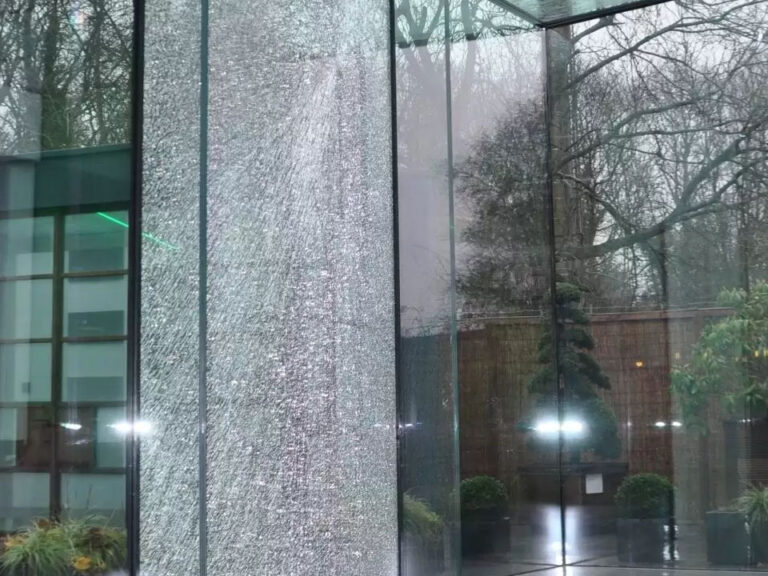
Then you get the procurement tell I pay attention to most. In 2024 institutional project manuals from the University of North Texas System and McHenry County College, manufacturers are required to replace heat-soaked tempered glass that spontaneously breaks due to nickel sulfide inclusions when breakage exceeds 0.3%, or 3 per 1,000, within the warranty period. Read that again. Serious owners are not arguing about whether inclusion risk exists. They are negotiating how much of it they are willing to absorb before the glass supplier owns the pain.
And the chemistry is not folklore. A 2023 Saint-Gobain technical paper on nickel sulfide risk in heat-strengthened façade glass estimated a conservative breakage probability of 1 breakage in 1,100 ± 200 tonnes and said roughly 90% of those breakages occur within 6 to 8 years after production. No, that paper is not about fully tempered bent glass alone. But it reinforces the point professionals already know: NiS is a real manufacturing risk with a real time profile, and anyone selling curved tempered glass as if heat treatment wipes away uncertainty is selling bedtime stories. If you stay with tempered, at least explore jumbo heat-soaked tempered glass before you congratulate yourself on cutting risk.
What I would expect by radius band
The table below is not a universal law. It is a buyer-side reality check built from ASTM C1464, supplier radius guides, Guardian’s coating notes, and 2024 owner specifications.
Design condition
What the shop is really fighting
What usually happens to yield
What I would do
5–10 mm glass near the common 1,000 mm floor
Edge quality, flats at tangent ends, hole placement, visual distortion
Yield pressure rises fast once holes, notches, or coating constraints enter the drawing
Freeze geometry early, reduce cutouts, and mock up before release
12–15 mm glass in the 1,500–2,000 mm guide range
Heavier handling, tighter tolerance management, coating strategy on IGUs
Remake risk increases when the project also demands pristine reflection
Separate “visual acceptance” from “dimensional acceptance” in the spec
Scrap becomes expensive even when rejection rate is modest
Price logistics and replacement, not just fabrication
Coated concave IGUs or bends tighter than about 80 in. / 2,032 mm
Coating contact, solar concentration, process suitability
Approval loops slow down and the process may need to change
Get coating manufacturer and fabricator alignment before tender
Curved safety glazing with owner sensitivity to spontaneous breakage
NiS exposure, warranty allocation, access cost after installation
The commercial risk often exceeds the fabrication risk
Specify heat-soak where justified and write warranty language like you mean it
My view? The “best” radius is rarely the smallest one the supplier says is technically possible. It is the radius that still leaves enough manufacturing margin after you add the real-world garbage every project introduces: coatings, deadlines, handling, field tolerances, and a client who suddenly notices optical distortion only after the truck arrives.
When curved tempered glass is the wrong answer
Some jobs should not be forced into a curved tempered glass answer just because the rendering looked sexy.
If the project needs post-breakage retention, long-span overhead safety behavior, or genuine forced-entry and ballistic resistance, do not let anybody smuggle a decorative bent tempered lite into a performance conversation it cannot win. In those cases I would rather see the team move toward laminated, heat-strengthened, or specialized security builds than pretend standard curvature solves everything. That is exactly why I treat bullet-resistant glazing systems and even bulk ballistic glass panels as separate conversations, not fancy cousins of architectural curved tempered glass.
And if the buyer mainly wants appearance, not structural drama, segmented flat glass can be the smarter move. I know. It sounds less glamorous. But glamour does not pay for remakes, scaffold access, or owner warranty fights five years later.
FAQs
What is the minimum radius for curved tempered glass?
The minimum radius for curved tempered glass is the smallest bend a fabricator can produce for a given thickness, size, coating, and process without pushing the panel outside acceptable distortion, flat-end, hole-position, or breakage limits; in common supplier guidance, that floor often starts around 1,000 mm for 5–10 mm glass and increases with thickness. The smart move is to treat that number as a negotiation starting point, not a promise.
What causes curved tempered glass yield risks?
Curved tempered glass yield risks are the fabrication and service conditions that make a lite more likely to be rejected, remade, or fail later, including tight radii, edge flaws, bad hole geometry, coating-side contact, optical distortion, handling damage, and spontaneous breakage mechanisms such as nickel sulfide inclusions. In practice, the drawing usually causes more pain than the furnace.
How do you determine the minimum bend radius for tempered glass?
The minimum bend radius for tempered glass is determined by matching thickness, lite size, bend type, coating location, hole and notch geometry, visual acceptance criteria, safety code marking requirements, and the fabricator’s approved process, then confirming the package through mockups and written shop review before release. Anyone who gives you a number without asking those questions is guessing.
Is heat-soaked tempered glass worth it for curved applications?
Heat-soaked tempered glass is a post-production screening step intended to reduce, not erase, spontaneous nickel sulfide breakage by forcing susceptible lites to fail before shipment, which makes it worth considering when replacement access is ugly, warranty exposure is real, or owner specs already treat NiS as a commercial risk. It is helpful, but it does not rescue a bad radius, weak edge geometry, or sloppy handling plan.
If you are pricing a curved façade, shower program, or oversized feature wall, send the radius, thickness, coating location, hole map, and visual standard before you send the purchase order. We can usually tell, very quickly, whether you need standard curved tempered glass, heat-soaked tempered glass, coated low-E glass, or a more defensive spec built around bullet-resistant glass.