当社は中国に拠点を置く大手ガラスメーカーであり、,
産業用および建築用向けの高品質なガラスソリューションを専門としています。.
長年の実績とISO認証を活かし、世界中の調達担当者、エンジニア、プロジェクトマネージャーの皆様に対し、迅速かつニーズに合わせた見積もりと、きめ細やかなサポートを提供しています。.

Safety glass might withstand a heavier preliminary lots and afterwards leave the opening in hundreds of granules, while laminated glass might fracture sooner yet stay attached to its interlayer, preserving an obstacle when that residual defense issues most.
Which failing can your project endure?
That is the genuine laminated vs tempered glass concern. Not which item is “much better.” Not which pamphlet declares four-times toughness. The proper selection relies on what need to occur previously, throughout, and after damage.
I’ll be candid: architects and customers often contrast these items as though they were contending qualities of the same material. They are not. Solidifying is mainly a heat-treatment process. Lamination is a technique of bonding several plies. A glass panel can be tempered, laminated flooring, or both.
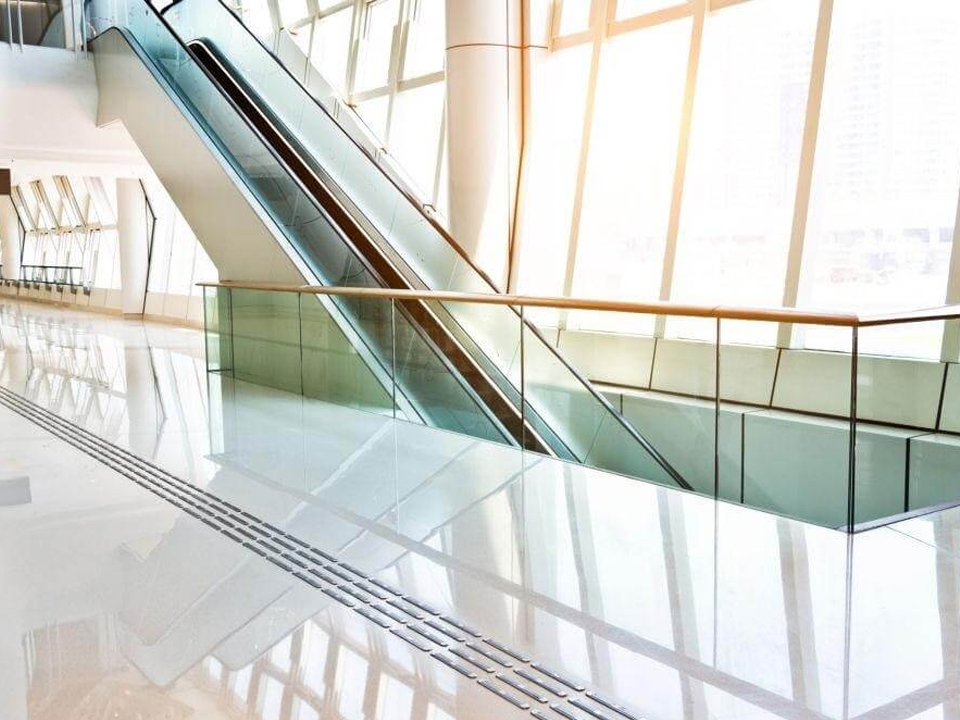
Laminated glass contains 2 or even more glass plies bonded by polyvinyl butyral (PVB), ethylene-vinyl acetate (EVA), ionoplast, or one more crafted interlayer. When a ply breaks, the pieces normally continue to be connected to that interlayer.
Safety glass– called toughened glass in the UK, Europe, Australia, and parts of Asia– is heated up to roughly 620– 680 ° C and swiftly air-quenched. The resulting surface area compression makes it significantly stronger than average annealed soda-lime glass, whose primary glass former is silicon dioxide, SiO TWO.
When toughened up glass breaks, the saved stress releases across the whole pane. It dices into small bits. The injury risk from long, sharp shards is decreased, however the opening might become entirely vacant.
That difference regulates most sensible specs:
Toughening up starts with a finished pane. Reducing, drilling, notching, edge sprucing up, and CNC job should be completed before warm therapy because subsequent machining can launch the pane’s internal tensions and ruin it.
The glass is warmed near its softening range and then swiftly cooled. The surface cools down initially, developing compression, while the center stays in stress. That tension profile raises resistance to bending, influence, and thermal shock.
Lamination functions differently. Two or more ready plies are assembled around an interlayer, pre-pressed to get rid of air, and adhered under regulated warm and stress. Common PVB thicknesses include 0.38 mm, 0.76 mm, and 1.52 mm, although architectural and security assemblies might utilize thicker or several interlayers.
Interlayer selection is not aesthetic. Requirement PVB can execute well in standard mounted glazing; acoustic PVB targets audio transmission; ionoplast provides higher stiffness and side security for certain structural applications; EVA is used where moisture resistance, ingrained materials, or specialized manufacture conditions matter.
However chemistry alone does not authorize a system. Glass thickness, interlayer density, temperature, load duration, side support, framework bite, sealer compatibility, and relevant examination records still control efficiency.
| ファクター | 合わせガラス | Solidified Glass |
|---|---|---|
| Standard construction | Two or even more bound glass plies | One heat-treated glass ply |
| Breakage habits | Cracks while pieces follow the interlayer | Pieces rapidly right into little granules |
| Post-breakage barrier | Usually stays partly or significantly shut | Normally leaves an open structure |
| Relative pre-breakage toughness | Depends on ply treatment and interlayer coupling | Typically regarding 4 times stronger than similar stiff glass |
| Security delay | Much better because the interlayer resists prompt penetration | Restricted once the pane dices |
| Expenses results control | Strong advantage when properly designed | Monolithic solidified glass can drop totally |
| Acoustic performance | Acoustic interlayers can reduce sound transmission | Limited benefit as a monolithic pane |
| UV control | PVB interlayers can block a big proportion of UV radiation | No comparable interlayer advantage |
| 製造 | Even more layers, weight, handling, and edge-detail danger | All machining needs to occur prior to tempering |
| Regular expense position | より高い | より低い |
| Typical applications | Windscreens, skylights, railings, safety and security glazing, acoustic façades | Shower doors, partitions, doors, table tops, device panels |
| Hybrid choice | Can make use of tempered plies | Toughened up plies can be laminated together |
Safety glass is normally stronger prior to breakage. Laminated glass is typically more persistent after damage.
Those are not compatible buildings.
A 10 mm monolithic tempered pane may lug a greater short-duration load than a laminate composed of 2 5 mm annealed plies. Yet when the solidified pane cracks, its load-carrying ability can break down practically instantaneously. The laminate may preserve fragments and proceed covering the opening, although its residual architectural capability must never be assumed without design.
NHTSA’s October 30, 2024 motorcoach glazing regulation supplies unusually honest test data. At effect speeds around 21 km/h, rubber-mounted laminated samplings recorded peak forces of 4,780 N and 5,879 N with 116 mm and 106 mm of trip. Comparable solidified specimens got to 8,030 N and 8,518 N with only 49 mm and 41 mm of excursion. The toughened up panels were harder and more inflexible; the laminates deflected extra while supporting an anti-ejection approach.
Harder is not instantly more secure. Safer wherefore– wind stress, human impact, falling glass, required access, or resident retention?
My guideline is simple: never approve “more powerful glass” as a spec. Demand the lots situation, assistance condition, examination standard, glass accumulation, and called for problem after damage.
Piece retention is the defining laminated glass advantage. It helps in reducing after effects and can maintain a damaged opening covered until substitute job starts.
Security follows. The interlayer compels a burglar to do greater than break the glass; the enemy must also tear, cut, or repetitively penetrate the polymer while managing connected pieces. That does not make every laminate “burglar-proof,” yet it can purchase time.
For store fronts, entrances, sidelites, and subjected property openings, laminated safety doors and window glass can combine clear sightlines with post-breakage fragment retention. Tempered-laminated arrangements are additionally offered where higher first effect resistance is needed.
Other advantages include:
A caution, though: laminated glass is not instantly ballistic glass. Ballistic assemblies need examined combinations of glass, interlayers, polycarbonate, framework building and construction, side involvement, and defense degree. Personalized multi-layer ballistic glass is built around specified danger and framework requirements, not a common “laminated” tag.
Safety glass provides high pre-breakage stamina without the weight and production intricacy of a multi-ply laminate. It additionally deals with thermal differentials better than annealed glass, that makes it helpful near heat sources, shaded exterior zones, and exposed edges.
Its granular damage pattern lowers the likelihood of long, knife-like fragments. That is why solidified glass applications typically consist of shower doors, frameless dividers, outdoor patio doors, furnishings, display cases, appliance panels, and car side home windows.
Production can also be much faster and less costly. A monolithic lite makes use of much less product, evaluates much less, and prevents the interlayer, de-airing, autoclave, and lamination-quality actions.
Still, solidified glass has weak points that sales literary works often tends to soften:
For big awnings, the practical response may be solidified plies within a laminated setting up. Extra-large tempered glass for canopy applications can be supplied with CNC handling and optional laminated accumulations, but the final cosmetics must comply with the canopy designer’s after effects, wind-load, snow-load, and support computations.
Requirements have repercussions.
In Vainker v Marbank Building Ltd, decided by the UK High Court on March 25, 2024, toughened glass had actually been set up where toughened-laminated glass was defined for balustrades. The court discovered that the alternative left the dwelling unfit for habitation since an unsuccessful panel might provide no recurring obstacle against a loss. Recoverable therapeutic damages included ₤ 61,468.75 attributed to the substitute work.
That judgment reveals a market behavior I highly do not like: treating a product replacement as safe due to the fact that both products are called shatterproof glass. They can both please impact-safety requirements while behaving completely in a different way after crack.
NHTSA reached a related final thought in transport glazing. Its 2024 evaluation assumed that double-glazed tempered/tempered motorcoach windows would need at least one laminated layer to satisfy new anti-ejection performance tests. The firm designed an incremental expense of $69.66 per window, or $835.92 for 12 placements on one vehicle, and reported that 39% of large-bus and over-the-road-bus deaths in its 2006– 2019 dataset involved ejected owners.
The lesson is not that every home window needs to be laminated. It is that the specification must comply with the consequence of failure.
Attractive demands do not transform the safety and security logic. Project-spec frosted pattern glass can be solidified or laminated for partitions, door lites, and privacy screens. Also, back-painted spandrel frit glass may make use of either arrangement depending upon exterior tons, fallout direct exposure, and neighborhood code.
Safety glass normally wins the initial rate comparison. Laminated glass typically wins when the price version consists of security, acoustics, temporary closure, cleanup, replacement access, and liability after damage.
For early budgeting– not acquiring– I make use of a proportion design:
| Building | Budget plan Index | Main Cost Drivers |
|---|---|---|
| Monolithic solidified | 1.00 × | Density, size, edgework, openings, warmth therapy |
| Requirement laminated | 1.40– 2.20 × | 2 plies, PVB, lamination, added weight |
| Tempered-laminated | 1.80– 3.00 × | Warm treatment of plies plus lamination |
| Structural or security laminate | Quote needed | Ionoplast, testing, multiple plies, framework design |
| Ballistic or blast-resistant system | プロジェクト固有の | Threat level, spall control, polycarbonate, accreditation |
These are procurement proportions, not installed-price assurances. Oversized panels, curved glass, low-iron substrates, ceramic frit, custom holes, heat saturating, tiny quantities, export crates, and third-party screening can overwhelm the base material distinction.
Energy performance is a separate decision. Both buildings can be integrated into shielding glass devices with IGU-ready Low-E layered glass. Tempering or lamination addresses safety and security and failure behavior; Low-E coverings resolve emissivity and warm transfer. Blending those tasks in one obscure request for “high-performance glass” is just how buying errors begin.
Begin with the failure condition, then function backward:
So, which is much better: laminated or solidified glass?
The truthful solution is whichever construction creates the safer failure setting for the real opening. Often that is solidified. Frequently it is laminated. For high-consequence glazing, it is often both.
Laminated glass is generally safer where the opening must continue to be covered after damage, because a PVB, EVA, or ionoplast interlayer holds fragments; solidified glass is typically much safer where greater pre-breakage stamina and little granular fragments matter greater than post-breakage retention, supplied the full setting up fulfills the controling code.
“Safer” consequently requires a called risk. A shower door, overhead cover, storefront, vehicle side home window, and glass guard do not share the very same failing requirements.
Safety glass is normally more powerful than an equal-thickness hardened ply, while laminated glass is a composite whose effective toughness depends on ply treatment, interlayer stiffness, temperature, tons period, support problems, and whether both plies share load; for that reason, “laminated versus toughened up” is not a valid structural comparison without a specified accumulation.
A laminate made with toughened up plies can combine greater initial toughness with post-breakage retention. Its residual capability still calls for testing or engineering evaluation.
Laminated glass typically sets you back greater than monolithic tempered glass because it needs a minimum of two plies, an interlayer, lamination, longer processing, stricter edge control, and much heavier shipping; the genuine premium, nonetheless, depends upon dimension, thickness, openings, coverings, warmth treatment, qualification, amount, and destination rather than an universal percent.
For a low-risk indoor dividing, the costs may not be warranted. For a cover or guard, avoiding laminated building and construction merely to minimize the order can be false economic climate.
Select laminated glass when results, forced-entry hold-up, acoustics, UV filtering system, or residual closure regulates; choose tempered glass when heat-treated strength, thermal resistance, tidy breakage, lower weight, and easier manufacture economics regulate; specify tempered-laminated building when both pre-breakage strength and post-breakage retention are called for.
Send out the producer the complete efficiency specification as opposed to an item nickname. “Safety glass” is not enough info to produce the appropriate panel.
Safety glass can not be securely reduced, pierced, notched, or edge-worked after heat therapy due to the fact that disrupting its compressive anxiety pattern can trigger immediate fragmentation; laminated glass can often be processed after lamination with specific equipment, but manufacturing work should typically be finished according to approved illustrations before last assembly and certification.
Equipment collaborates need to be validated prior to release. A lost hole in tempered glass is not a repair service; it is a remake.
Send us the panel measurements, quantities, assistance conditions, opening and notch drawings, finish demands, applicable requirements, and intended application. We can after that contrast toughened up, laminated flooring, and tempered-laminated constructions against the efficiency your task in fact needs– and estimate the build-up without concealing behind the unclear expression “safety glass.”