We are a leading glass manufacturer based in China,
Specializing in high-quality glass solutions for industrial and architectural applications.
With years of experience and ISO certification, we provide fast, tailored quotes and responsive support for procurement professionals,engineers, and project managers worldwide.
We are a leading glass manufacturer based in China,
Specializing in high-quality glass solutions for industrial and architectural applications.
With years of experience and ISO certification, we provide fast, tailored quotes and responsive support for procurement professionals,engineers, and project managers worldwide.
Safer Overhead Glazing Build-Ups for Public-Facing Projects
The Glass Looks Calm. The Risk Isn’t.
I once watched a project team spend 45 minutes arguing about frit density on a canopy mock-up and maybe 90 seconds on fallout behavior.
That stuck.
Because overhead glazing on a public-facing project isn’t just “nice daylight.” It’s a loaded assembly sitting over human heads, entry queues, prams, security lines, delivery zones, exterior furniture, and—if the sun angle gets cute—materials that really don’t enjoy concentrated heat. We pretend the danger is only breakage. It isn’t.
Here’s the ugly truth: window reflection damage is still treated like a weird residential siding problem, when it should be treated as a façade-risk problem. Same physics. Bigger consequences.
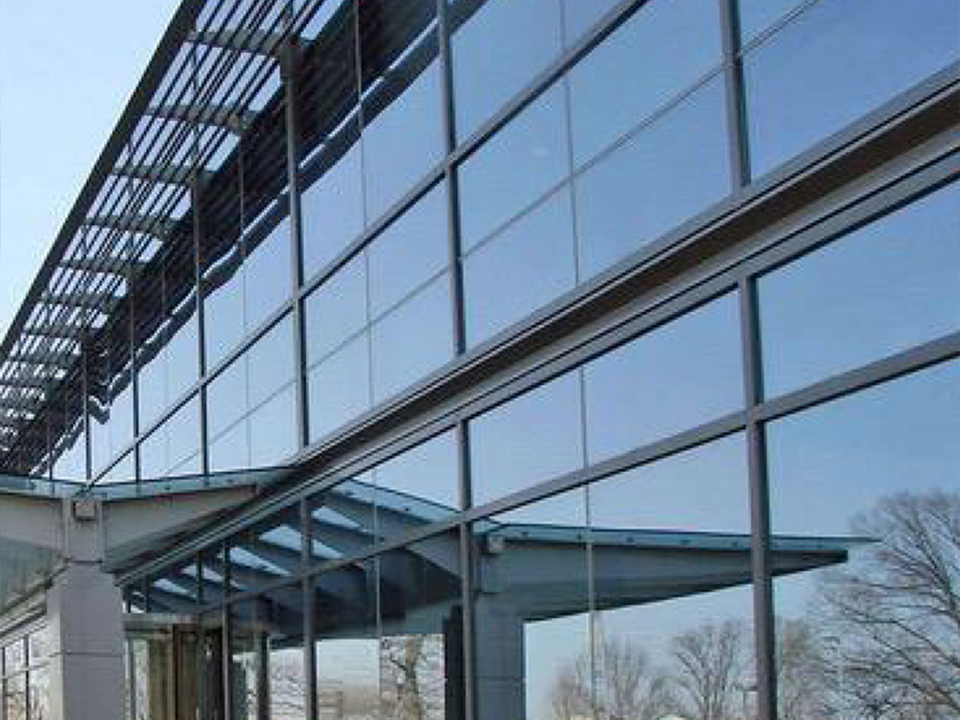
Reuters covered the infamous London case at 20 Fenchurch Street, where the concave façade reflected sunlight hard enough to melt parts of a Jaguar, damage shop materials, and push the building into “Walkie Scorchie” folklore. Architects laughed. Insurers didn’t. The tower later got horizontal fins to calm the beam path. See the original case coverage here: London’s car-melting skyscraper wins Carbuncle Cup.
And no, that wasn’t just bad luck.
Table of Contents
What Actually Goes Wrong With Reflective Glass
But the usual meeting-room sentence—“It’s Low-E, so it’s efficient”—is dangerously incomplete.
Low-E coatings can reduce heat transfer through the unit while also changing how much solar energy is reflected outward; when double-pane glass bows or forms a slight concavity from pressure differences, the reflection can tighten into a hot spot, especially at low winter or shoulder-season sun angles. That’s the part people leave out.
Bad habit.
The NAHB report on double-pane Low-E windows says normal vinyl siding can begin softening around 160–165°F, while focused reflected heat from Low-E units has been measured above 200°F. It also notes that clear glass may reflect about 10% of solar energy, while Low-E glass may reflect 30–50%. Read the source: Sunlight Reflected from Double-Paned Low-E Windows.
So when someone asks, “Can solar reflection melt materials?” my answer is simple.
Yes. Easily.
Especially when the receiving surface is dark PVC, vinyl, TPO, EPDM, composite decking, artificial turf, powder-coated trim, signage, gasket stock, or some unfortunate black planter box placed exactly where the reflected beam lands at 2:20 p.m. in March.
Public-Facing Projects Don’t Get Residential Forgiveness
A backyard siding claim is annoying. A public entry canopy failure is different.
I frankly believe architects underprice reflection risk because the failure usually shows up after practical completion, when everyone has moved on, the renderings are archived, and the contractor is already fighting a different fire. Then photos arrive: warped cladding, crazed plastic, scorched membrane, cooked sealant, melted vinyl siding from windows, angry owner. The usual.
The Consumer Product Safety Commission once announced a recall involving about 6,000 sunrooms because reflective roof glass and skylights created a fire hazard on cedar shingles or shakes. Four fires had been reported. Roof sheathing, shingles, walls—the damage wasn’t theoretical. Here’s the recall: CPSC, Four Seasons and Cardinal IG Co. Announce Recall to Repair Sunroom Roof Glass.
That’s why overhead glazing above a school entrance, retail galleria, civic lobby, hospital drop-off, or transit shelter needs more than “tempered IGU to code.”
It needs suspicion.
Stop Writing “Tempered Low-E IGU” Like That Means Something
“Tempered Low-E IGU.”
I hate that note.
Not because tempered glass is bad. Not because Low-E is bad. Because the phrase is usually a substitute for thinking. What ply? What coating surface? What SHGC? What exterior reflectance? What interlayer? What edge bite? What support condition? What slope? What wind/snow load? What happens when the unit breaks? What does the reflected beam hit?
Nobody wants to answer all that in DD. Then it lands in CA, wearing a submittal stamp and a fake sense of certainty.
If solar control is the driver, use a deliberate assembly like custom solar-control Low-E insulating glass and specify the actual performance: SHGC, VLT, U-value, exterior reflectance, coating position, spacer system, gas fill, glass thickness, and laminated safety layer.
And don’t let the energy model bully the safety review. I’ve seen that happen. A project chases lower cooling loads, lands on a shiny coating, then nobody asks whether the reflected energy is now pointed at dark metal, signage, or a neighboring façade panel that wasn’t invited into the thermal conversation.
For Overhead Glazing, Retention Beats Bravado
Here’s another unpopular opinion: people over-romanticize strength.
Strength is sexy in a submittal. Retention is what keeps broken glass from becoming weather.
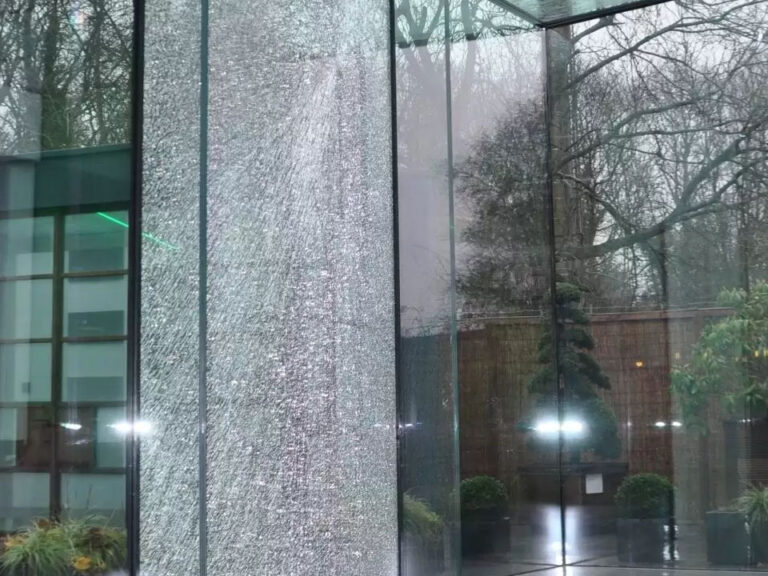
For overhead glazing, the question isn’t only “Can it resist load?” The question is “What happens after failure?” A monolithic tempered lite may break into smaller particles, sure, but particles falling from overhead are still falling from overhead. Laminated glass changes the failure mode. The interlayer holds fragments, buys time, and gives the maintenance team something other than a disaster zone.
STRUCTURE’s discussion of 2024 IBC glass changes notes that laminated tempered and laminated heat-strengthened glass are treated as structurally adequate under all installation conditions for glass guards, while single-layer fully tempered glass has narrower acceptable use cases where fallout risk below is controlled. Their glass code discussion is here: 2024 IBC Significant Structural Changes-Part 8.
Different application, same lesson: don’t confuse break pattern with public safety.
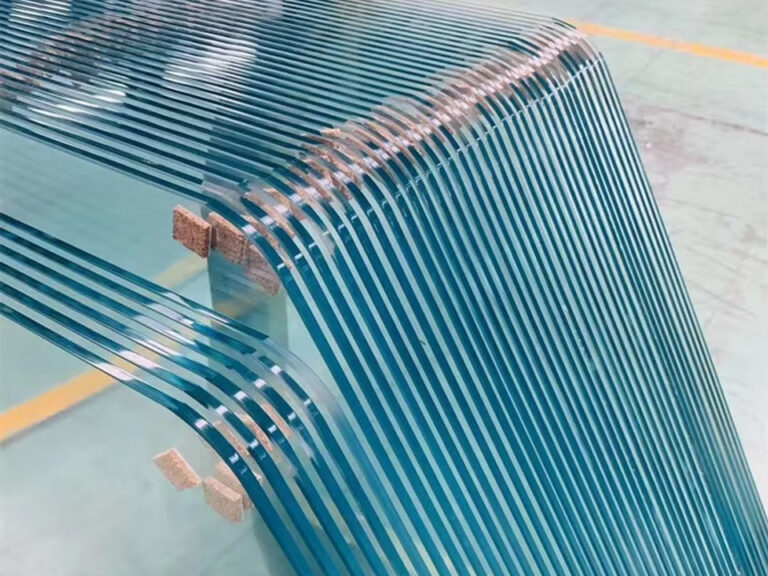
For a cleaner, safer overhead spec, I’d start with clear tempered laminated glass where strength and retention both matter. If the owner is allergic to green edge tint—and many premium retail and civic clients are—then ultra-clear laminated glass earns its keep.
Reflection Control Isn’t Just “Make It Tinted”
Yet tint gets thrown at glare like duct tape.
A tinted lite may reduce visible glare. Fine. But depending on glass composition, coating stack, absorption, heat buildup, and framing shadow, it can also raise thermal stress risk. That’s not theory; that’s the kind of boring failure that shows up as edge cracks, seal stress, or a thermal-break autopsy nobody budgeted for.
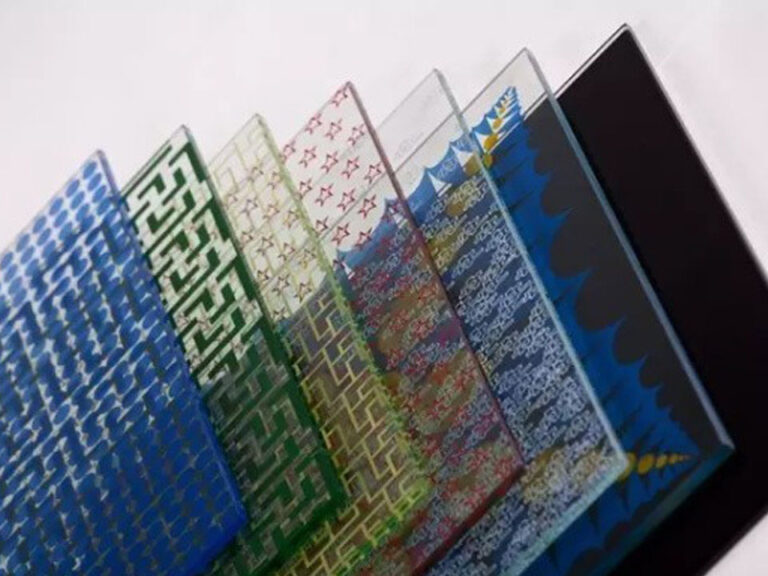
Use factory-direct tinted glass for façade use when the job needs glare control, visual uniformity, and exterior appearance control. Just don’t let the word “tinted” end the conversation.
Ask for numbers. Exterior reflectance. SHGC. VLT. Absorptance. Coating surface. Heat-strengthened versus tempered. Laminated inner lite versus laminated outer lite. Gas fill. Spacer. Edge bite. Support angle.
Yes, it’s tedious.
That’s the job.
The Security Layer: Don’t Bolt Good Glass Into a Bad Frame
On some public-facing projects, the glazing isn’t only handling sun and breakage. It’s also part of the security line.
Schools. Courthouses. Transport nodes. Police facilities. High-profile retail. Government entrances. The spec changes quickly once forced-entry delay, blast exposure, or hostile-impact risk enters the room.
Glass Magazine’s 2024 FGIA coverage warned that security glazing isn’t just the lite; if a resistant glass product sits in a weak frame, the system can still fail badly. The article also discussed ASTM F3561 in the context of forced-entry resistance after simulated active-shooter attack. Here’s the piece: FGIA Covers Safety-focused Fenestration and Glazing Products.
That’s where blast-resistant façade glass belongs in the conversation early—not after the owner has already fallen in love with a delicate mullion profile that can’t carry the threat model.
A safer overhead build-up isn’t just glass. It’s glass plus interlayer plus frame plus anchorage plus drainage plus access plus maintenance plan. Miss one, and the assembly is cosplaying as safety.
Don’t Ignore Argon, Deflection, and the Weird Little Edge Details
The cavity matters.
People like to talk about coatings because coatings sound clever. But sealed IGU behavior—barometric pressure, altitude, temperature swings, cavity width, spacer stiffness, pane thickness—can push glass into subtle deflection. Subtle is enough. A tiny concavity can focus reflected sunlight into a beam that makes a dark receiving surface very unhappy.
If thermal performance is part of the brief, argon-filled insulating glass units may help improve U-value performance, but I’d still want the project team to review deflection behavior and reflection geometry, especially for sloped or overhead installations.
The spec should not read like a shopping list. It should read like a controlled system.
Build-Up Comparison for Public-Facing Overhead Glazing
Build-Up Option
What It Does Well
Where It Fails
Best Public-Facing Use
My Verdict
Monolithic tempered glass
High strength, clean appearance, common supply chain
Poor fragment retention after breakage overhead
Limited non-overhead or protected conditions
Too risky above people unless code and protection conditions are very specific
Laminated heat-strengthened glass
Retains fragments, lower spontaneous breakage risk than fully tempered
Lower strength than tempered; needs engineering
Skylights, canopies, atriums with occupied space below
Strong default for safer overhead glazing
Laminated tempered glass
High strength plus interlayer retention
Higher nickel sulfide breakage concern unless heat-soak testing is specified
Larger spans, structural glass, high load cases
Good, but specify testing and support details
Solar-control Low-E IGU with laminated inner lite
Thermal control, daylighting, fallout reduction
Can still create solar reflection damage if reflectance path is ignored
And include a receiving-surface scan. I mean it. Walk the site plan and elevations and identify nearby vinyl, PVC, EPDM, TPO, artificial turf, painted black metal, composite boards, signage, membranes, parked-vehicle zones, and pedestrian furniture. If the reflected beam path lands on any of those, solve it before tender.
Not after the melted-photo email.
FAQs
Can solar reflection melt materials?
Yes—solar reflection can melt or deform materials when glass geometry, coating reflectance, sun angle, distance, and receiving-surface absorptance combine to concentrate heat above a material’s softening point, with vinyl siding often cited because normal grades can begin softening around 160–165°F. This is why window reflection damage should be treated as a design risk, not a neighborhood oddity.
What is the safest overhead glazing build-up for public-facing projects?
The safest overhead glazing build-up for most public-facing projects is a tested laminated assembly, often laminated heat-strengthened or laminated tempered glass within a compatible frame, because the interlayer helps retain fractured glass and reduce fallout risk over occupied areas while still allowing engineered solar-control, acoustic, and thermal performance. The frame and anchorage must match the glass performance.
Does Low-E window reflection cause damage more than clear glass?
Low-E window reflection can increase damage risk when the insulating glass unit becomes concave and focuses sunlight, because the coating may reflect more solar energy outward than clear glass, but the hazard comes from the complete optical setup, not from Low-E coating alone. Treat Low-E as a performance tool that needs reflection-path review.
How do you prevent melted vinyl siding from windows?
To prevent melted vinyl siding from windows, reduce focused reflected sunlight before it reaches vulnerable cladding by using exterior screens, shading, different glass optics, careful orientation, matte or higher-temperature adjacent materials, and mock-up analysis when a public walkway or neighboring façade sits in the reflection path. Replacing only the damaged siding usually repeats the failure.
Should overhead glazing be tempered or laminated?
Overhead glazing over people should not rely on monolithic tempered glass alone; a laminated safety glass assembly is usually the safer specification because the interlayer can hold broken fragments, while tempered-only glass may break into pieces that still fall into occupied zones. Tempered plies can still be used inside a laminated build-up when engineered.
Stop Buying Pretty Glass Without the Failure Story
I’ll say the quiet part: too many public glazing packages are sold as aesthetics with a safety appendix.
That’s backwards.
Before approving overhead glazing, ask the nasty questions. Where does it break? Where does it land? Where does it reflect? What does it heat? What happens in March, not just July? What happens when the IGU bows? What happens when the maintenance crew can’t reach the failed lite? Who owns the claim?